
Before Memmo my notes were scattered across PDFs. Now a workspace pulls everything into one place — I see exactly what's still left to study.
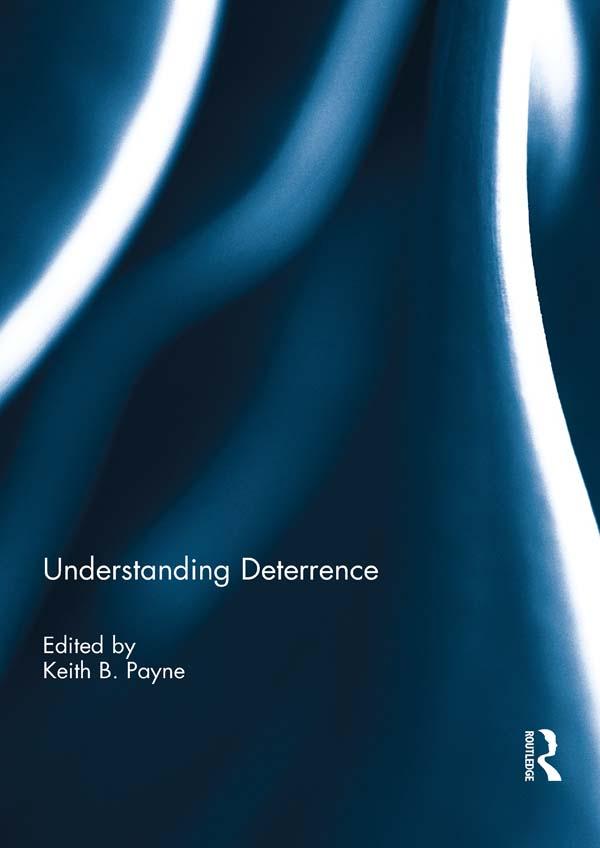
For decades, the rational actor model served as the preferred guide for U.S. deterrence policy. It has been a convenient and comforting guide because it requires little detailed knowledge of an opponent’s unique decision-making process and yet typically provides confident generalizations about how deterrence works. The model tends to postulate common decision-making parameters across the globe to reach generalizations about how deterrence will function and the types of forces that will be "stabilizing" or "destabilizing." Yet a broad spectrum of unique factors can influence an opponent’s perceptions and his calculations, and these are not easily captured by the rational actor model. The absence of uniformity means there can be very few deterrence generalizations generated by the use of the rational actor model that are applicable to the entire range of opponents.
Understanding Deterrence considers how factors such as psychology, history, religion, ideology, geography, political structure, culture, proliferation and geopolitics can shape a leadership’s decision-making process, in ways that are specific and unique to each opponent. Understanding Deterrence demonstrates how using a multidisciplinary approach to deterrence analysis can better identify and assess factors that influence an opponent’s decision-making process. This identification and assessment process can facilitate the tailoring of deterrence strategies to specific purposes and result in a higher likelihood of success than strategies guided by the generalizations about opponent decision-making typically contained in the rational actor model.
This book was published as a special issue of Comparative Strategy.
Before Memmo my notes were scattered across PDFs. Now a workspace pulls everything into one place — I see exactly what's still left to study.
Memmo's summaries are gold before exams. I don't have to re-read 800 pages two weeks before — just the important parts.
The AI chat has saved me the night before an exam more than once. I just keep asking until I get it — no waiting on a study group to reply.
The quizzes hit exactly what I need to know. Memmo tracks what I get stuck on — so I only practice what's worth it.
Flashcards with spaced repetition are magic. Memmo knows when I'm about to forget something and brings it back.
The AI podcasts are my favorite. I listen on my way to school and get a recap without sitting at a computer.

Handbok i kvalitativa metoder
281 kr

Hållbar utveckling: en introduktion för ingenjörer och andra problemlösare
334 kr

Brymans Samhällsvetenskapliga metoder
390 kr

Projektledning
491 kr

Den orättvisa hälsan: om socioekonomiska skillnader i hälsa och livslängd
326 kr

Organizational Leadership
429 kr

Vetenskapsteori för nybörjare
196 kr

På väg mot läraryrket
172 kr

Det sociala livet i skolan: Socialpsykologiska perspektiv
253 kr

Betygsättningens didaktik
151 kr

Personality
402 kr

Studying Leadership
404 kr

Managing Innovation
477 kr

Introduktion till samhällsvetenskaplig metod
347 kr

The Psychology of Sex and Gender
698 kr

Evidens och kunskap för socialt arbete
207 kr

Introduction to Leadership
605 kr