
Before Memmo my notes were scattered across PDFs. Now a workspace pulls everything into one place — I see exactly what's still left to study.
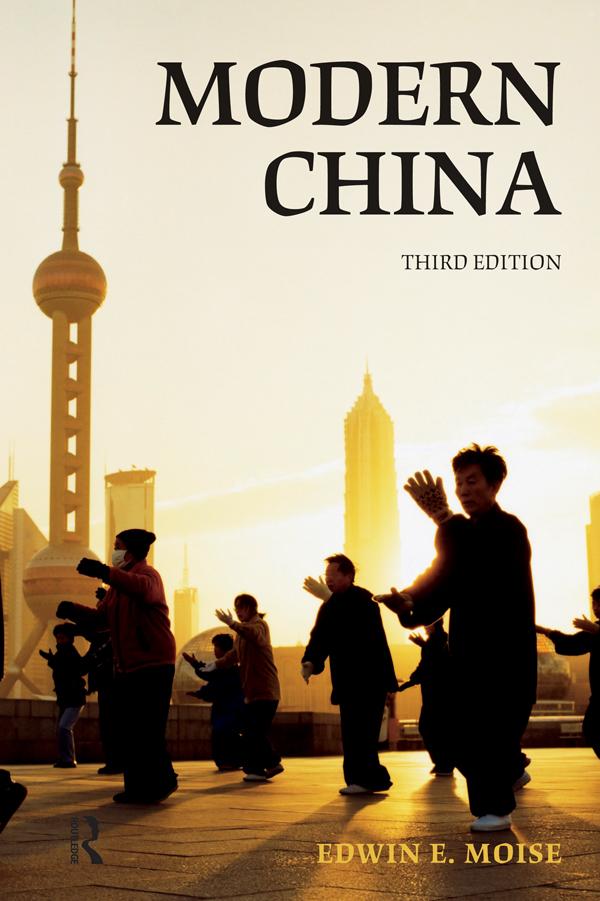
The past hundred years in China have seen almost continuous transformation and upheaval. From Confucianist monarchy to warlordism, from fanatically doctrinaire socialist tyranny to almost doctrineless social-capitalism, China has experienced political, cultural and economic disintegration, reunion, and revolution on an unprecedented scale.
Beginning with the overthrow of the Emperor in 1911, Moise guides us through a century of ever-unfolding drama with characteristic clarity and balance. Examining the effects of the communist revolution, he argues that in the early days Mao Zedong established the most effective government China had ever known, and that even during the bizarre excesses and blood-letting of the Cultural Revolution, there were still issues that were dealt with in a rational and effective manner.
Moving on to the developments since the death of Mao in 1976, in a section fully revised and updated for this new edition, Moise gives a nuanced account of the two sides of China: its spectacularly successful programme of capitalist economic development, and its continuing dictatorship. He contends that dictatorship is now much less total than it was until the mid-70s; although dissenters are still persecuted, their very existence is evidence of a significant loosening of repression. However, there is a heavy price being paid for the Chinese economic miracle. The environmental effects of this boom already stretch well beyond the borders of China.
Modern Chinasends us a clear message: the rapid and fundamental change that has framed the last century has not slowed or stalled but acts as a pointer to the near certainty of significant further change. To understand Chinas future we must understand its past.
Edwin E. Moise is Professor of History at Clemson University, South Carolina and a specialist in the history of China and Vietnam. His previous works include Land Reform in China and North Vietnam(1983) and Tonkin Gulf and the Escalation of the Vietnam War (1996).
Before Memmo my notes were scattered across PDFs. Now a workspace pulls everything into one place — I see exactly what's still left to study.
Memmo's summaries are gold before exams. I don't have to re-read 800 pages two weeks before — just the important parts.
The AI chat has saved me the night before an exam more than once. I just keep asking until I get it — no waiting on a study group to reply.
The quizzes hit exactly what I need to know. Memmo tracks what I get stuck on — so I only practice what's worth it.
Flashcards with spaced repetition are magic. Memmo knows when I'm about to forget something and brings it back.
The AI podcasts are my favorite. I listen on my way to school and get a recap without sitting at a computer.

Handbok i kvalitativa metoder
281 kr

Hållbar utveckling: en introduktion för ingenjörer och andra problemlösare
334 kr

Brymans Samhällsvetenskapliga metoder
390 kr

Projektledning
491 kr

Den orättvisa hälsan: om socioekonomiska skillnader i hälsa och livslängd
326 kr

Vetenskapsteori för nybörjare
196 kr

Organizational Leadership
429 kr

På väg mot läraryrket
172 kr

Det sociala livet i skolan: Socialpsykologiska perspektiv
253 kr

Betygsättningens didaktik
151 kr

Personality
402 kr

Studying Leadership
404 kr

Managing Innovation
477 kr

Introduktion till samhällsvetenskaplig metod
347 kr

The Psychology of Sex and Gender
698 kr

Evidens och kunskap för socialt arbete
207 kr

Introduction to Leadership
605 kr