
Before Memmo my notes were scattered across PDFs. Now a workspace pulls everything into one place — I see exactly what's still left to study.
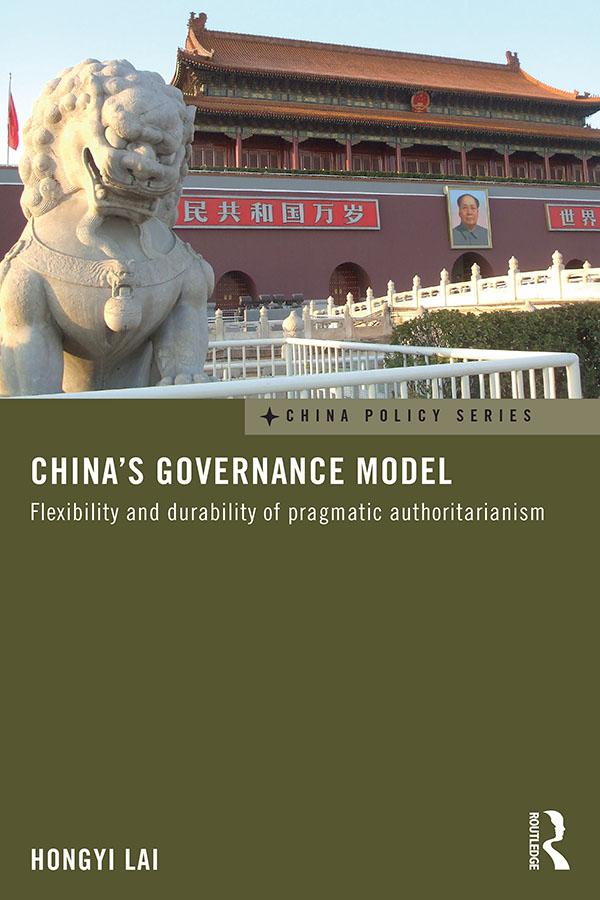
Many studies of government in China either simply describe the political institutions or else focus, critically, on the weaknesses of the system, such as corruption or the absence of Western-style democracy. Authors of these studies fail to appreciate the surprising ability of China’s government to rapidly transform a once impoverished economy and to recover from numerous crises from 1978 to the present. This book, on the other hand, takes a more balanced, more positive view. This view is based on a study of changes in China’s institutions for coping with critical crises in governance since 1978. These changes include better management of leadership succession, better crisis management, improved social welfare, the management of society through treating different social groups differently depending on their potential to rival the Party state, and a variety of limited, intra-party and grassroots democracy. This book applies to the Chinese model the term “pragmatic authoritarianism.” It explains changes to and the likely future direction of China’s governance model. It compares current risks in China’s governance with threats that terminated dynasties and the republic in China over the past four thousand years and concludes that the regime can be expected to survive a considerable period despite its existing flaws.
"Few topics in Chinese politics are as significant as the nature, state and prospects of the political regime. While the topic had been unduly understudied for a long period of time, a young generation of scholars has emerged on this subject. Among others, the book by Hongyi Lai stands out and provides a comprehensive and penetrating analysis on this topic....I am confident that his book will make a significant contribution to the study of Chinese politics and may well define the debate on China’s political development, governance and model for years to come." - Yongnian Zheng, Director, East Asian Institute, National University of Singapore
Before Memmo my notes were scattered across PDFs. Now a workspace pulls everything into one place — I see exactly what's still left to study.
Memmo's summaries are gold before exams. I don't have to re-read 800 pages two weeks before — just the important parts.
The AI chat has saved me the night before an exam more than once. I just keep asking until I get it — no waiting on a study group to reply.
The quizzes hit exactly what I need to know. Memmo tracks what I get stuck on — so I only practice what's worth it.
Flashcards with spaced repetition are magic. Memmo knows when I'm about to forget something and brings it back.
The AI podcasts are my favorite. I listen on my way to school and get a recap without sitting at a computer.

Handbok i kvalitativa metoder
281 kr

Hållbar utveckling: en introduktion för ingenjörer och andra problemlösare
334 kr

Brymans Samhällsvetenskapliga metoder
390 kr

Projektledning
491 kr

Den orättvisa hälsan: om socioekonomiska skillnader i hälsa och livslängd
326 kr

Organizational Leadership
429 kr

Vetenskapsteori för nybörjare
196 kr

På väg mot läraryrket
172 kr

Det sociala livet i skolan: Socialpsykologiska perspektiv
253 kr

Betygsättningens didaktik
151 kr

Personality
402 kr

Studying Leadership
404 kr

Managing Innovation
477 kr

Introduktion till samhällsvetenskaplig metod
347 kr

The Psychology of Sex and Gender
698 kr

Evidens och kunskap för socialt arbete
207 kr

Introduction to Leadership
605 kr