
Before Memmo my notes were scattered across PDFs. Now a workspace pulls everything into one place — I see exactly what's still left to study.
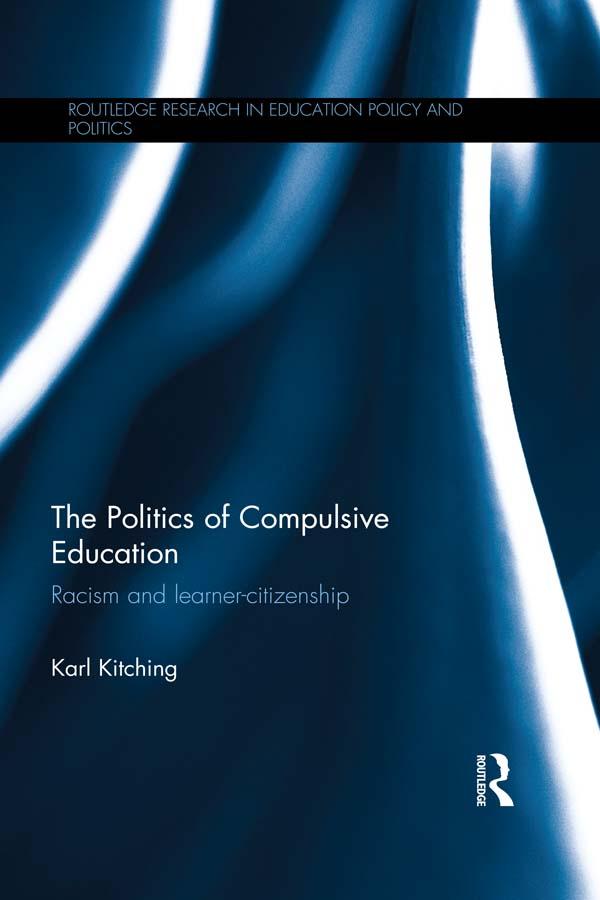
The marketised and securitised shaping of formal education sites in terms of risk prevention strategies have transformed what it means to be a learner and a citizen. In this book, Karl Kitching explores racialised dimensions to suggest how individuals and collectives are increasingly made responsible for their own welfare as ‘good’ or ‘bad’ students, at the expense of the protection of their rights as learner-citizens. Focusing on Ireland as a post-colonial Atlantic state, the book demonstrates how liberal governance, racisms, migration and mass education are interconnected and struggled over at local, national, European and global levels.
Using a variety of qualitative studies and analytic approaches, The Politics of Compulsive Education details the significance of mass education(s) to the ongoing racialisation of national sovereignty. It draws on in-depth historical, policy, media and school-based research, moving from the 19th century to the present day. Chapters explore diverse themes such as student deportation, austerity and the politics of community ‘integration’, the depoliticisation of third level education via international student and ‘quality’ teacher regimes, the racialised distribution of learner ‘ability’, and school-based bullying and harassment. Combined, these studies demonstrate the possibilities and constraints that exist for educational anti-racisms both in terms of social movements and everyday classroom situations.
The Politics of Compulsive Education asks key questions about anti-racist responsibility across multiple education sites and explores how racisms are both shaped, and can be interrupted, by the interaction of the global and the local, as seen in terms of migration, the distribution of capital, media, education policy discourse, and teacher and learner identifications. It will be of interest to researchers, academics and postgraduate students of sociology, education, cultural studies, political theory, philosophy and postcolonial studies.
Before Memmo my notes were scattered across PDFs. Now a workspace pulls everything into one place — I see exactly what's still left to study.
Memmo's summaries are gold before exams. I don't have to re-read 800 pages two weeks before — just the important parts.
The AI chat has saved me the night before an exam more than once. I just keep asking until I get it — no waiting on a study group to reply.
The quizzes hit exactly what I need to know. Memmo tracks what I get stuck on — so I only practice what's worth it.
Flashcards with spaced repetition are magic. Memmo knows when I'm about to forget something and brings it back.
The AI podcasts are my favorite. I listen on my way to school and get a recap without sitting at a computer.

Handbok i kvalitativa metoder
281 kr

Hållbar utveckling: en introduktion för ingenjörer och andra problemlösare
334 kr

Brymans Samhällsvetenskapliga metoder
390 kr

Projektledning
491 kr

Den orättvisa hälsan: om socioekonomiska skillnader i hälsa och livslängd
326 kr

Vetenskapsteori för nybörjare
196 kr

Organizational Leadership
429 kr

På väg mot läraryrket
172 kr

Det sociala livet i skolan: Socialpsykologiska perspektiv
253 kr

Betygsättningens didaktik
151 kr

Personality
402 kr

Studying Leadership
404 kr

Managing Innovation
477 kr

Introduktion till samhällsvetenskaplig metod
347 kr

The Psychology of Sex and Gender
698 kr

Evidens och kunskap för socialt arbete
207 kr

Introduction to Leadership
605 kr