
Before Memmo my notes were scattered across PDFs. Now a workspace pulls everything into one place — I see exactly what's still left to study.
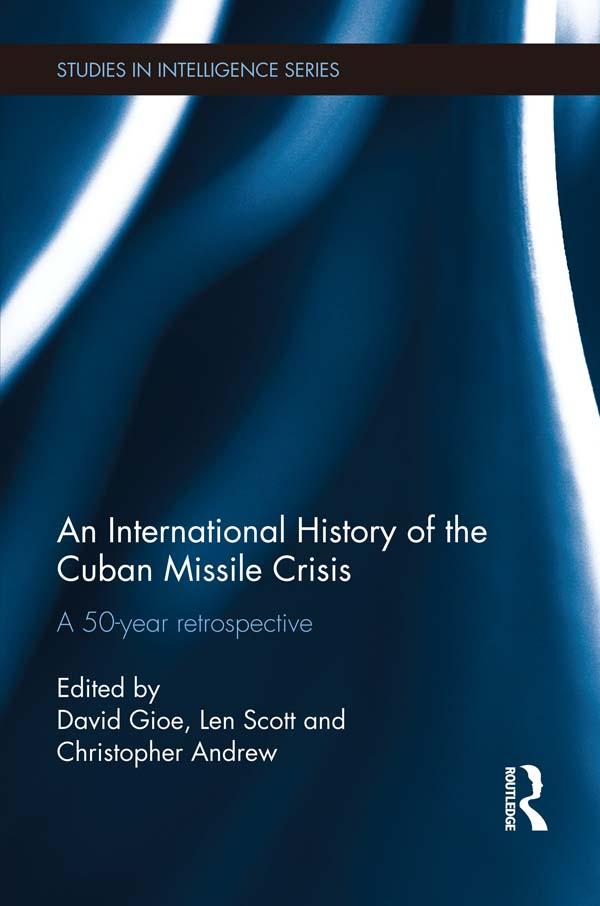
This edited volume addresses the main lessons and legacies of the 1962 Cuban Missile Crisis from a global perspective.
Despite the discoveries of recent research, there is still much more to be revealed about the handling of nuclear weapons before and during the Cuban Missile Crisis (CMC). Featuring contributions from a number of eminent international scholars of nuclear history, intelligence, espionage, political science and Cold War studies, An International History of the Cuban Missile Crisis reviews and reflects on one of the critical moments of the Cold War, focussing on three key areas.
First, the volume highlights the importance of memory as an essential foundation of historical understanding and demonstrates how events that rely only on historical records can provide misleading accounts. This focus on memory extends the scope of the existing literature by exploring hitherto neglected aspects of the CMC, including an analysis of the operational aspects of Bomber Command activity, explored through recollections of the aircrews that challenge accounts based on official records. The editors then go on to explore aspects of intelligence whose achievements and failings have increasingly been recognised to be of central importance to the origins, dynamics and outcomes of the missile crisis. Studies of hitherto neglected organisations such as the US Defense Intelligence Agency (DIA) and the British Joint Intelligence Committee (JIC) both extend our understanding of British and American intelligence machinery in this period and enrich our understanding of key episodes and assessments in the missile crisis. Finally, the book explores the risk of nuclear war and looks at how close we came to nuclear conflict. The risk of inadvertent use of nuclear weapons is evaluated and a new proposed framework for the analysis of nuclear risk put forward.
This volume will be of much interest to students of intelligence studies, international history, foreign policy, security studies and IR in general.
Before Memmo my notes were scattered across PDFs. Now a workspace pulls everything into one place — I see exactly what's still left to study.
Memmo's summaries are gold before exams. I don't have to re-read 800 pages two weeks before — just the important parts.
The AI chat has saved me the night before an exam more than once. I just keep asking until I get it — no waiting on a study group to reply.
The quizzes hit exactly what I need to know. Memmo tracks what I get stuck on — so I only practice what's worth it.
Flashcards with spaced repetition are magic. Memmo knows when I'm about to forget something and brings it back.
The AI podcasts are my favorite. I listen on my way to school and get a recap without sitting at a computer.

Handbok i kvalitativa metoder
281 kr

Hållbar utveckling: en introduktion för ingenjörer och andra problemlösare
334 kr

Brymans Samhällsvetenskapliga metoder
390 kr

Projektledning
491 kr

Den orättvisa hälsan: om socioekonomiska skillnader i hälsa och livslängd
326 kr

Vetenskapsteori för nybörjare
196 kr

Organizational Leadership
429 kr

På väg mot läraryrket
172 kr

Det sociala livet i skolan: Socialpsykologiska perspektiv
253 kr

Betygsättningens didaktik
151 kr

Personality
402 kr

Studying Leadership
404 kr

Managing Innovation
477 kr

Introduktion till samhällsvetenskaplig metod
347 kr

The Psychology of Sex and Gender
698 kr

Evidens och kunskap för socialt arbete
207 kr

Introduction to Leadership
605 kr