
Before Memmo my notes were scattered across PDFs. Now a workspace pulls everything into one place — I see exactly what's still left to study.
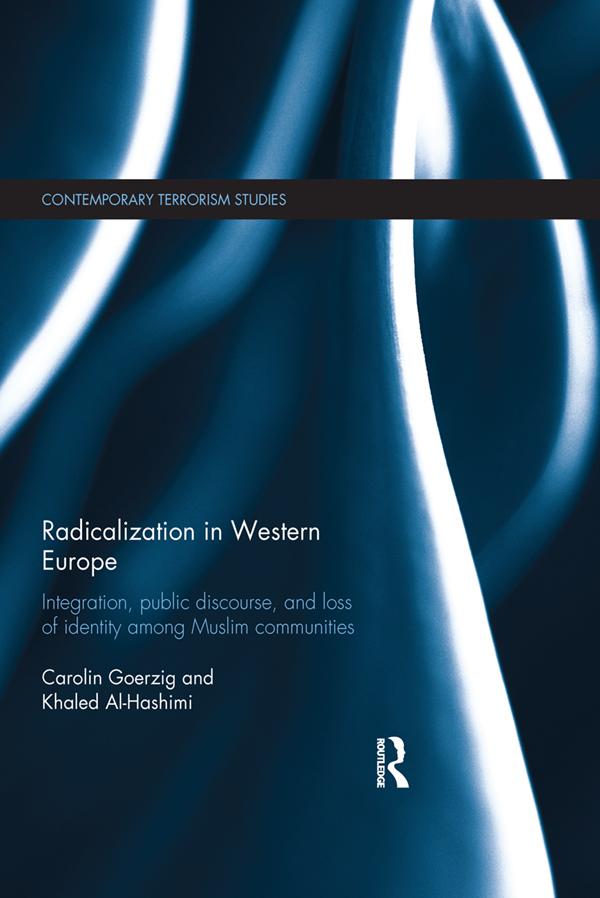
Employing a theoretical framework based on the concept of identity loss, this book seeks to understand why increased integration has stimulated greater radicalization among the Muslim populations in Western Europe.
Through extensive field research in four European countries – the UK, the Netherlands, Germany and France – the authors investigate three key questions: 1) Why are 2nd and 3rd generations of Muslims in Europe more radical than their parents?; 2) Why does Europe experience more "home-grown terrorism" today than thirty or forty years ago?; 3) Why do some European countries feature more radical Muslim communities than others? The book reveals that these three puzzling questions can be solved when analyzing the loss of individuality if the face of integration and identification with European society.
While Individualist and structural approaches fail to explain radicalization of Muslims in Europe, this study, by framing radicalization through coupling the public discourse with identity loss, provides a much needed insight into the process of radicalization. Explaining radicalization and gaining an understanding of the drivers of radicalization is crucial to prevent and mitigate intercultural alienation, to further develop immigration policies, redress integration failures as well as to avoid dangerous oversimplifications. This book contributes not only to understanding why greater integration is matched by increasing radicalization, but its insights also contribute to developing ideas about how radicalization can be prevented or overcome and integration policies can be enhanced.
This book will be of much interest to students of terrorism and counter-terrorism, radical Islam, war and conflict studies, European politics, IR and security studies.
Before Memmo my notes were scattered across PDFs. Now a workspace pulls everything into one place — I see exactly what's still left to study.
Memmo's summaries are gold before exams. I don't have to re-read 800 pages two weeks before — just the important parts.
The AI chat has saved me the night before an exam more than once. I just keep asking until I get it — no waiting on a study group to reply.
The quizzes hit exactly what I need to know. Memmo tracks what I get stuck on — so I only practice what's worth it.
Flashcards with spaced repetition are magic. Memmo knows when I'm about to forget something and brings it back.
The AI podcasts are my favorite. I listen on my way to school and get a recap without sitting at a computer.

Handbok i kvalitativa metoder
281 kr

Hållbar utveckling: en introduktion för ingenjörer och andra problemlösare
334 kr

Brymans Samhällsvetenskapliga metoder
390 kr

Projektledning
491 kr

Den orättvisa hälsan: om socioekonomiska skillnader i hälsa och livslängd
326 kr

Vetenskapsteori för nybörjare
196 kr

Organizational Leadership
429 kr

På väg mot läraryrket
172 kr

Det sociala livet i skolan: Socialpsykologiska perspektiv
253 kr

Betygsättningens didaktik
151 kr

Personality
402 kr

Studying Leadership
404 kr

Managing Innovation
477 kr

Introduktion till samhällsvetenskaplig metod
347 kr

The Psychology of Sex and Gender
698 kr

Evidens och kunskap för socialt arbete
207 kr

Introduction to Leadership
605 kr