
Before Memmo my notes were scattered across PDFs. Now a workspace pulls everything into one place — I see exactly what's still left to study.
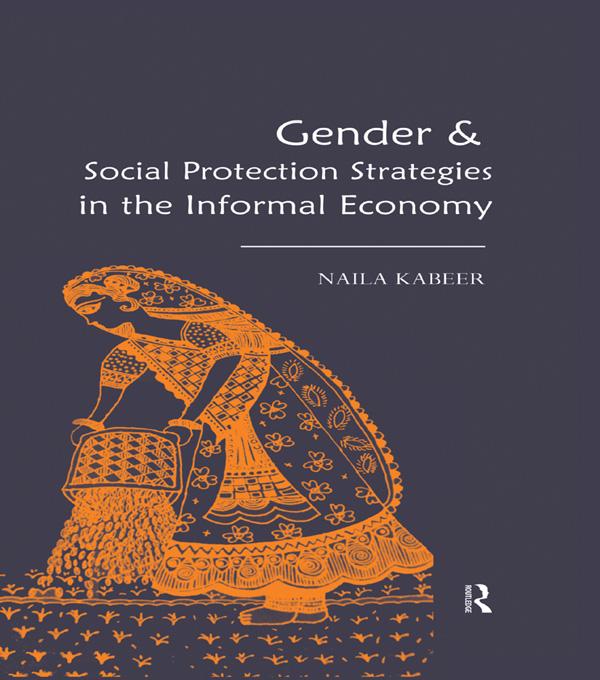
The vast majority of the world’s working women, particularly those from low-income households in developing countries, are located in the informal economy in activities that are casual, poorly paid, irregular and outside the remit of formal social security and protective legislation. This book examines the constraints and barriers which continue to confine women to these forms of work and what this implies for their ability to provide for themselves and their families and to cope with insecurity.
It develops a framework of analysis that integrates gender, life course and livelihoods perspectives in order to explore the interactions between gender inequality, household poverty and labour market forces that help to produce gender-differentiated experiences of risk and vulnerability for the working poor. Drawing on practical experiences from the field, It uses this framework to demonstrate the relevance of a gender-analytical approach to the design and evaluation of a range of social protection measures that are relevant to women at different stages of their life course. These include conditional and unconditional social transfers to reduce child labour and promote children’s education, child care support for working women, financial services for the poor, employment generation through public works and different measures for old age security.
The book stresses the importance of an organised voice for working women if they are to ensure that employers, trade unions and governments respond to their need for socio-economic security. Finally, the book synthesises the main lessons that emerge from the discussion and the linkages between social protection strategies and the broader macro-economic framework.
A book that will be of interest to a wide range of readers—those in the fields of economics, sociology and gender studies, as also activists and policy-makers.
Before Memmo my notes were scattered across PDFs. Now a workspace pulls everything into one place — I see exactly what's still left to study.
Memmo's summaries are gold before exams. I don't have to re-read 800 pages two weeks before — just the important parts.
The AI chat has saved me the night before an exam more than once. I just keep asking until I get it — no waiting on a study group to reply.
The quizzes hit exactly what I need to know. Memmo tracks what I get stuck on — so I only practice what's worth it.
Flashcards with spaced repetition are magic. Memmo knows when I'm about to forget something and brings it back.
The AI podcasts are my favorite. I listen on my way to school and get a recap without sitting at a computer.

Handbok i kvalitativa metoder
281 kr

Hållbar utveckling: en introduktion för ingenjörer och andra problemlösare
334 kr

Brymans Samhällsvetenskapliga metoder
390 kr

Projektledning
491 kr

Den orättvisa hälsan: om socioekonomiska skillnader i hälsa och livslängd
326 kr

Vetenskapsteori för nybörjare
196 kr

Organizational Leadership
429 kr

På väg mot läraryrket
172 kr

Det sociala livet i skolan: Socialpsykologiska perspektiv
253 kr

Betygsättningens didaktik
151 kr

Personality
402 kr

Studying Leadership
404 kr

Managing Innovation
477 kr

Introduktion till samhällsvetenskaplig metod
347 kr

The Psychology of Sex and Gender
698 kr

Evidens och kunskap för socialt arbete
207 kr

Introduction to Leadership
605 kr