
Before Memmo my notes were scattered across PDFs. Now a workspace pulls everything into one place — I see exactly what's still left to study.
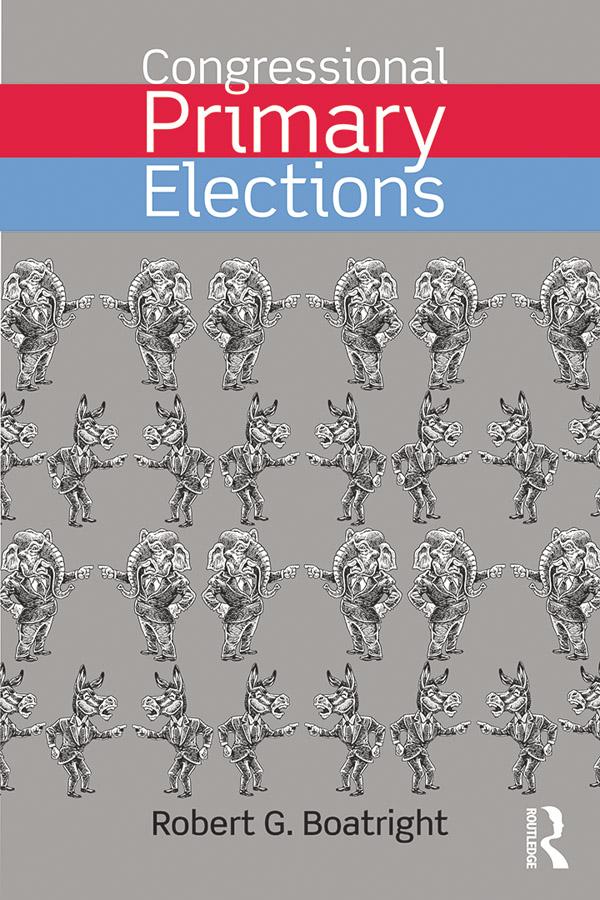
Congressional primaries are increasingly being blamed for polarization and gridlock in Congress. Most American states adopted congressional primaries during the first decades of the 20th century as a means of breaking the hold of political "bosses" on the nomination of candidates. Yet now, many contend that primaries have become a means by which the most dedicated party activists choose candidates unrepresentative of the electorate, and so general election voters are forced to choose between two ideologically extreme candidates. Consequently, there have been recent instances in both parties where nominees were chosen who were clearly not preferred by party leaders, and who arguably lost elections that their parties should have won.
This book is the first to focus solely upon congressional primary elections, and to do so for a student readership. Boatright organizes his text around the contention that there are important differences between types of primaries, and these differences prevent us from making blanket statements about primary competition. He focuses on explanations of two sources of difference: differences in electoral structure and differences brought about by the presence or absence of an incumbent seeking reelection. The first three chapters introduce these differences, explore how they came to exist, and outline some of the strategic considerations for candidates, parties, interest groups, and voters in primary elections. The subsequent four chapters explore different types of primary elections, and the final chapter evaluates actual and proposed primary reforms.
Congressional Primary Elections is the first book to provide a history and analysis of congressional primary elections and will serve as a crucial part of courses on political parties and campaigns and elections. The book gives students the tools for understanding arguments for and against the reform of primary elections and for understanding the differences between types of primaries.
Before Memmo my notes were scattered across PDFs. Now a workspace pulls everything into one place — I see exactly what's still left to study.
Memmo's summaries are gold before exams. I don't have to re-read 800 pages two weeks before — just the important parts.
The AI chat has saved me the night before an exam more than once. I just keep asking until I get it — no waiting on a study group to reply.
The quizzes hit exactly what I need to know. Memmo tracks what I get stuck on — so I only practice what's worth it.
Flashcards with spaced repetition are magic. Memmo knows when I'm about to forget something and brings it back.
The AI podcasts are my favorite. I listen on my way to school and get a recap without sitting at a computer.

Handbok i kvalitativa metoder
281 kr

Hållbar utveckling: en introduktion för ingenjörer och andra problemlösare
334 kr

Brymans Samhällsvetenskapliga metoder
390 kr

Projektledning
491 kr

Den orättvisa hälsan: om socioekonomiska skillnader i hälsa och livslängd
326 kr

Vetenskapsteori för nybörjare
196 kr

Organizational Leadership
429 kr

På väg mot läraryrket
172 kr

Det sociala livet i skolan: Socialpsykologiska perspektiv
253 kr

Betygsättningens didaktik
151 kr

Personality
402 kr

Studying Leadership
404 kr

Managing Innovation
477 kr

Introduktion till samhällsvetenskaplig metod
347 kr

The Psychology of Sex and Gender
698 kr

Evidens och kunskap för socialt arbete
207 kr

Introduction to Leadership
605 kr