
Before Memmo my notes were scattered across PDFs. Now a workspace pulls everything into one place — I see exactly what's still left to study.
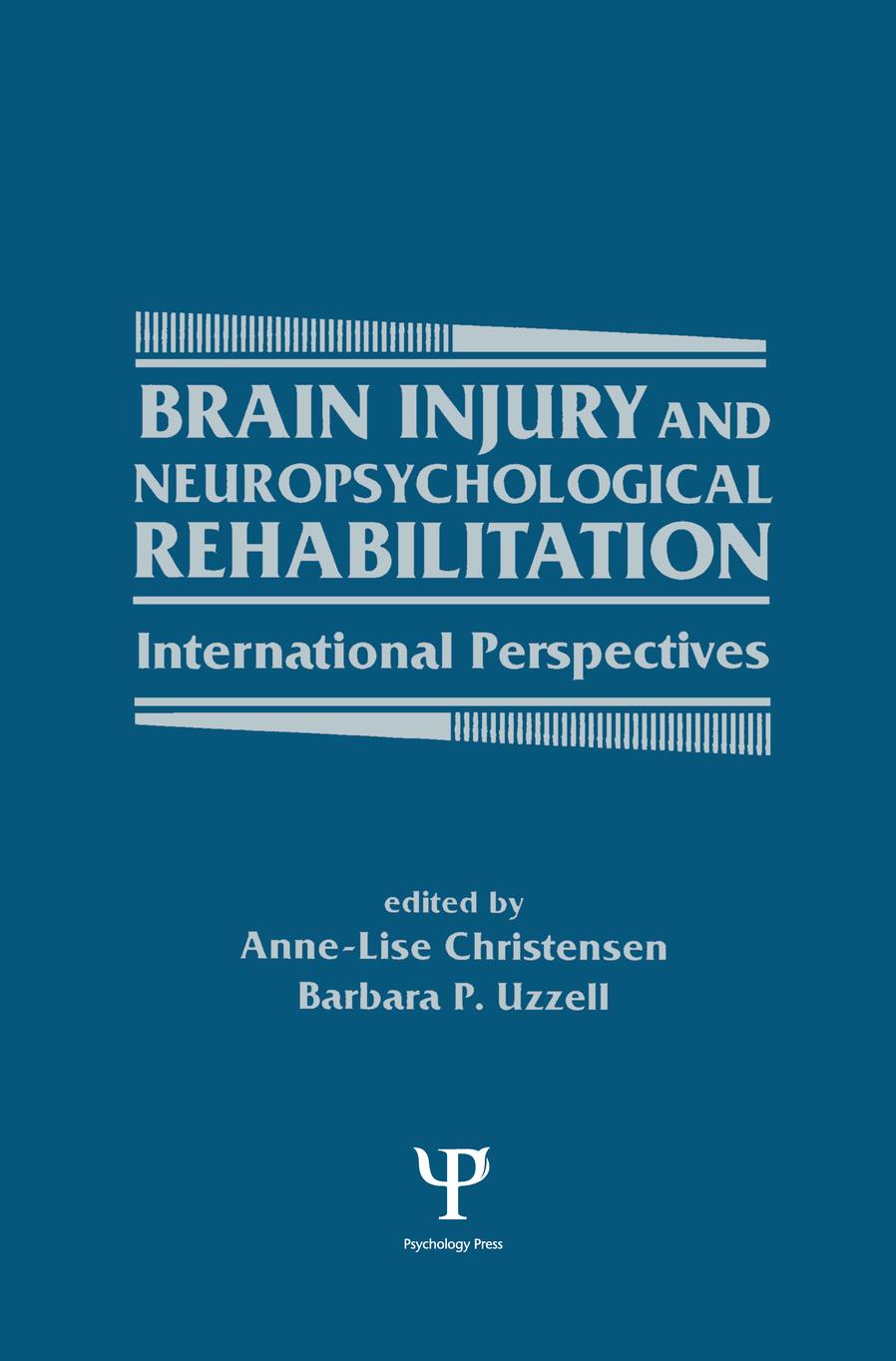
Most individuals with brain damage experience a curtailment or loss of lifestyle without rehabilitation. Improved methods and appropriately timed medical interventions now make it possible for more individuals to survive brain insults and to be assisted by rehabilitation neuropsychologists in achieving renewed commitment to life. Damage to the brain -- the organ of human emotions and cognition -- reduces psychological functioning and realistic adaptation, and the patient and his/her family are often encapsulated in the time prior to injury. To regain part or most of the lifestyle lost, an honest, dedicated, and realistic approach is required. Neuropsychological rehabilitation can provide tools for this task, provided that the most comprehensive, elaborate and knowledge-based methods are integrated in the training, and provided that knowledge from many disciplines and from community environments and family is encompassed.
In the present book knowledge representing the development of neuropsychological rehabilitation during the past five years is collected from a conference titled "Progress in Neuropsychological Rehabilitation." The chapters are written by professionals who were invited to share their experiences from different areas within the field because of their expertise with processes involved in neuropsychological rehabilitation. After a historical review, the chapters follow a visible sequence from biology to neuropsychology and neuropharmacology. Experts discuss the most advanced medical knowledge of the effect of injury on states of the organism. The second part of the book is dedicated to the outcome and the economics of rehabilitation as well as plans for the future. Finally, a panel discussion addresses the overall concept: Is rehabilitation worthwhile and ethical? The reactions -- influenced by the cross-cultural exchange of knowledge -- shed light on the essence and practice of today's neurorehabilitation.
Before Memmo my notes were scattered across PDFs. Now a workspace pulls everything into one place — I see exactly what's still left to study.
Memmo's summaries are gold before exams. I don't have to re-read 800 pages two weeks before — just the important parts.
The AI chat has saved me the night before an exam more than once. I just keep asking until I get it — no waiting on a study group to reply.
The quizzes hit exactly what I need to know. Memmo tracks what I get stuck on — so I only practice what's worth it.
Flashcards with spaced repetition are magic. Memmo knows when I'm about to forget something and brings it back.
The AI podcasts are my favorite. I listen on my way to school and get a recap without sitting at a computer.

Handbok i kvalitativa metoder
281 kr

Hållbar utveckling: en introduktion för ingenjörer och andra problemlösare
334 kr

Brymans Samhällsvetenskapliga metoder
390 kr

Projektledning
491 kr

Den orättvisa hälsan: om socioekonomiska skillnader i hälsa och livslängd
326 kr

Vetenskapsteori för nybörjare
196 kr

Organizational Leadership
429 kr

På väg mot läraryrket
172 kr

Det sociala livet i skolan: Socialpsykologiska perspektiv
253 kr

Betygsättningens didaktik
151 kr

Personality
402 kr

Studying Leadership
404 kr

Managing Innovation
477 kr

Introduktion till samhällsvetenskaplig metod
347 kr

The Psychology of Sex and Gender
698 kr

Evidens och kunskap för socialt arbete
207 kr

Introduction to Leadership
605 kr