
Before Memmo my notes were scattered across PDFs. Now a workspace pulls everything into one place — I see exactly what's still left to study.
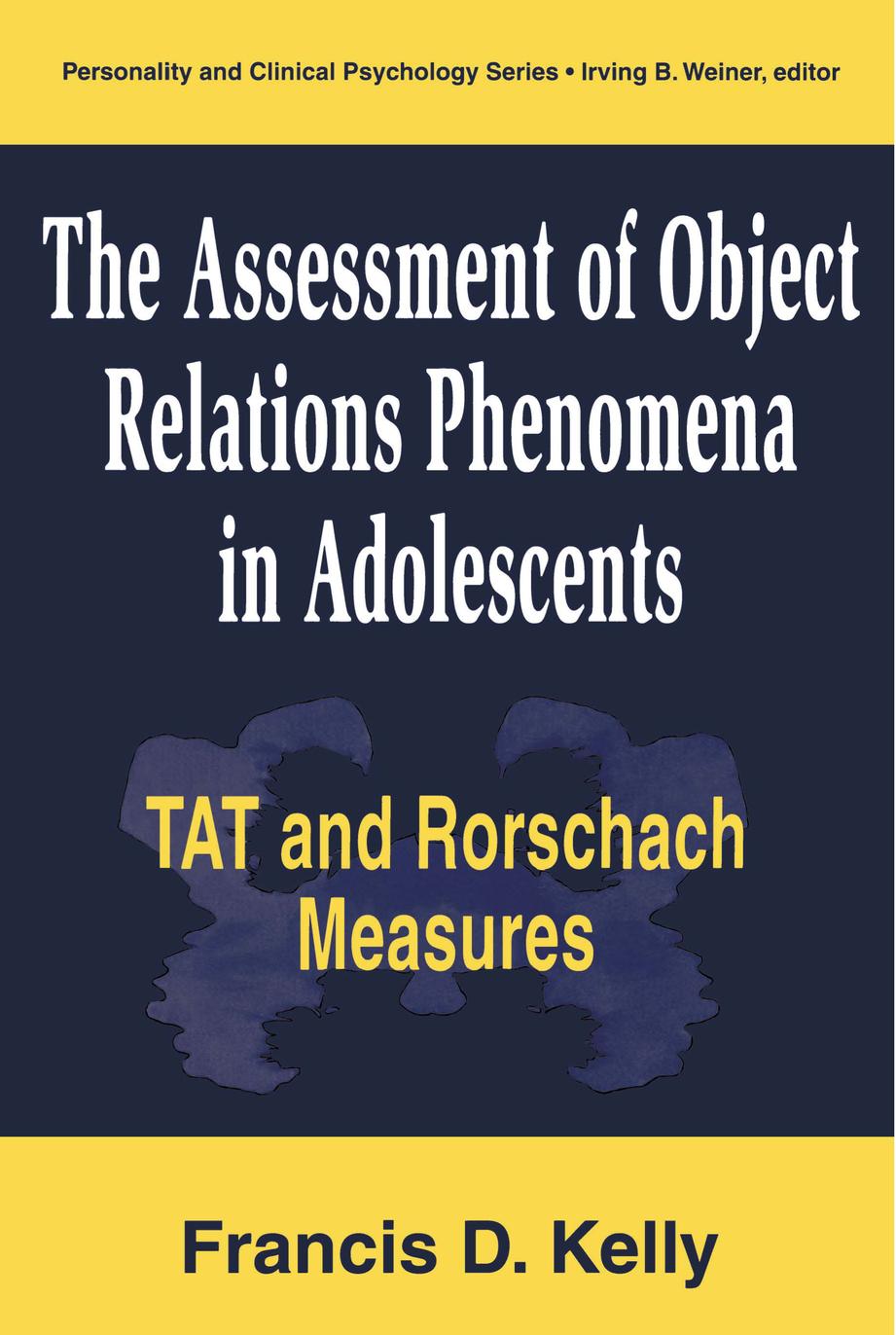
This book offers clinicians a long-awaited comprehensive paradigm for assessing object relations functioning in disturbed younger and older adolescents. It gives a clear sense of how object relations functioning is manifest in different disorders, and illuminates how scores on object relations measures are converted into a therapeutically relevant diagnostic matrix and formulation.
Outlining the process of object relations assessment, Kelly presents vividly detailed cases of a range of disorders including anorexia nervosa, borderline states, depressive disorders, and trauma. The cases portray the vicissitudes of object relations functioning and disruption that result in a unique structural developmental composite for a given adolescent.
A major concern is demonstrating the utility and validity of two object representation measures--The Mutuality of Autonomy Scale (MOA) and The Social Cognition Object Relations Scale (SCORS)--that are the main ones employed in the assessment of adolescents. MOA and SCORS scores facilitate a multidimensional understanding of the nuances of an adolescent's object relations functioning, and provide clinicians with organized, theory-based data leading to clear, specific treatment directions and guidelines and appropriate therapeutic programming. The book addresses the following questions:
* Is individual psychotherapy indicated--will this adolescent benefit from an insight-oriented approach?
* What are the likely directions that transference parameters will take in the treatment?
* What types of countertransference reactions are likely to be anticipated in a given patient?
* Is medication likely to be helpful in making this adolescent more accessible for treatment?
Focusing only on adolescents, covering both the TAT and the Rorschach, and utilizing object relations theory as its major interpretive foundation, the book offers practitioners an alternative to general references based on a more actuarial, nomothetic, and atheoretical interpretive approach. It reflects one school of contemporary thought in projective assessment--one that advocates a more phenomenological, theory-based approach to test application and interpretation.
Before Memmo my notes were scattered across PDFs. Now a workspace pulls everything into one place — I see exactly what's still left to study.
Memmo's summaries are gold before exams. I don't have to re-read 800 pages two weeks before — just the important parts.
The AI chat has saved me the night before an exam more than once. I just keep asking until I get it — no waiting on a study group to reply.
The quizzes hit exactly what I need to know. Memmo tracks what I get stuck on — so I only practice what's worth it.
Flashcards with spaced repetition are magic. Memmo knows when I'm about to forget something and brings it back.
The AI podcasts are my favorite. I listen on my way to school and get a recap without sitting at a computer.

Handbok i kvalitativa metoder
281 kr

Hållbar utveckling: en introduktion för ingenjörer och andra problemlösare
334 kr

Brymans Samhällsvetenskapliga metoder
390 kr

Projektledning
491 kr

Den orättvisa hälsan: om socioekonomiska skillnader i hälsa och livslängd
326 kr

Vetenskapsteori för nybörjare
196 kr

Organizational Leadership
429 kr

På väg mot läraryrket
172 kr

Det sociala livet i skolan: Socialpsykologiska perspektiv
253 kr

Betygsättningens didaktik
151 kr

Personality
402 kr

Studying Leadership
404 kr

Managing Innovation
477 kr

Introduktion till samhällsvetenskaplig metod
347 kr

The Psychology of Sex and Gender
698 kr

Evidens och kunskap för socialt arbete
207 kr

Introduction to Leadership
605 kr