
Before Memmo my notes were scattered across PDFs. Now a workspace pulls everything into one place — I see exactly what's still left to study.
Recent work in cognitive science, much of it placed in opposition to a computational view of the mind, has argued that the concept of representation and theories based on that concept are not sufficient to explain the details of cognitive processing. These attacks on representation have focused on the importance of context sensitivity in cognitive processing, on the range of individual differences in performance, and on the relationship between minds and the bodies and environments in which they exist. In each case, models based on traditional assumptions about representation have been assumed to be too rigid to account for the effects of these factors on cognitive processing. In place of a representational view of mind, other formalisms and methodologies, such as nonlinear differential equations (or dynamical systems) and situated robotics, have been proposed as better explanatory tools for understanding cognition.
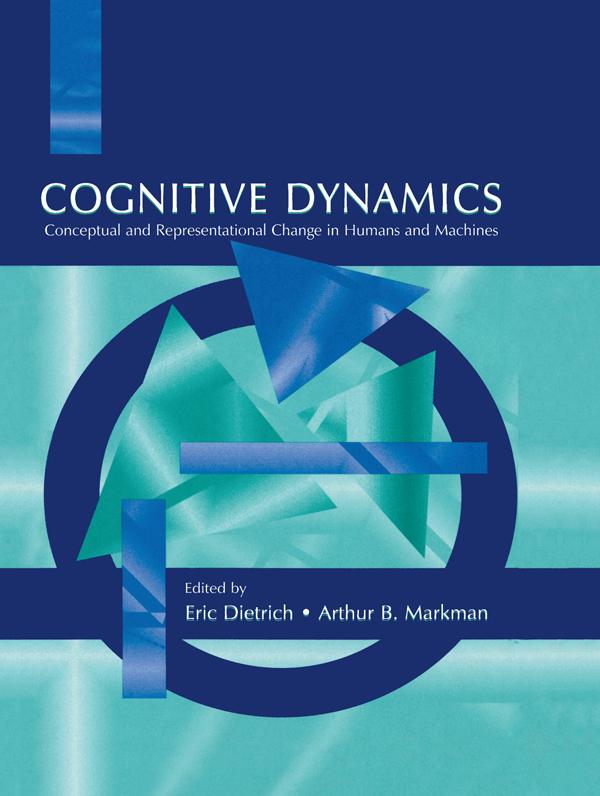
This book is based on the notion that, while new tools and approaches for understanding cognition are valuable, representational approaches do not need to be abandoned in the course of constructing new models and explanations. Rather, models that incorporate representation are quite compatible with the kinds of complex situations being modeled with the new methods. This volume illustrates the power of this explicitly representational approach--labeled "cognitive dynamics"--in original essays by prominent researchers in cognitive science. Each chapter explores some aspect of the dynamics of cognitive processing while still retaining representations as the centerpiece of the explanations of the key phenomena. These chapters serve as an existence proof that representation is not incompatible with the dynamics of cognitive processing. The book is divided into sections on foundational issues about the use of representation in cognitive science, the dynamics of low level cognitive processes (such as visual and auditory perception and simple lexical priming), and the dynamics of higher cognitive processes (including categorization, analogy, and decision making).
Before Memmo my notes were scattered across PDFs. Now a workspace pulls everything into one place — I see exactly what's still left to study.
Memmo's summaries are gold before exams. I don't have to re-read 800 pages two weeks before — just the important parts.
The AI chat has saved me the night before an exam more than once. I just keep asking until I get it — no waiting on a study group to reply.
The quizzes hit exactly what I need to know. Memmo tracks what I get stuck on — so I only practice what's worth it.
Flashcards with spaced repetition are magic. Memmo knows when I'm about to forget something and brings it back.
The AI podcasts are my favorite. I listen on my way to school and get a recap without sitting at a computer.

Handbok i kvalitativa metoder
281 kr

Hållbar utveckling: en introduktion för ingenjörer och andra problemlösare
334 kr

Brymans Samhällsvetenskapliga metoder
390 kr

Projektledning
491 kr

Den orättvisa hälsan: om socioekonomiska skillnader i hälsa och livslängd
326 kr

Vetenskapsteori för nybörjare
196 kr

Organizational Leadership
429 kr

På väg mot läraryrket
172 kr

Det sociala livet i skolan: Socialpsykologiska perspektiv
253 kr

Betygsättningens didaktik
151 kr

Personality
402 kr

Studying Leadership
404 kr

Managing Innovation
477 kr

Introduktion till samhällsvetenskaplig metod
347 kr

The Psychology of Sex and Gender
698 kr

Evidens och kunskap för socialt arbete
207 kr

Introduction to Leadership
605 kr