
Before Memmo my notes were scattered across PDFs. Now a workspace pulls everything into one place — I see exactly what's still left to study.
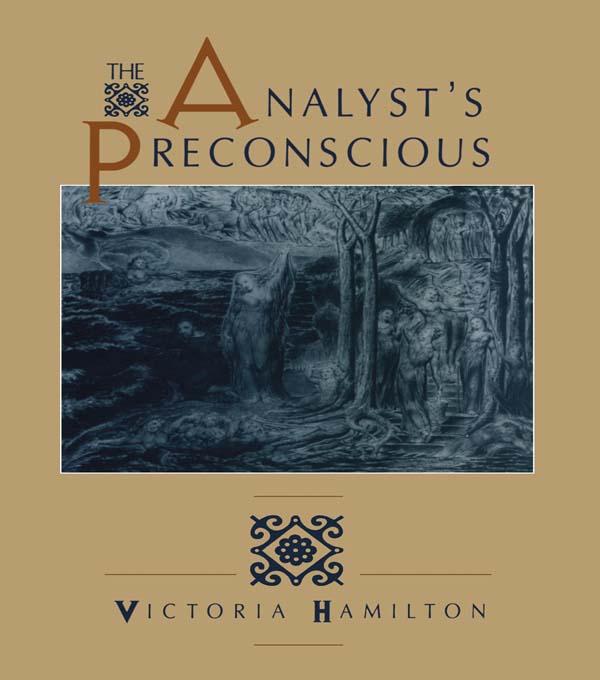
How do the analyst's consciously held theoretical commitments intersect with the actual conduct of analysis? Do commitments to notions like "psychic truth" or "analytic neutrality" affect interpretive style, the willingness to acknowledge treatment mistakes, and other pragmatic preferences? Does the commitment to cerain comcepts entail commitment to related ideas and practices to the exclusion of others?
This is the uncharted domain that Victoria Hamilton explores in The Analyst's Preconscious. At the heart of her endeavor is an imaginatively conceived empirical investigation revolving around in-depth interviews with 65 leading analysts in the United States and Britain. In these lively and free-ranging discussions, the reader encounter firsthand the thoughtfulness with which practitioners wrestle with the ambiguous relations between various theoretical positions, whether or not their own, and the exigencies of the therapeutic encounter.
The result is a uniquely detailed map of contemporary psychoanalysis. Hamilton documents the existence of different analytic cultures, each shaped by a need to maintain inner consistency among fundamental assumptions and also by extratheoretical factors, including geography, collegial experiences, and exposure to particular teachers and supervisors.
A major contribution to understanding the pluralism of contemporary psychoanalysis, The Analyst's Preconscious is also a celebration of the dedication and sensitivity with which contemporary analysts seek to organize their therapeutic practices amidst the welter of proliferating concepts and rival schools of thought. Coming at a critical juncture in the history of the field, this work is indispensable to all who care about psychoanalytic culture and psychoanalytic practice, and especially about the analyst's real-world adaptation to the theoretical turbulence of our time.
Before Memmo my notes were scattered across PDFs. Now a workspace pulls everything into one place — I see exactly what's still left to study.
Memmo's summaries are gold before exams. I don't have to re-read 800 pages two weeks before — just the important parts.
The AI chat has saved me the night before an exam more than once. I just keep asking until I get it — no waiting on a study group to reply.
The quizzes hit exactly what I need to know. Memmo tracks what I get stuck on — so I only practice what's worth it.
Flashcards with spaced repetition are magic. Memmo knows when I'm about to forget something and brings it back.
The AI podcasts are my favorite. I listen on my way to school and get a recap without sitting at a computer.

Handbok i kvalitativa metoder
281 kr

Hållbar utveckling: en introduktion för ingenjörer och andra problemlösare
334 kr

Brymans Samhällsvetenskapliga metoder
390 kr

Projektledning
491 kr

Den orättvisa hälsan: om socioekonomiska skillnader i hälsa och livslängd
326 kr

Organizational Leadership
429 kr

Vetenskapsteori för nybörjare
196 kr

På väg mot läraryrket
172 kr

Det sociala livet i skolan: Socialpsykologiska perspektiv
253 kr

Betygsättningens didaktik
151 kr

Personality
402 kr

Studying Leadership
404 kr

Managing Innovation
477 kr

Introduktion till samhällsvetenskaplig metod
347 kr

The Psychology of Sex and Gender
698 kr

Evidens och kunskap för socialt arbete
207 kr

Introduction to Leadership
605 kr