
Before Memmo my notes were scattered across PDFs. Now a workspace pulls everything into one place — I see exactly what's still left to study.
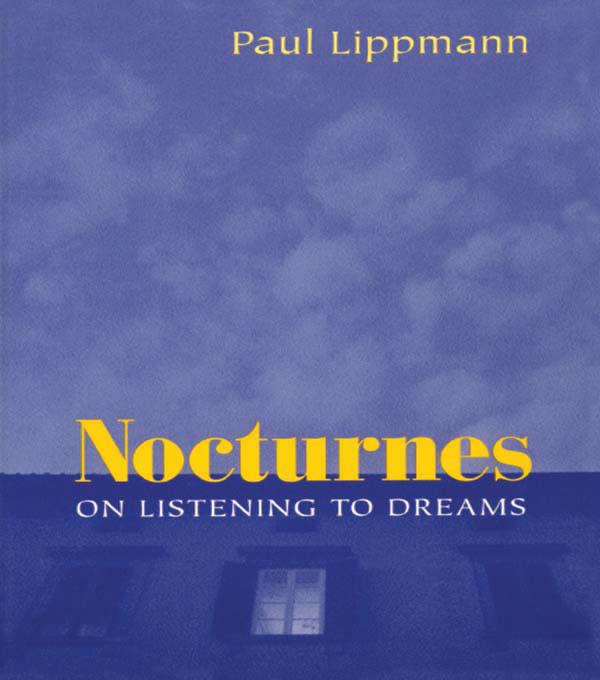
Nocturnes, literally music for the night, is a delightfully impressionistic investigation into everything that is not known, and perhaps can never be known, about dreams. Rather than espousing yet another strategy of dream interpretation, Lippmann proffers a naturalistic approach appreciative of the playful, complex, even zany creativity embodied in dreams. He urges us, that is, to apprehend dreams on their own terms, in a manner that enables patients actually to experience the unconscious in its radical difference from waking thought.
Lippmann delivers on his agenda lightly, with a sense of humor and practicality that will engage lay readers as well as analysts and therapists. He takes up questions of general interest that challenge us to reorient our thinking about dreams: How do children learn about dreams and their telling? Why are most dreams forgotten? How may we understand dreams about sleeping and waking, even dreams about dreaming? And he reengages issues of perennial interest to analytic therapists: dream disguise, dream forgetting, the "companionship" of dreams, the neurotic dream expert, and the therapist's management of his or her own anxiety when patients report their dreams.
"Oh, I had a dream last night," the patient remembers. Too often, observes Lippmann, this remark signals the beginning of an unfortunate struggle, as the patient is called on to relate something that changes when it is put into words, the analyst is put on the spot to come up with an interpretation, and both are asked to extract something immediately useful - and lately, cost effective - from something that partakes of magic and mystery. How silly this ritual is, Lippmann argues, and how alien to the nature of the dream itself. After reading Nocturnes, no clinician, from the novice to the most senior, will hear the words "Oh, I had a dream last night" in quite the same way.
Before Memmo my notes were scattered across PDFs. Now a workspace pulls everything into one place — I see exactly what's still left to study.
Memmo's summaries are gold before exams. I don't have to re-read 800 pages two weeks before — just the important parts.
The AI chat has saved me the night before an exam more than once. I just keep asking until I get it — no waiting on a study group to reply.
The quizzes hit exactly what I need to know. Memmo tracks what I get stuck on — so I only practice what's worth it.
Flashcards with spaced repetition are magic. Memmo knows when I'm about to forget something and brings it back.
The AI podcasts are my favorite. I listen on my way to school and get a recap without sitting at a computer.

Handbok i kvalitativa metoder
281 kr

Hållbar utveckling: en introduktion för ingenjörer och andra problemlösare
334 kr

Brymans Samhällsvetenskapliga metoder
390 kr

Projektledning
491 kr

Den orättvisa hälsan: om socioekonomiska skillnader i hälsa och livslängd
326 kr

Organizational Leadership
429 kr

Vetenskapsteori för nybörjare
196 kr

På väg mot läraryrket
172 kr

Det sociala livet i skolan: Socialpsykologiska perspektiv
253 kr

Betygsättningens didaktik
151 kr

Personality
402 kr

Studying Leadership
404 kr

Managing Innovation
477 kr

Introduktion till samhällsvetenskaplig metod
347 kr

The Psychology of Sex and Gender
698 kr

Evidens och kunskap för socialt arbete
207 kr

Introduction to Leadership
605 kr