
Before Memmo my notes were scattered across PDFs. Now a workspace pulls everything into one place — I see exactly what's still left to study.
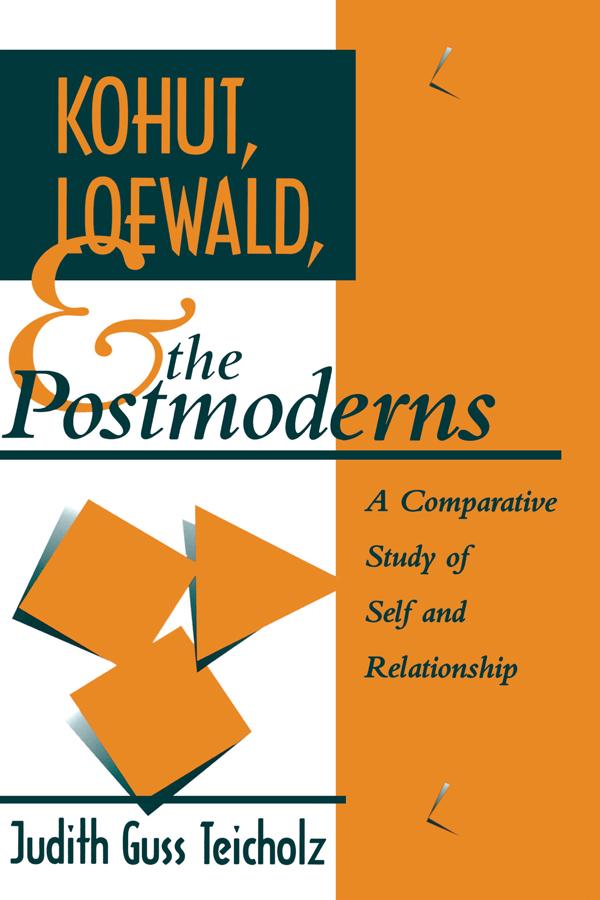
In Kohut, Loewald, and the Postmoderns, Judith Teicholz, using the contemporary critique of Kohut and Loewald as a touchstone of inquiry into the current status of psychoanalysis, focuses on a select group of postmodern theorists whose recent writings comprise a questioning subtext to Kohut's and Loewald's ideas. Acutely aware of the important differences among these theorists, Teicholz nonetheless believes that their respective contributions, which present psychoanalysis as an interactive process in which the analyst's own subjectivity plays a constitutive role in the joint construction of meanings, achieve shared significance as a postmodern critique of Kohut and Loewald. She is especially concerned with the relationship - both theoretically and technically -between Kohut's emphasis on the analyst's empathic resonance with the analysand's viewpoint and affect, and the postmodern theorists' shared insistence on the expression of the analyst's own subjectivity in the treatment situation.
Her analysis incorporates fine insight into the tensions and ambiguities in Kohut and Loewald, whose work ultimately emerges as a way station between modern and postmodern viewpoints, and her appreciation of Kohut and Loewald as transitional theorists makes for an admirably even-handed exposition. She emphasizes throughout the various ways in which Kohut and Loewald gave nascent expression to postmodern attitudes, but she is no less appreciative of the originality of postmodern theorists, who address genuine lacunae in the thought and writings of these exemplars of an earlier generation.
Teicholz's examination of what she terms two overlapping "partial revolutions" in psychoanalysis - that of Kohut and Loewald on one hand and of the postmoderns on the other - throws an illuminating searchlight on the path psychoanalysis has traveled over the last quarter of the 20th century.
Before Memmo my notes were scattered across PDFs. Now a workspace pulls everything into one place — I see exactly what's still left to study.
Memmo's summaries are gold before exams. I don't have to re-read 800 pages two weeks before — just the important parts.
The AI chat has saved me the night before an exam more than once. I just keep asking until I get it — no waiting on a study group to reply.
The quizzes hit exactly what I need to know. Memmo tracks what I get stuck on — so I only practice what's worth it.
Flashcards with spaced repetition are magic. Memmo knows when I'm about to forget something and brings it back.
The AI podcasts are my favorite. I listen on my way to school and get a recap without sitting at a computer.

Handbok i kvalitativa metoder
281 kr

Hållbar utveckling: en introduktion för ingenjörer och andra problemlösare
334 kr

Brymans Samhällsvetenskapliga metoder
390 kr

Projektledning
491 kr

Den orättvisa hälsan: om socioekonomiska skillnader i hälsa och livslängd
326 kr

Vetenskapsteori för nybörjare
196 kr

Organizational Leadership
429 kr

På väg mot läraryrket
172 kr

Det sociala livet i skolan: Socialpsykologiska perspektiv
253 kr

Betygsättningens didaktik
151 kr

Personality
402 kr

Studying Leadership
404 kr

Managing Innovation
477 kr

Introduktion till samhällsvetenskaplig metod
347 kr

The Psychology of Sex and Gender
698 kr

Evidens och kunskap för socialt arbete
207 kr

Introduction to Leadership
605 kr