
Before Memmo my notes were scattered across PDFs. Now a workspace pulls everything into one place — I see exactly what's still left to study.
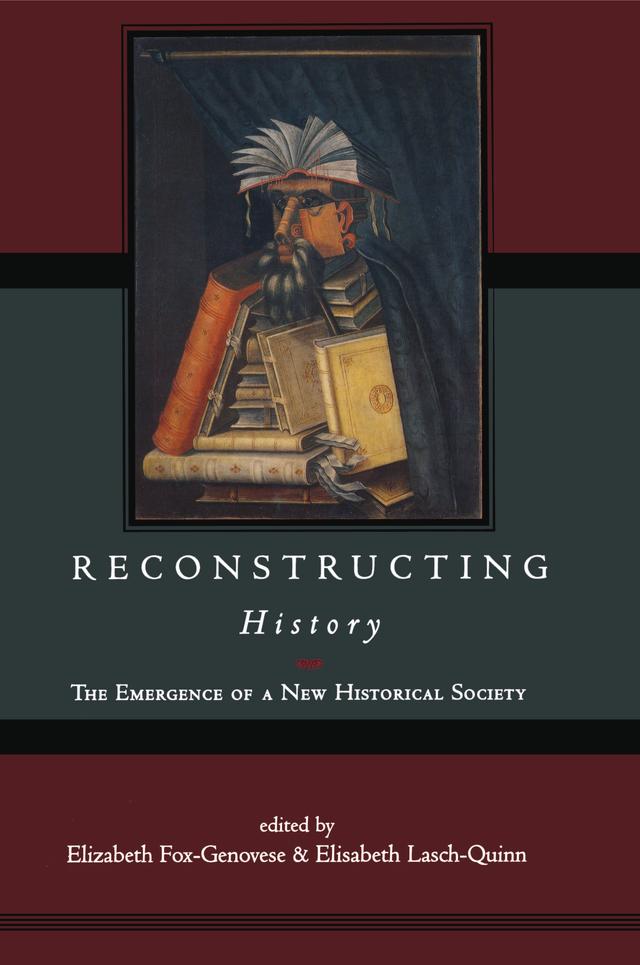
In May 1997, a group of distinguished historians announced the formation of the Historical Society, an organization that sought to be free of the jargon-laden debates and political agendas that have come to characterize the profession. Eugene Genovese, Prsident of the Society, explained the commitment to form a new and genuinely diverse organization. "The Society extends from left to right and embraces people of every ideological and political tendency. The Society promotes frank debate in an atmosphere of civility, mutual respect, and common courtesy. All we require is that participants lay down plausible premises; reason logically; appeal to evidence; and prepare to exchange criticism with those who hold different points of view. Our goal: to promote an integrated history accessible to the public." From those beginnings, the Society has grown to include hundreds of members from every level of the profession, from Pulitzer-prize winning scholars to graduate students, across the ideological and political spectrum.
In this first book from the Historical Society, several founding members explore central topics within the field; the enduring value of the practice of history; the sensitive use of historical records, sources, and archives; the value of common standards; and much more. An engaging and challenging work that will appeal to scholars, students, educators, and the many public readers who have become lost in the culture wars, Reconstructing History is sure to generate the kind of civil, reasoned debate that is a foundational goal of the Historical Society.
Contributors include Walter A. McDougall, Marc Trachtenberg, Alan Charles Kors, Deborah A. Symonds, Leo P. Ribuffo, Bruce Kuklick, Elizabeth Fox-Genovese, Gertrude Himmelfarb, Edward Berkowitz, John Patrick Diggins, John Womack, Victor Davis Hanson, Miriam R. Levin, Martin J. Sklar, Eugene D. Genovese, Daniel C. Littlefield, Elisabeth Lasch-Quinn, Russell Jacoby, Rochelle Gurstein, Paul Rahe, Donald Kagan, Diane Ravitch, Sean Wilentz, Louis Ferleger and Richard H. Steckel.
Before Memmo my notes were scattered across PDFs. Now a workspace pulls everything into one place — I see exactly what's still left to study.
Memmo's summaries are gold before exams. I don't have to re-read 800 pages two weeks before — just the important parts.
The AI chat has saved me the night before an exam more than once. I just keep asking until I get it — no waiting on a study group to reply.
The quizzes hit exactly what I need to know. Memmo tracks what I get stuck on — so I only practice what's worth it.
Flashcards with spaced repetition are magic. Memmo knows when I'm about to forget something and brings it back.
The AI podcasts are my favorite. I listen on my way to school and get a recap without sitting at a computer.

Handbok i kvalitativa metoder
281 kr

Hållbar utveckling: en introduktion för ingenjörer och andra problemlösare
334 kr

Brymans Samhällsvetenskapliga metoder
390 kr

Projektledning
491 kr

Den orättvisa hälsan: om socioekonomiska skillnader i hälsa och livslängd
326 kr

Organizational Leadership
429 kr

Vetenskapsteori för nybörjare
196 kr

På väg mot läraryrket
172 kr

Det sociala livet i skolan: Socialpsykologiska perspektiv
253 kr

Betygsättningens didaktik
151 kr

Personality
402 kr

Studying Leadership
404 kr

Managing Innovation
477 kr

Introduktion till samhällsvetenskaplig metod
347 kr

The Psychology of Sex and Gender
698 kr

Evidens och kunskap för socialt arbete
207 kr

Introduction to Leadership
605 kr