
Before Memmo my notes were scattered across PDFs. Now a workspace pulls everything into one place — I see exactly what's still left to study.
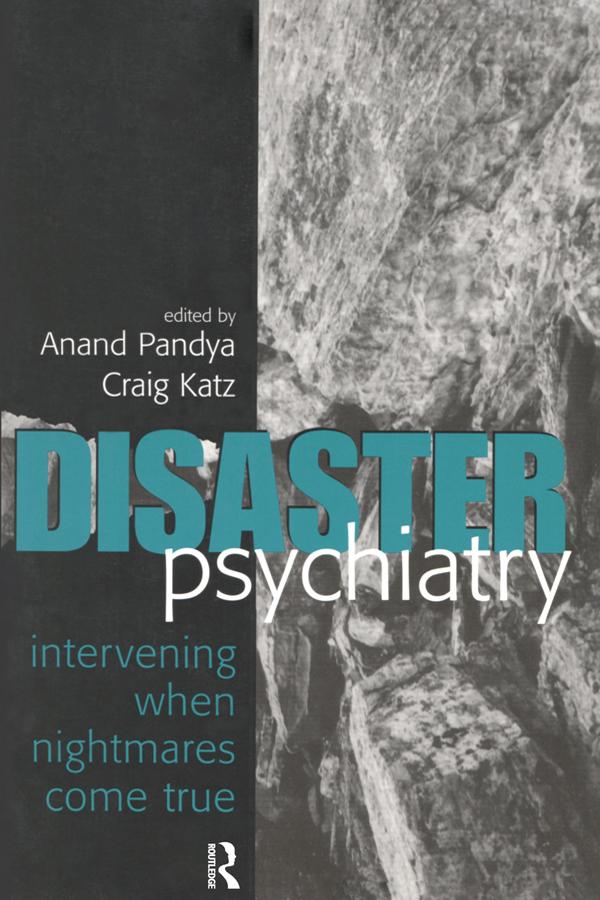
Disaster Psychiatry: Intervening When Nightmares Come True captures the state of disaster psychiatry in the aftermath of the terrorist attacks of September 11, 2001. This emergent psychiatric specialty, which is increasingly separated from trauma and grief psychiatry on one hand and military psychiatry on the other, provides psychotherapeutic assistance to victims during, and in the weeks and months following, major disasters. As such, disaster psychiatrists must operate in the widely varying locales in which natural and man-made disasters occur, and they must establish their role among the chaotic array of organizations involved in direct disaster response.
Editors Anand Pandya and Craig Katz have captured the challenge and promise of disaster psychiatry through first-person narratives. We hear from psychiatrists who have encountered disasters at various stages of their career and in widely varying social, political, and personal contexts. Accounts of psychiatric involvement with adults and children during and after 9/11 have understandable pride of place in this collection. But they are balanced by richly informative narratives about other domestic and international disasters.
Fraught with the drama attendant to the events they describe, these essays delineate the dizzying array of challenges that confront the disaster psychiatrist. They range from the intense emotional responses that are part of the aftermath of any disaster, to the need to legitimize a psychiatric presence within diverse cultural and medical contexts, to the subtle task of providing therapeutic boundaries at a time when all rules seem to be suspended. Special attention is given to the daunting task of working with children whose parents' are disaster victims. What emerges from these testimonies is compelling documentation of skilled and compassionate psychiatrists at the outer limits of their specialty, pursuing their calling into uncharted realms of therapeutic engagement.
Before Memmo my notes were scattered across PDFs. Now a workspace pulls everything into one place — I see exactly what's still left to study.
Memmo's summaries are gold before exams. I don't have to re-read 800 pages two weeks before — just the important parts.
The AI chat has saved me the night before an exam more than once. I just keep asking until I get it — no waiting on a study group to reply.
The quizzes hit exactly what I need to know. Memmo tracks what I get stuck on — so I only practice what's worth it.
Flashcards with spaced repetition are magic. Memmo knows when I'm about to forget something and brings it back.
The AI podcasts are my favorite. I listen on my way to school and get a recap without sitting at a computer.

Handbok i kvalitativa metoder
281 kr

Hållbar utveckling: en introduktion för ingenjörer och andra problemlösare
334 kr

Brymans Samhällsvetenskapliga metoder
390 kr

Projektledning
491 kr

Den orättvisa hälsan: om socioekonomiska skillnader i hälsa och livslängd
326 kr

Vetenskapsteori för nybörjare
196 kr

Organizational Leadership
429 kr

På väg mot läraryrket
172 kr

Det sociala livet i skolan: Socialpsykologiska perspektiv
253 kr

Betygsättningens didaktik
151 kr

Personality
402 kr

Studying Leadership
404 kr

Managing Innovation
477 kr

Introduktion till samhällsvetenskaplig metod
347 kr

The Psychology of Sex and Gender
698 kr

Evidens och kunskap för socialt arbete
207 kr

Introduction to Leadership
605 kr