
Before Memmo my notes were scattered across PDFs. Now a workspace pulls everything into one place — I see exactly what's still left to study.
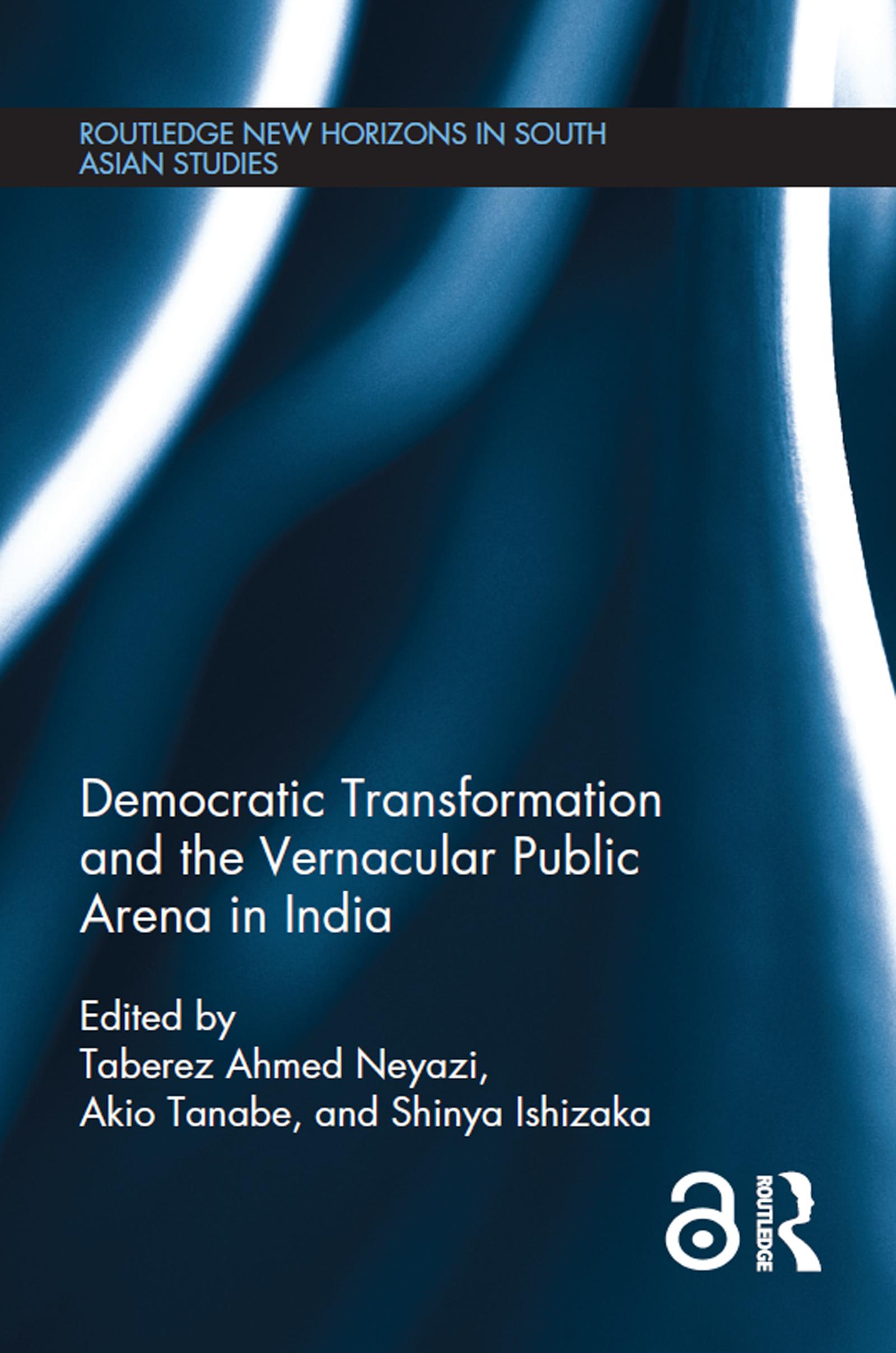
Since the structural change in Indian society that began in the 1990s - the result of the liberalisation of the economy, devolution of power, and decentralisation of the government–an unprecedented, democratic transformation has been taking place. This has caused the emergence of unexpected coalitions and alliances across diverse castes, classes, and religious groups according to the issues involved.
In this volume, we intend to understand this deepening of democracy by employing a new analytical framework of the 'vernacular public arena' where negotiations, dialogues, debates, and contestations occur among 'vernacular publics'. This reflects the profound changes in Indian democracy as diverse social groups, including dalits, adivasis, and Other Backward Classes; minorities, women; individuals from rural areas, towns, and cities; the poor and the new middle classes–the 'vernacular publics'–participate in new ways in India’s public life. This participation is not confined to electoral politics, but has extended to the public arenas in which these groups have begun to raise their voice publicly and to negotiate and engage in dialogue with each other and the wider world. Contributors demonstrate that the participation of vernacular publics has resulted in the broadening of Indian democracy itself which focuses on the ways of governance, improving people’s lives, life chances, and living environments.
An original, comprehensive study that furthers our understanding of the unfolding political dynamism and the complex reshuffling and reassembling taking place in Indian society and politics, this book will be relevant to academics with an interest in South Asian Studies from a variety of disciplines, including Political Science, Sociology, Anthropology, and Media Studies.
The Open Access version of this book, available at http://www.taylorfrancis.com, has been made available under a Creative Commons Attribution-Non Commercial-No Derivatives 4.0 license.
Before Memmo my notes were scattered across PDFs. Now a workspace pulls everything into one place — I see exactly what's still left to study.
Memmo's summaries are gold before exams. I don't have to re-read 800 pages two weeks before — just the important parts.
The AI chat has saved me the night before an exam more than once. I just keep asking until I get it — no waiting on a study group to reply.
The quizzes hit exactly what I need to know. Memmo tracks what I get stuck on — so I only practice what's worth it.
Flashcards with spaced repetition are magic. Memmo knows when I'm about to forget something and brings it back.
The AI podcasts are my favorite. I listen on my way to school and get a recap without sitting at a computer.

Handbok i kvalitativa metoder
281 kr

Hållbar utveckling: en introduktion för ingenjörer och andra problemlösare
334 kr

Brymans Samhällsvetenskapliga metoder
390 kr

Projektledning
491 kr

Den orättvisa hälsan: om socioekonomiska skillnader i hälsa och livslängd
326 kr

Vetenskapsteori för nybörjare
196 kr

Organizational Leadership
429 kr

På väg mot läraryrket
172 kr

Det sociala livet i skolan: Socialpsykologiska perspektiv
253 kr

Betygsättningens didaktik
151 kr

Personality
402 kr

Studying Leadership
404 kr

Managing Innovation
477 kr

Introduktion till samhällsvetenskaplig metod
347 kr

The Psychology of Sex and Gender
698 kr

Evidens och kunskap för socialt arbete
207 kr

Introduction to Leadership
605 kr