
Before Memmo my notes were scattered across PDFs. Now a workspace pulls everything into one place — I see exactly what's still left to study.
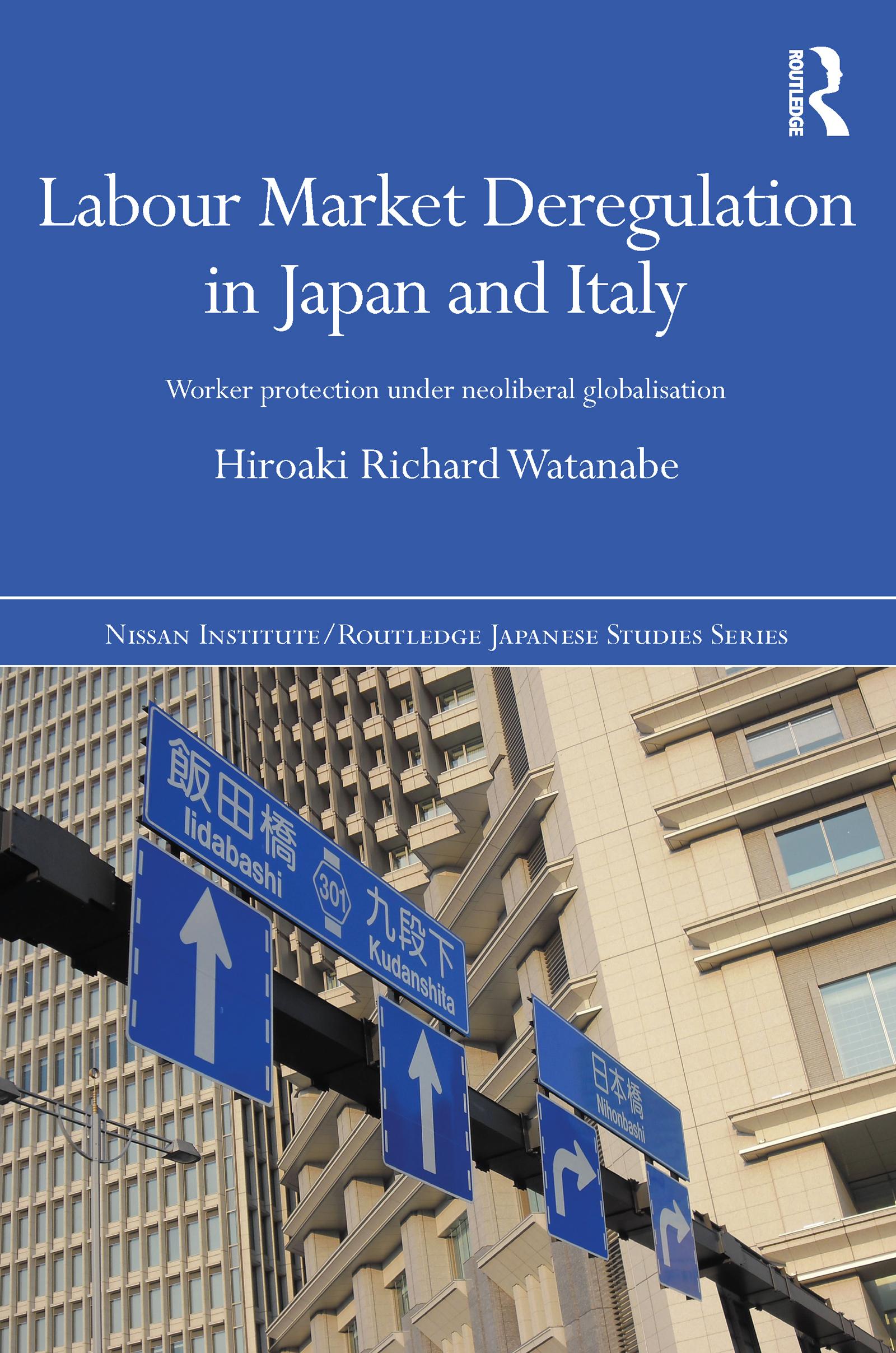
Japan and Italy encountered severe economic problems in the early 1990s, and the governments had to deal with those issues effectively under the increasing neoliberal pressures of globalisation. In this context, labour market deregulation was considered an effective tool to cope with those economic problems. However, the forms and degrees of labour market deregulation in the two countries were quite different.
This book seeks to explain the differences in labour market deregulation policies between Japan and Italy, despite the fact that the two countries shared a number of similar political, social and labour market (if not cultural) characteristics. Uniquely, it takes a political, rather than economic or sociological perspective to provide a theoretical and empirical analysis of the processes of labour market deregulation in the two countries. The precarious working conditions of an increasing number of non-regular workers has become a prominent social issue in many industrialised countries including Japan and Italy, but the level of the protection for these workers depends on a country’s labour market policies, which are affected by the power resources of labour unions and labour policy-making structures. This book provides a useful perspective for understanding the root causes of this phenomenon, such as the diffusion of ‘neoliberal’ ideas aimed at promoting labour-market flexibility under globalisation, and demonstrates that there is still room for politics to decide the extent of deregulation and maintain worker protection from management offensives even in an era of globalisation.
Labour Market Deregulation in Japan and Italy: Worker Protection under Neoliberal Globalisation will appeal to students and scholars of Japanese politics, Italian politics, political economy and comparative politics.
Before Memmo my notes were scattered across PDFs. Now a workspace pulls everything into one place — I see exactly what's still left to study.
Memmo's summaries are gold before exams. I don't have to re-read 800 pages two weeks before — just the important parts.
The AI chat has saved me the night before an exam more than once. I just keep asking until I get it — no waiting on a study group to reply.
The quizzes hit exactly what I need to know. Memmo tracks what I get stuck on — so I only practice what's worth it.
Flashcards with spaced repetition are magic. Memmo knows when I'm about to forget something and brings it back.
The AI podcasts are my favorite. I listen on my way to school and get a recap without sitting at a computer.

Handbok i kvalitativa metoder
281 kr

Hållbar utveckling: en introduktion för ingenjörer och andra problemlösare
334 kr

Brymans Samhällsvetenskapliga metoder
390 kr

Projektledning
491 kr

Den orättvisa hälsan: om socioekonomiska skillnader i hälsa och livslängd
326 kr

Vetenskapsteori för nybörjare
196 kr

Organizational Leadership
429 kr

På väg mot läraryrket
172 kr

Det sociala livet i skolan: Socialpsykologiska perspektiv
253 kr

Betygsättningens didaktik
151 kr

Personality
402 kr

Studying Leadership
404 kr

Managing Innovation
477 kr

Introduktion till samhällsvetenskaplig metod
347 kr

The Psychology of Sex and Gender
698 kr

Evidens och kunskap för socialt arbete
207 kr

Introduction to Leadership
605 kr