
Before Memmo my notes were scattered across PDFs. Now a workspace pulls everything into one place — I see exactly what's still left to study.
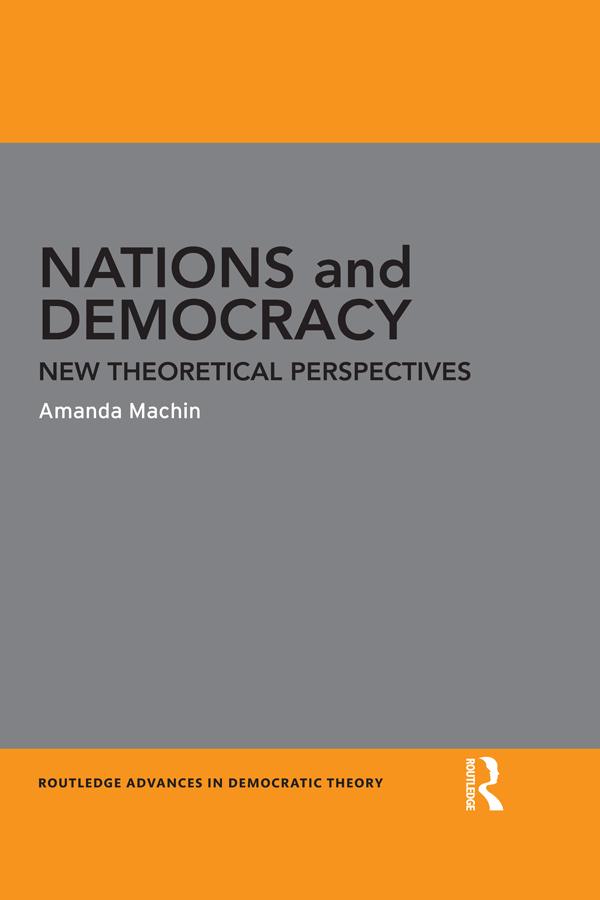
A figure of enduring ingenuity, the nation has for centuries played a part on the socio-political stage. Whether centre stage or background scenery, it has featured in violent tragedies, revolutionary drama and nostalgic fable. Today, the nation is cast simultaneously in the roles of villain and hero. While it is renounced by those advocating trans-national, post-national and cosmopolitan forms of belonging, it has lately also been asserted as the solution to various social failures in liberal democracies. This appears to leave us with two alternatives: to jettison the nation in order to move towards a less parochial world, a world in which new forms of belonging underpin more inclusive politics. Or to celebrate the nation as way of ensuring the social cement that can unite a diverse society.
Using the ideas of Wittgenstein and Lacan, Amanda Machin expertly explains that the overlapping and conflicting language games of the nation produce it as an object of desire in an uncertain world. The nation is not a pre-political thing but a matter of persistent political contestation and coalition. She reveals that the nation still has a vital part to play in democratic politics, but that this role is one of improvisation. While they endure as tools of emancipatory promise, nations nonetheless remain potential categories of violent exclusion. They cannot be pinned down as easily as anti-national and pro-national alternatives suggest. It is precisely the indeterminacy of the nation that gives it ongoing importance for democracy today.
Providing an urgent riposte to dominant accounts, this thought provoking and highly original account demands a re-politicisation of the nation. This book will appeal to those engaged in theory and empirical research on nations and nationalism and the question of their link to democracy in a changing world, as well as those interested in psychoanalysis and Wittgenstein.
Before Memmo my notes were scattered across PDFs. Now a workspace pulls everything into one place — I see exactly what's still left to study.
Memmo's summaries are gold before exams. I don't have to re-read 800 pages two weeks before — just the important parts.
The AI chat has saved me the night before an exam more than once. I just keep asking until I get it — no waiting on a study group to reply.
The quizzes hit exactly what I need to know. Memmo tracks what I get stuck on — so I only practice what's worth it.
Flashcards with spaced repetition are magic. Memmo knows when I'm about to forget something and brings it back.
The AI podcasts are my favorite. I listen on my way to school and get a recap without sitting at a computer.

Handbok i kvalitativa metoder
281 kr

Hållbar utveckling: en introduktion för ingenjörer och andra problemlösare
334 kr

Brymans Samhällsvetenskapliga metoder
390 kr

Projektledning
491 kr

Den orättvisa hälsan: om socioekonomiska skillnader i hälsa och livslängd
326 kr

Vetenskapsteori för nybörjare
196 kr

Organizational Leadership
429 kr

På väg mot läraryrket
172 kr

Det sociala livet i skolan: Socialpsykologiska perspektiv
253 kr

Betygsättningens didaktik
151 kr

Personality
402 kr

Studying Leadership
404 kr

Managing Innovation
477 kr

Introduktion till samhällsvetenskaplig metod
347 kr

The Psychology of Sex and Gender
698 kr

Evidens och kunskap för socialt arbete
207 kr

Introduction to Leadership
605 kr