
Before Memmo my notes were scattered across PDFs. Now a workspace pulls everything into one place — I see exactly what's still left to study.
WINNER of the BISA IPEG Book Prize 2015 http://www.bisa-ipeg.org/ipeg-book-prize-2015-winner-announced/
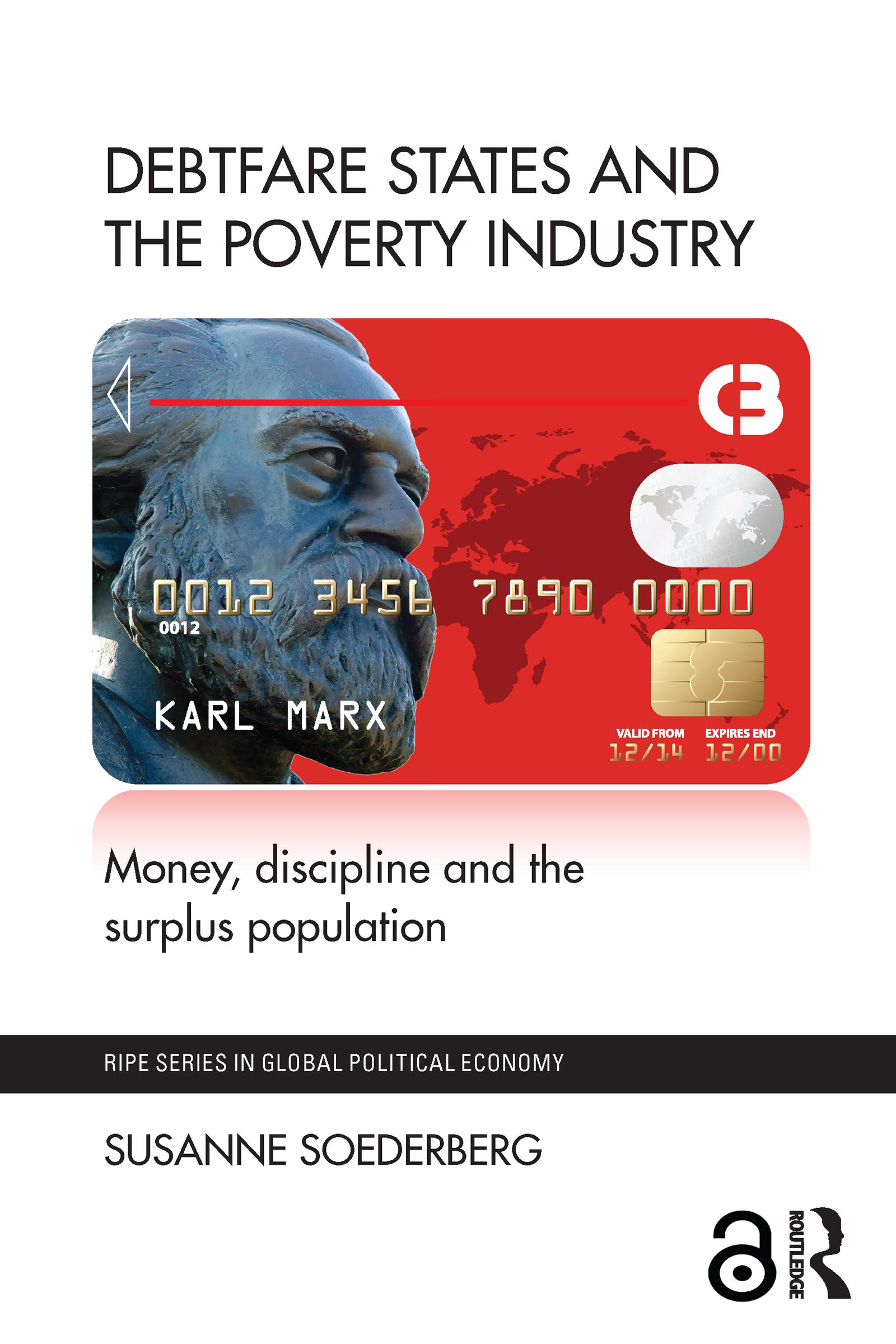
Under the rubric of ‘financial inclusion’, lending to the poor –in both the global North and global South –has become a highly lucrative and rapidly expanding industry since the 1990s. A key inquiry of this book is what is ‘the financial’ in which the poor are asked to join. Instead of embracing the mainstream position that financial inclusion is a natural, inevitable and mutually beneficial arrangement, Debtfare States and the Poverty Industry suggests that the structural violence inherent to neoliberalism and credit-led accumulation have created and normalized a reality in which the working poor can no longer afford to live without expensive credit.
The book further transcends economic treatments of credit and debt by revealing how the poverty industry is extricably linked to the social power of money, the paradoxes in credit-led accumulation, and ‘debtfarism’. The latter refers to rhetorical and regulatory forms of governance that mediate and facilitate the expansion of the poverty industry and the reliance of the poor on credit to augment/replace their wages. Through a historically grounded analysis, the author examines various dimensions of the poverty industry ranging from the credit card, payday loan, and student loan industries in the United States to micro-lending and low-income housing finance industries in Mexico.
Providing a much-needed theorization of the politics of debt, Debtfare States and the Poverty Industry has wider implications of the increasing dependence of the poor on consumer credit across the globe, this book will be of very strong interest to students and scholars of Global Political Economy, Finance, Development Studies, Geography, Law, History, and Sociology.
The Open Access version of this book, available at http://www.taylorfrancis.com/books/e/9781315761954, has been made available under a Creative Commons Attribution-Non Commercial-No Derivatives 4.0 license.
https://www.youtube.com/watch?v=2lU6PHjyOzU
Before Memmo my notes were scattered across PDFs. Now a workspace pulls everything into one place — I see exactly what's still left to study.
Memmo's summaries are gold before exams. I don't have to re-read 800 pages two weeks before — just the important parts.
The AI chat has saved me the night before an exam more than once. I just keep asking until I get it — no waiting on a study group to reply.
The quizzes hit exactly what I need to know. Memmo tracks what I get stuck on — so I only practice what's worth it.
Flashcards with spaced repetition are magic. Memmo knows when I'm about to forget something and brings it back.
The AI podcasts are my favorite. I listen on my way to school and get a recap without sitting at a computer.

Handbok i kvalitativa metoder
281 kr

Hållbar utveckling: en introduktion för ingenjörer och andra problemlösare
334 kr

Brymans Samhällsvetenskapliga metoder
390 kr

Projektledning
491 kr

Den orättvisa hälsan: om socioekonomiska skillnader i hälsa och livslängd
326 kr

Vetenskapsteori för nybörjare
196 kr

Organizational Leadership
429 kr

På väg mot läraryrket
172 kr

Det sociala livet i skolan: Socialpsykologiska perspektiv
253 kr

Betygsättningens didaktik
151 kr

Personality
402 kr

Studying Leadership
404 kr

Managing Innovation
477 kr

Introduktion till samhällsvetenskaplig metod
347 kr

The Psychology of Sex and Gender
698 kr

Evidens och kunskap för socialt arbete
207 kr

Introduction to Leadership
605 kr