
Before Memmo my notes were scattered across PDFs. Now a workspace pulls everything into one place — I see exactly what's still left to study.
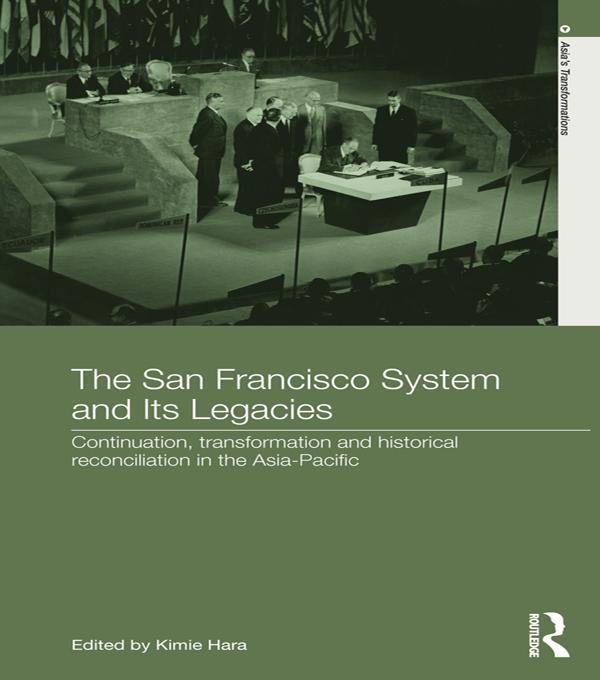
In September 1951, Japan signed a peace treaty with forty-eight countries in San Francisco; in April 1952, the treaty came into effect. The San Francisco Peace Treaty is an international agreement that in significant ways shaped the post–World War II international order in the Asia-Pacific. With its associated security arrangements, it laid the foundation for the regional structure of Cold War confrontation: the "San Francisco System" fully reflected the strategic interests and policy priorities of the peace conference’s host nation, the United States. The treaty fell far short of settling outstanding issues in the wake of the Pacific War or facilitating a clean start for the "post-war" period. Rather, critical aspects of the settlement were left equivocal, and continue to have significant and worrisome implications for regional international relations.
This book examines the key developments of the contentious political and security issues in the Asia-Pacific that share a common foundation in the post-war disposition of Japan, particularly the San Francisco Peace Treaty. These include both tangible and intangible issues, such as disputes over territories and "history" problems. Taking the San Francisco System as its conceptual grounding, the authors examine how these issues developed and have remained contentious long after the San Francisco arrangements. To provide bases for producing solutions, the chapters offer comprehensive accounts that explain and deepen our understanding of these complex regional issues and the San Francisco System as a whole.
By closely and systematically examining the legacy and various ramifications of the San Francisco System, this fascinating book adds to our understanding of current and growing tensions in the region. As such, it will be of great interest to students and scholars of Asian studies, history, international relations and politics.
Before Memmo my notes were scattered across PDFs. Now a workspace pulls everything into one place — I see exactly what's still left to study.
Memmo's summaries are gold before exams. I don't have to re-read 800 pages two weeks before — just the important parts.
The AI chat has saved me the night before an exam more than once. I just keep asking until I get it — no waiting on a study group to reply.
The quizzes hit exactly what I need to know. Memmo tracks what I get stuck on — so I only practice what's worth it.
Flashcards with spaced repetition are magic. Memmo knows when I'm about to forget something and brings it back.
The AI podcasts are my favorite. I listen on my way to school and get a recap without sitting at a computer.

Handbok i kvalitativa metoder
281 kr

Hållbar utveckling: en introduktion för ingenjörer och andra problemlösare
334 kr

Brymans Samhällsvetenskapliga metoder
390 kr

Projektledning
491 kr

Den orättvisa hälsan: om socioekonomiska skillnader i hälsa och livslängd
326 kr

Organizational Leadership
429 kr

Vetenskapsteori för nybörjare
196 kr

På väg mot läraryrket
172 kr

Det sociala livet i skolan: Socialpsykologiska perspektiv
253 kr

Betygsättningens didaktik
151 kr

Personality
402 kr

Studying Leadership
404 kr

Managing Innovation
477 kr

Introduktion till samhällsvetenskaplig metod
347 kr

The Psychology of Sex and Gender
698 kr

Evidens och kunskap för socialt arbete
207 kr

Introduction to Leadership
605 kr