
Before Memmo my notes were scattered across PDFs. Now a workspace pulls everything into one place — I see exactly what's still left to study.
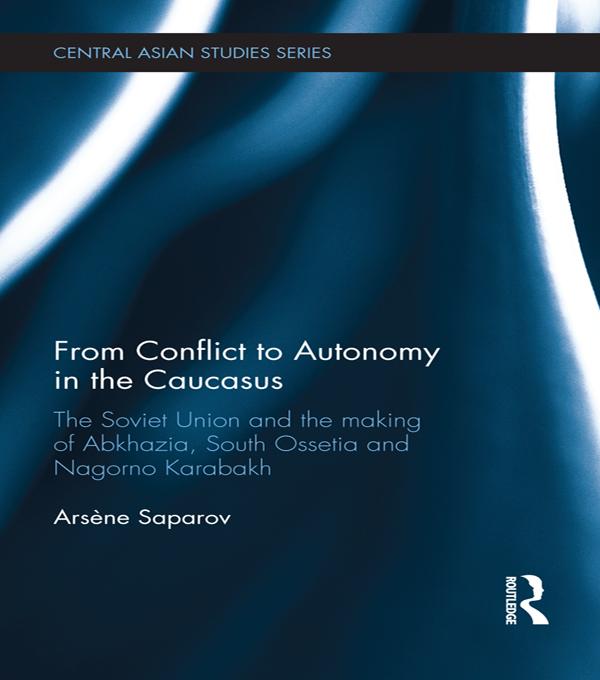
This book is the first historical work to study the creation of ethnic autonomies in the Caucasus in the 1920s – the transitional period from Russian Empire to Soviet Union. Seventy years later these ethnic autonomies were to become the loci of violent ethno-political conflicts which have consistently been blamed on the policies of the Bolsheviks and Stalin. According to this view, the Soviet leadership deliberately set up ethnic autonomies within the republics, thereby giving Moscow unprecedented leverage against each republic.
From Conflict to Autonomy in the Caucasus questions this assumption by examining three case studies: Abkhazia, South Ossetia and Nagorno Karabakh are placed within the larger socio-political context of transformations taking place in this borderland region during the nineteenth and twentieth centuries. It examines demographic, social and economic consequences of the Russian colonization and resulting replacement of traditional societies and identities with modern ones. Based on original Russian language sources and archival materials, the book brings together two periods that are usually studied separately – the period of the Russian Civil War 1917–20 and the early Soviet period – in order to understand the roots of the Bolshevik decision-making policy when granting autonomies. It argues that rather than being the product of blatant political manipulation this was an attempt at conflict resolution. The institution of political autonomy, however, became a powerful tool for national mobilization during the Soviet era.
Contributing both to the general understanding of the early Soviet nationality policy and to our understanding of the conflicts that have engulfed the Caucasus region since the 1990s, this book will be of interest to scholars of Central Asian studies, Russian/Soviet history, ethnic conflict, security studies and International Relations.
Before Memmo my notes were scattered across PDFs. Now a workspace pulls everything into one place — I see exactly what's still left to study.
Memmo's summaries are gold before exams. I don't have to re-read 800 pages two weeks before — just the important parts.
The AI chat has saved me the night before an exam more than once. I just keep asking until I get it — no waiting on a study group to reply.
The quizzes hit exactly what I need to know. Memmo tracks what I get stuck on — so I only practice what's worth it.
Flashcards with spaced repetition are magic. Memmo knows when I'm about to forget something and brings it back.
The AI podcasts are my favorite. I listen on my way to school and get a recap without sitting at a computer.

Handbok i kvalitativa metoder
281 kr

Hållbar utveckling: en introduktion för ingenjörer och andra problemlösare
334 kr

Brymans Samhällsvetenskapliga metoder
390 kr

Projektledning
491 kr

Den orättvisa hälsan: om socioekonomiska skillnader i hälsa och livslängd
326 kr

Organizational Leadership
429 kr

Vetenskapsteori för nybörjare
196 kr

På väg mot läraryrket
172 kr

Det sociala livet i skolan: Socialpsykologiska perspektiv
253 kr

Betygsättningens didaktik
151 kr

Personality
402 kr

Studying Leadership
404 kr

Managing Innovation
477 kr

Introduktion till samhällsvetenskaplig metod
347 kr

The Psychology of Sex and Gender
698 kr

Evidens och kunskap för socialt arbete
207 kr

Introduction to Leadership
605 kr