
Before Memmo my notes were scattered across PDFs. Now a workspace pulls everything into one place — I see exactly what's still left to study.
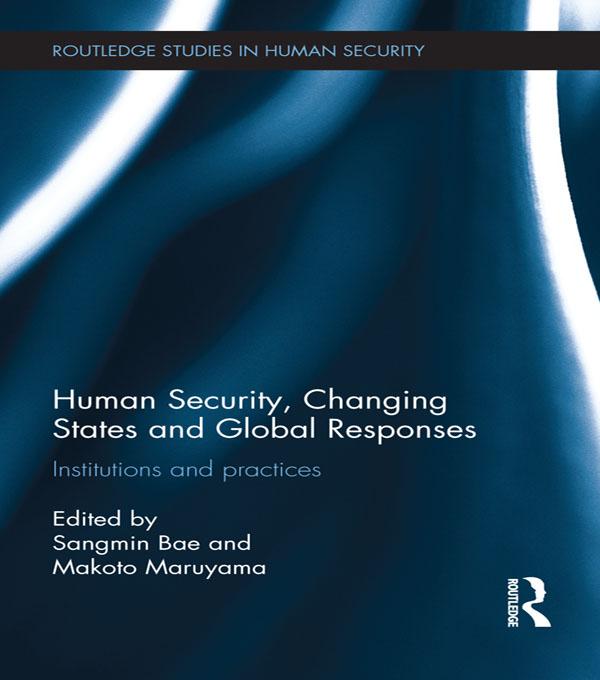
This book critically assesses the human security challenges faced by states, focusing on how and to what extent the state is influenced by global structures and operations.
Having grown rapidly since the 1990s, the field of human security has spawned a wide variety of academic research. This research has helped to reconceptualize the notion of security, both broadening and deepening it, and it has created a space where unconventional and multidimensional forms of security inform international policy practices. However, while various issues and cases of human security have received growing academic attention and policy interest, many of the existing books on human security focus primarily on non-state actors. This leaves a key question unanswered: why do sovereign states take on leadership roles in promoting human security?
To answer the question of why and how national governments influence international human security policy, this volume examines the domestic political factors and structures that mediate the range of policy choices. Important domestic variables include the ‘cultural match’ (e.g., ‘Does the country often favor multilateralism and promote a rule-bound international society?’), the nature of the political interests and realities that are present (e.g., ‘Does the country see the promotion of human security as a strategic choice?’), and the occurrence of important historical events such as wars, revolutions, or natural disasters (e.g., ‘Does the country, during the crisis, help to foster a new way of managing enduring security threats?’). Using this line of analysis, the book illuminates the role of the state in handling critical human security issues and its rationale for doing so.
This book will be of much interest to students of human security, peace studies, global governance, development studies and IR in general.
Before Memmo my notes were scattered across PDFs. Now a workspace pulls everything into one place — I see exactly what's still left to study.
Memmo's summaries are gold before exams. I don't have to re-read 800 pages two weeks before — just the important parts.
The AI chat has saved me the night before an exam more than once. I just keep asking until I get it — no waiting on a study group to reply.
The quizzes hit exactly what I need to know. Memmo tracks what I get stuck on — so I only practice what's worth it.
Flashcards with spaced repetition are magic. Memmo knows when I'm about to forget something and brings it back.
The AI podcasts are my favorite. I listen on my way to school and get a recap without sitting at a computer.

Handbok i kvalitativa metoder
281 kr

Hållbar utveckling: en introduktion för ingenjörer och andra problemlösare
334 kr

Brymans Samhällsvetenskapliga metoder
390 kr

Projektledning
491 kr

Den orättvisa hälsan: om socioekonomiska skillnader i hälsa och livslängd
326 kr

Vetenskapsteori för nybörjare
196 kr

Organizational Leadership
429 kr

På väg mot läraryrket
172 kr

Det sociala livet i skolan: Socialpsykologiska perspektiv
253 kr

Betygsättningens didaktik
151 kr

Personality
402 kr

Studying Leadership
404 kr

Managing Innovation
477 kr

Introduktion till samhällsvetenskaplig metod
347 kr

The Psychology of Sex and Gender
698 kr

Evidens och kunskap för socialt arbete
207 kr

Introduction to Leadership
605 kr