
Before Memmo my notes were scattered across PDFs. Now a workspace pulls everything into one place — I see exactly what's still left to study.
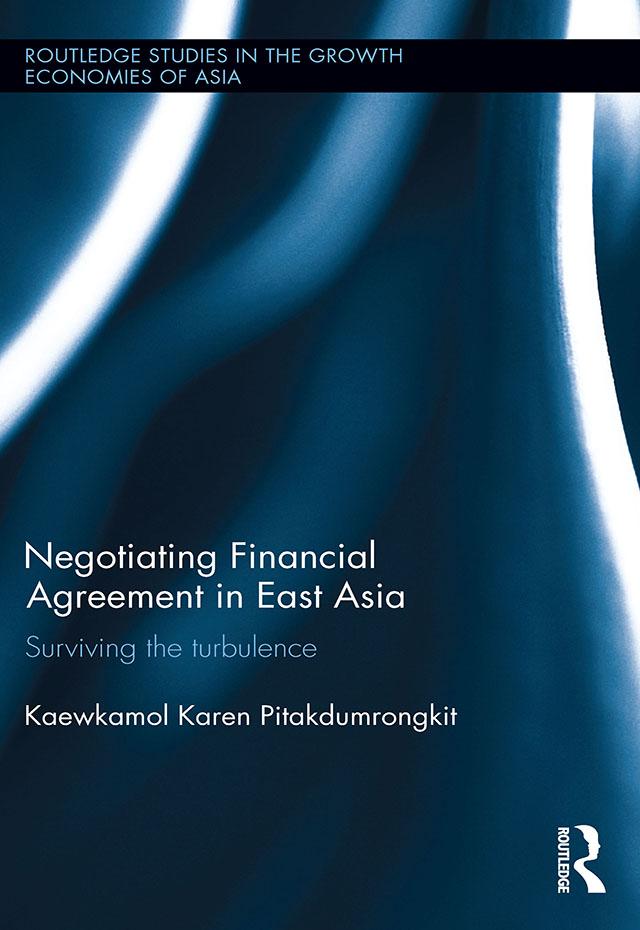
Every international negotiation bears a risk of collapse, as even among like-minded countries, different players often have different priorities and interests. This can result in conflict as states clash over certain agreement details, and their disputes can escalate and founder the entire negotiation, missing an opportunity to realize potential initiatives. However, other circumstances have witnessed the cases of successful deals. This begets a puzzle: What did these states do to salvage their talks and seal their deals?
This book examines East Asian financial negotiation processes and seeks to explain why some negotiations are successful despite the risk of bargaining failure. Using the Chiang Mai Initiative Multilateralization (CMIM) talks as the case study, the book analyses how states with little prior experience at dealing with certain aspects of an agreement manage to avert negotiation failure and successfully conclude their final deal. Using extensive archival research, in-depth interviews with involved negotiators and experts, and process-tracing method, it reconstructs the making of the CMIM agreement. The multi-country analysis reveals the roles played by key actors, namely China, Japan, South Korea, Indonesia, Malaysia, and Thailand, in shaping the agreement terms. The book goes on to argue that preventing a stalemate or succeeding in concluding arrangements like the CMIM is a product of various strategies and tactics employed by negotiators. These include employing bargaining strategies and tactics that help avoid a negotiation deadlock, and assessing the conditions under which such strategies and tactics are likely - or unlikely - to achieve the objective of avoiding bargaining failure.
As a study of East Asian economic negotiation processes, this book will be of huge interest to students and scholars of East Asian cooperation and regionalism as well as finance, international business, international relations and international political economy.
Before Memmo my notes were scattered across PDFs. Now a workspace pulls everything into one place — I see exactly what's still left to study.
Memmo's summaries are gold before exams. I don't have to re-read 800 pages two weeks before — just the important parts.
The AI chat has saved me the night before an exam more than once. I just keep asking until I get it — no waiting on a study group to reply.
The quizzes hit exactly what I need to know. Memmo tracks what I get stuck on — so I only practice what's worth it.
Flashcards with spaced repetition are magic. Memmo knows when I'm about to forget something and brings it back.
The AI podcasts are my favorite. I listen on my way to school and get a recap without sitting at a computer.

Handbok i kvalitativa metoder
281 kr

Hållbar utveckling: en introduktion för ingenjörer och andra problemlösare
334 kr

Brymans Samhällsvetenskapliga metoder
390 kr

Projektledning
491 kr

Den orättvisa hälsan: om socioekonomiska skillnader i hälsa och livslängd
326 kr

Vetenskapsteori för nybörjare
196 kr

Organizational Leadership
429 kr

På väg mot läraryrket
172 kr

Det sociala livet i skolan: Socialpsykologiska perspektiv
253 kr

Betygsättningens didaktik
151 kr

Personality
402 kr

Studying Leadership
404 kr

Managing Innovation
477 kr

Introduktion till samhällsvetenskaplig metod
347 kr

The Psychology of Sex and Gender
698 kr

Evidens och kunskap för socialt arbete
207 kr

Introduction to Leadership
605 kr