
Before Memmo my notes were scattered across PDFs. Now a workspace pulls everything into one place — I see exactly what's still left to study.
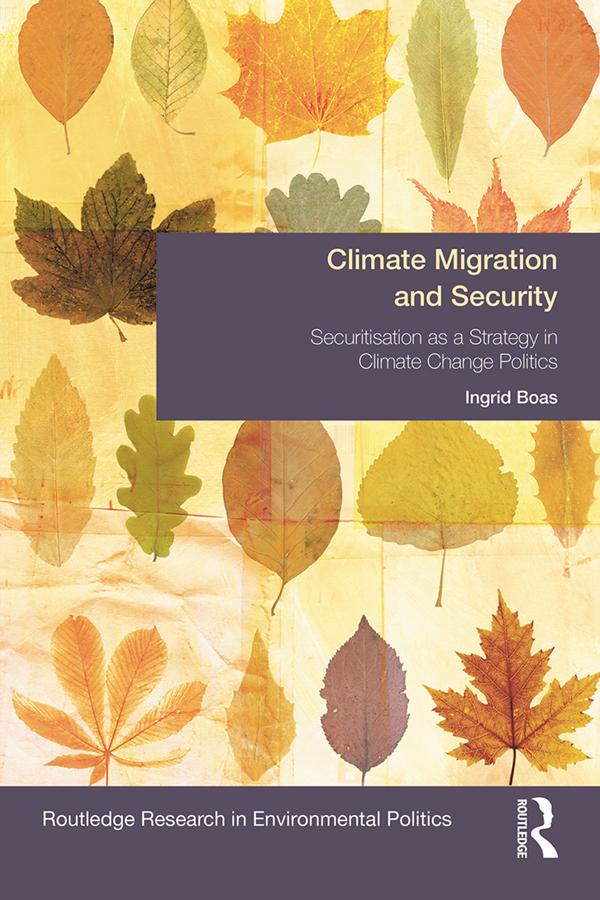
Climate migration, as an image of people moving due to sea-level rise and increased drought, has been presented as one of the main security risks of global warming. The rationale is that climate change will cause mass movements of climate refugees, causing tensions and even violent conflict. Through the lens of climate change politics and securitisation theory, Ingrid Boas examines how and why climate migration has been presented in terms of security and reviews the political consequences of such framing exercises.
This study is done through a macro-micro analysis and concentrates on the period of the early 2000s until the end of September 2014. The macro-level analysis provides an overview of the coalitions of states that favour or oppose security framings on climate migration. It shows how European states and the Small Island States have been key actors to present climate migration as a matter of security, while the emerging developing countries have actively opposed such a framing. The book argues that much of the division between these states alliances can be traced back to climate change politics. As a next step, the book delves into UK-India interactions to provide an in-depth analysis of these security framings and their connection with climate change politics. This micro-level analysis demonstrates how the UK has strategically used security framings on climate migration to persuade India to commit to binding targets to reduce their greenhouse gas emissions. The book examines how and why such a strategy has emerged, and most importantly, to what extent it has been successful.
Climate Migration and Security is the first book of its kind to examine the strategic usage of security arguments on climate migration as a political tool in climate change politics. Original theoretical, empirical, and policy-related insights will provide students, scholars, and policy makers with the necessary tools to review the effectiveness of these framing strategies for the purpose of climate change diplomacy and delve into the wider implications of these framing strategies for the governance of climate change.
Before Memmo my notes were scattered across PDFs. Now a workspace pulls everything into one place — I see exactly what's still left to study.
Memmo's summaries are gold before exams. I don't have to re-read 800 pages two weeks before — just the important parts.
The AI chat has saved me the night before an exam more than once. I just keep asking until I get it — no waiting on a study group to reply.
The quizzes hit exactly what I need to know. Memmo tracks what I get stuck on — so I only practice what's worth it.
Flashcards with spaced repetition are magic. Memmo knows when I'm about to forget something and brings it back.
The AI podcasts are my favorite. I listen on my way to school and get a recap without sitting at a computer.

Handbok i kvalitativa metoder
281 kr

Hållbar utveckling: en introduktion för ingenjörer och andra problemlösare
334 kr

Brymans Samhällsvetenskapliga metoder
390 kr

Projektledning
491 kr

Den orättvisa hälsan: om socioekonomiska skillnader i hälsa och livslängd
326 kr

Organizational Leadership
429 kr

Vetenskapsteori för nybörjare
196 kr

På väg mot läraryrket
172 kr

Det sociala livet i skolan: Socialpsykologiska perspektiv
253 kr

Betygsättningens didaktik
151 kr

Personality
402 kr

Studying Leadership
404 kr

Managing Innovation
477 kr

Introduktion till samhällsvetenskaplig metod
347 kr

The Psychology of Sex and Gender
698 kr

Evidens och kunskap för socialt arbete
207 kr

Introduction to Leadership
605 kr