
Before Memmo my notes were scattered across PDFs. Now a workspace pulls everything into one place — I see exactly what's still left to study.
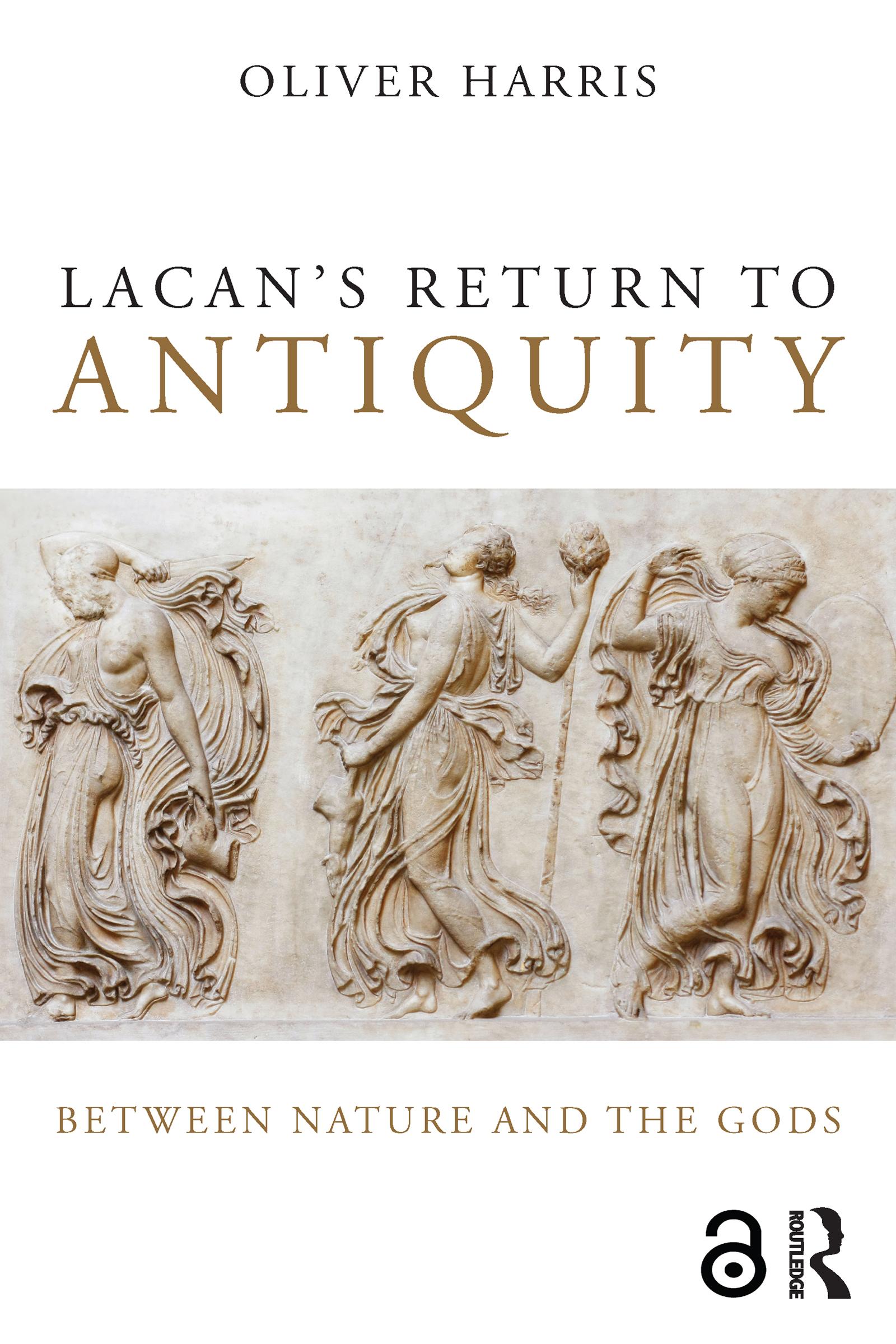
Chapters 1, 2, and 5 of this book is freely available as a downloadable Open Access PDF under a Creative Commons Attribution-Non Commercial-No Derivatives 4.0 license available at http://www.taylorfrancis.com/books/e/9781138820388
Lacan’s Return to Antiquity is the first book devoted to the role of classical antiquity in Lacan’s work. Oliver Harris poses a question familiar from studies of Freud: what are Ancient Greece and Rome doing in a twentieth-century theory of psychology? In Lacan’s case, the issue has an additional edge, for he employs antiquity to demonstrate what is radically new about psychoanalysis. It is a tool with which to convey the revolutionary power of Freud’s ideas by digging down to the philosophical questions beneath them. It is through these questions that Lacan allies psychoanalysis with the pioneering intellectual developments of his time in anthropology, philosophy, art and literature.
Harris begins by considering the role of Plato and Socrates in Lacan’s conflicted thoughts on teaching, writing and the process of becoming an intellectual icon. In doing so, he provides a way into considering the uniquely challenging nature of the Lacanian texts themselves, and the live performances behind them. Two central chapters explore when and why myth is drawn upon in psychoanalysis, its threat to the discipline’s scientific aspirations, and Lacan’s embrace of its expressive potential. The final chapters explore Lacan’s defence of tragedy and his return to Ovidian themes. These include the unwitting voyeurism of Actaeon, and the fate of Narcissus, a figure of tragic metamorphosis that Freud places at the heart of infantile development.
Lacan’s Return to Antiquity brings to Lacan studies the close reading and cross-disciplinary research that has proved fruitful in understanding Freud’s invention of psychoanalysis. It will appeal to psychoanalysts and advanced students studying in the field, being of particular value to those interested in the roots of Lacanian concepts, the evolution of his thought, and the cultural context of his work. What emerges is a more nuanced, self-critical figure, a corrective to the reputation for dogmatism and obscurity that Lacan has attracted. In the process, new light is thrown on enduring controversies, from Lacan’s pronouncements on feminine sexuality to the opaque drama of the seminars themselves.
Before Memmo my notes were scattered across PDFs. Now a workspace pulls everything into one place — I see exactly what's still left to study.
Memmo's summaries are gold before exams. I don't have to re-read 800 pages two weeks before — just the important parts.
The AI chat has saved me the night before an exam more than once. I just keep asking until I get it — no waiting on a study group to reply.
The quizzes hit exactly what I need to know. Memmo tracks what I get stuck on — so I only practice what's worth it.
Flashcards with spaced repetition are magic. Memmo knows when I'm about to forget something and brings it back.
The AI podcasts are my favorite. I listen on my way to school and get a recap without sitting at a computer.

Handbok i kvalitativa metoder
281 kr

Hållbar utveckling: en introduktion för ingenjörer och andra problemlösare
334 kr

Brymans Samhällsvetenskapliga metoder
390 kr

Projektledning
491 kr

Den orättvisa hälsan: om socioekonomiska skillnader i hälsa och livslängd
326 kr

Vetenskapsteori för nybörjare
196 kr

Organizational Leadership
429 kr

På väg mot läraryrket
172 kr

Det sociala livet i skolan: Socialpsykologiska perspektiv
253 kr

Betygsättningens didaktik
151 kr

Personality
402 kr

Studying Leadership
404 kr

Managing Innovation
477 kr

Introduktion till samhällsvetenskaplig metod
347 kr

The Psychology of Sex and Gender
698 kr

Evidens och kunskap för socialt arbete
207 kr

Introduction to Leadership
605 kr