
Before Memmo my notes were scattered across PDFs. Now a workspace pulls everything into one place — I see exactly what's still left to study.
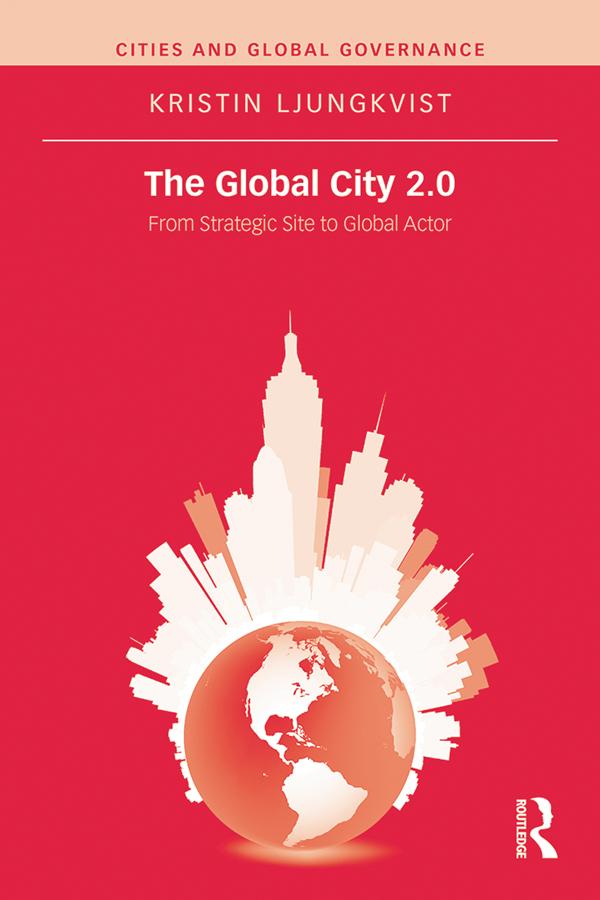
Global cities all over the world are taking on new roles as they increasingly participate directly and independently in international affairs and global politics. So far, surprisingly few studies have analyzed the role of the Global City beyond its already well explicated role in the globalized economy. How is it that local governments of Global Cities claim international political authority and develop what appears to be their own independent foreign and security policies despite the fact that such policy areas have traditionally been considered to be the core function of nation-states and central governments? What does it mean to be and to govern the contemporary Global City?
In this book Kristin Ljungkvist claims that we can better understand why local governments find it to be in their Global City’s interest to claim international political authority by exploring how the city’s role in the globalized world is constructed and narrated locally. A core claim is that Global City-hood as a specific type of collective identity can play a constitutive part in such interest formation. Combining insights from International Relations and Urban Studies scholarship, and with the help of a case study on New York City, Ljungkvist develops a new analytical framework for studying the Global City as an international political actor.
The Global City 2.0 shows that even as the Global City engages in various global issues such as global environmental governance or counterterrorism, such pursuit will be framed and rationalized in terms of the city’s economic growth. The quest for growth and global competitiveness are not necessarily the only available meanings attached to the being and governing of the contemporary Global City. However, there seems to be a remarkable persistency and attraction in economistic ideas and an economistic conception of the Global City.
Before Memmo my notes were scattered across PDFs. Now a workspace pulls everything into one place — I see exactly what's still left to study.
Memmo's summaries are gold before exams. I don't have to re-read 800 pages two weeks before — just the important parts.
The AI chat has saved me the night before an exam more than once. I just keep asking until I get it — no waiting on a study group to reply.
The quizzes hit exactly what I need to know. Memmo tracks what I get stuck on — so I only practice what's worth it.
Flashcards with spaced repetition are magic. Memmo knows when I'm about to forget something and brings it back.
The AI podcasts are my favorite. I listen on my way to school and get a recap without sitting at a computer.

Handbok i kvalitativa metoder
281 kr

Hållbar utveckling: en introduktion för ingenjörer och andra problemlösare
334 kr

Brymans Samhällsvetenskapliga metoder
390 kr

Projektledning
491 kr

Den orättvisa hälsan: om socioekonomiska skillnader i hälsa och livslängd
326 kr

Organizational Leadership
429 kr

Vetenskapsteori för nybörjare
196 kr

På väg mot läraryrket
172 kr

Det sociala livet i skolan: Socialpsykologiska perspektiv
253 kr

Betygsättningens didaktik
151 kr

Personality
402 kr

Studying Leadership
404 kr

Managing Innovation
477 kr

Introduktion till samhällsvetenskaplig metod
347 kr

The Psychology of Sex and Gender
698 kr

Evidens och kunskap för socialt arbete
207 kr

Introduction to Leadership
605 kr