
Before Memmo my notes were scattered across PDFs. Now a workspace pulls everything into one place — I see exactly what's still left to study.
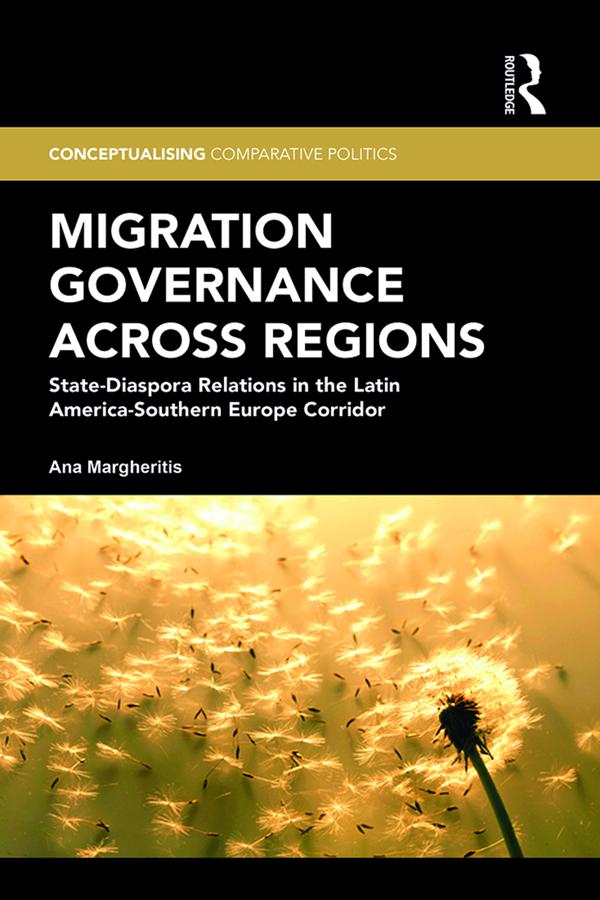
Migration policies are rarely effective. Examples of unintended and undesirable outcomes abound. In Latin America, very little is known about the impact and long-term sustainability of state policies towards emigrants. Following a world-wide trend, Ecuador, Uruguay, Mexico, Argentina, and Brazil have developed new institutions and discourses to strengthen links; assist, protect and enfranchise migrants, and capture their resources. As an adaptation of governmental techniques to global realities, these policies redefine the contours of polities, nations, and citizenship, giving place to a new form of transnational governance.
Building upon field research done in these five states and two receiving countries in the last decade, Ana Margheritis explains the timing, motivations, characteristics, and implications of emigration policies implemented by each country, as well as the emergence of a distinctive regional consensus around a post-neoliberal approach to national development and citizenship construction. Margheritis argues that these outreach efforts resemble courting practices. Courting is a deliberate expression of the ambivalent, still incipient, and open-ended relationship between states and diasporas which is not exempt of conflict, detours, and setbacks. For various reasons, state-diaspora relations are not unfolding into stable and fruitful partnerships yet. Thus, she makes "diaspora engagement" problematic and investigates to what extent courting might become engagement in each case.
Studying emigration policies of five Latin American countries and migrant responses in Southern Europe sheds light on the political dynamics and governance mechanisms that transnational migration is generating across regions. It illuminates possible venues to manage multiple engagements of migrants with societies at both ends of their migration journey and unveils the opportunities for states and non-state actors to cooperatively manage of migration flows.
Before Memmo my notes were scattered across PDFs. Now a workspace pulls everything into one place — I see exactly what's still left to study.
Memmo's summaries are gold before exams. I don't have to re-read 800 pages two weeks before — just the important parts.
The AI chat has saved me the night before an exam more than once. I just keep asking until I get it — no waiting on a study group to reply.
The quizzes hit exactly what I need to know. Memmo tracks what I get stuck on — so I only practice what's worth it.
Flashcards with spaced repetition are magic. Memmo knows when I'm about to forget something and brings it back.
The AI podcasts are my favorite. I listen on my way to school and get a recap without sitting at a computer.

Handbok i kvalitativa metoder
281 kr

Hållbar utveckling: en introduktion för ingenjörer och andra problemlösare
334 kr

Brymans Samhällsvetenskapliga metoder
390 kr

Projektledning
491 kr

Den orättvisa hälsan: om socioekonomiska skillnader i hälsa och livslängd
326 kr

Organizational Leadership
429 kr

Vetenskapsteori för nybörjare
196 kr

På väg mot läraryrket
172 kr

Det sociala livet i skolan: Socialpsykologiska perspektiv
253 kr

Betygsättningens didaktik
151 kr

Personality
402 kr

Studying Leadership
404 kr

Managing Innovation
477 kr

Introduktion till samhällsvetenskaplig metod
347 kr

The Psychology of Sex and Gender
698 kr

Evidens och kunskap för socialt arbete
207 kr

Introduction to Leadership
605 kr