
Before Memmo my notes were scattered across PDFs. Now a workspace pulls everything into one place — I see exactly what's still left to study.
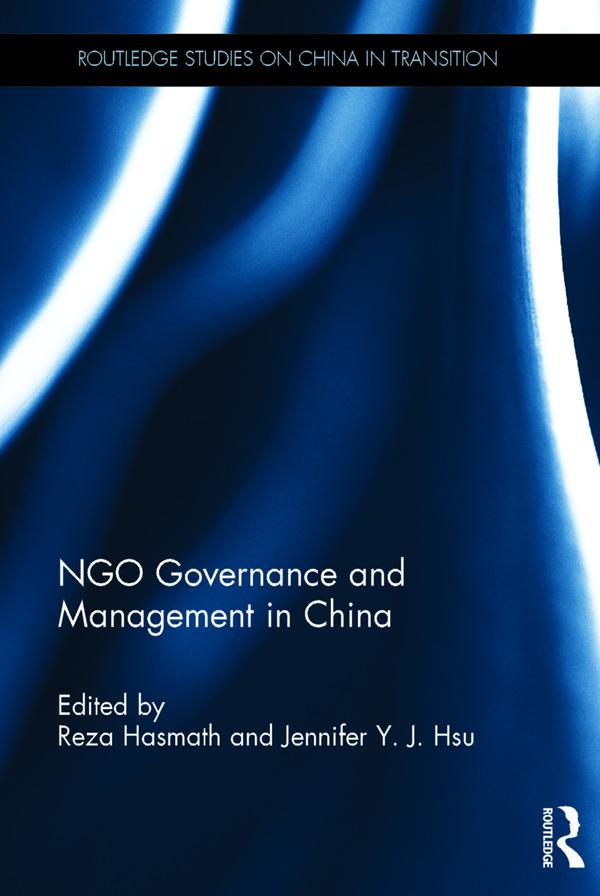
As China becomes increasingly integrated into the global system there will be continuing pressure to acknowledge and engage with non-governmental organizations (NGOs). Suffice to say, without a clear understanding of the state’s interaction with NGOs, and vice versa, any political, economic and social analysis of China will be incomplete.
This book provides an urgent insight into contemporary state-NGO relations. It brings together the most recent research covering three broad themes, namely the conceptualizations and subsequent functions of NGOs; state-NGO engagement; and NGOs as a mediator between state and society in contemporary China. The book provides a future glimpse into the challenges of state-NGO interactions in China's rapidly developing regions, which will aid NGOs strategic planning in both the short- and long-term. In addition, it allows a measure of predictability in our assessment of Chinese NGOs behaviour, notably when they eventually move their areas of operation from the domestic sphere to an international one.
The salient themes, concepts, theories and practice discussed in this book will be of acute interest to students, scholars and practitioners in development studies, public administration, and Chinese and Asian politics.
Reza Hasmath is a Lecturer in Chinese Politics at the University of Oxford, UK, and an Associate Professor in Political Science at the University of Alberta, Canada. His research looks at state-society relationships, the labour market experiences of ethnic minorities, and development theories and practices.
Jennifer Y.J. Hsu is an Assistant Professor in Political Science at the University of Alberta, Canada. Her recent publications include a co-authored book HIV/AIDS in China: The Economic and Social Determinants (Routledge, 2011), and a co-edited book The Chinese Corporatist State: Adaption, Survival and Resistance (Routledge, 2012).
Before Memmo my notes were scattered across PDFs. Now a workspace pulls everything into one place — I see exactly what's still left to study.
Memmo's summaries are gold before exams. I don't have to re-read 800 pages two weeks before — just the important parts.
The AI chat has saved me the night before an exam more than once. I just keep asking until I get it — no waiting on a study group to reply.
The quizzes hit exactly what I need to know. Memmo tracks what I get stuck on — so I only practice what's worth it.
Flashcards with spaced repetition are magic. Memmo knows when I'm about to forget something and brings it back.
The AI podcasts are my favorite. I listen on my way to school and get a recap without sitting at a computer.

Handbok i kvalitativa metoder
281 kr

Hållbar utveckling: en introduktion för ingenjörer och andra problemlösare
334 kr

Brymans Samhällsvetenskapliga metoder
390 kr

Projektledning
491 kr

Den orättvisa hälsan: om socioekonomiska skillnader i hälsa och livslängd
326 kr

Vetenskapsteori för nybörjare
196 kr

Organizational Leadership
429 kr

På väg mot läraryrket
172 kr

Det sociala livet i skolan: Socialpsykologiska perspektiv
253 kr

Betygsättningens didaktik
151 kr

Personality
402 kr

Studying Leadership
404 kr

Managing Innovation
477 kr

Introduktion till samhällsvetenskaplig metod
347 kr

The Psychology of Sex and Gender
698 kr

Evidens och kunskap för socialt arbete
207 kr

Introduction to Leadership
605 kr