
Before Memmo my notes were scattered across PDFs. Now a workspace pulls everything into one place — I see exactly what's still left to study.
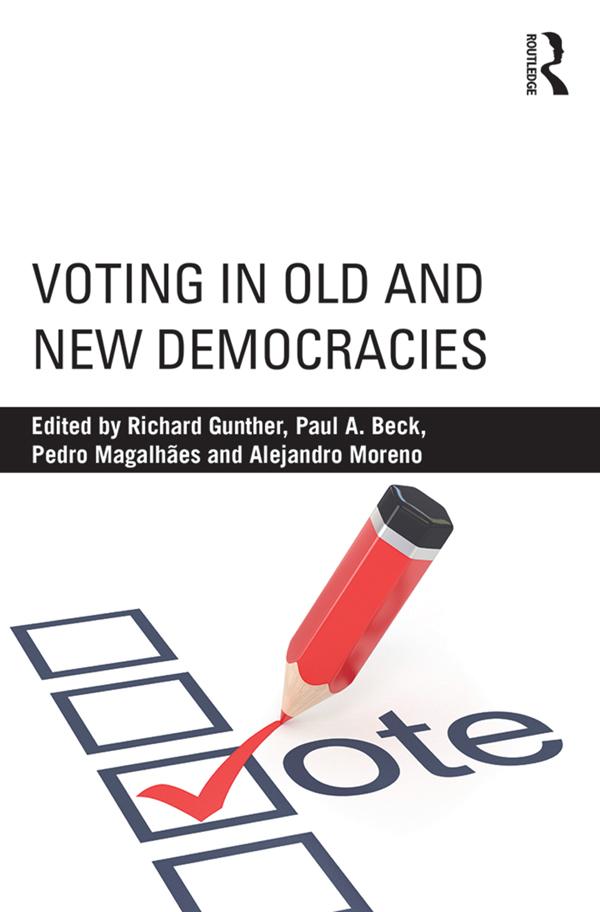
Voting in Old and New Democracies examines voting behavior and its determinants based on 26 surveys from 18 countries on five continents between 1992 and 2008. It systematically analyzes the impact on voting choice of factors rooted in the currently dominant approaches to the study of electoral behavior, but adds to this analysis factors introduced or reintroduced into this field by the Comparative National Elections Project (CNEP)—socio-political values, and political communication through media, personal discussion, and organizational intermediaries. It demonstrates empirically that these long-neglected factors have significant political impact in many countries that previous studies have overlooked, while "economic voting" is insignificant in most elections once long-term partisan attitudes are taken into consideration. Its examination of electoral turnout finds that the strongest predictor is participation by other family members, demonstrating the importance of intermediation. Another chapter surveys cross-national variations in patterns of intermediation, and examines the impact of general social processes (such as socioeconomic and technological modernization), country-specific factors, and individual-level attitudinal factors as determinants of those patterns. Complementing its cross-national comparative analysis is a detailed longitudinal case study of one country over 25 years. Finally, it examines the extent of support for democracy as well as significant cross-national differences in how democracy is understood by citizens.
Written in a clear and accessible style, Voting in Old and New Democracies significantly advances our understanding of citizen attitudes and behavior in election settings.
Before Memmo my notes were scattered across PDFs. Now a workspace pulls everything into one place — I see exactly what's still left to study.
Memmo's summaries are gold before exams. I don't have to re-read 800 pages two weeks before — just the important parts.
The AI chat has saved me the night before an exam more than once. I just keep asking until I get it — no waiting on a study group to reply.
The quizzes hit exactly what I need to know. Memmo tracks what I get stuck on — so I only practice what's worth it.
Flashcards with spaced repetition are magic. Memmo knows when I'm about to forget something and brings it back.
The AI podcasts are my favorite. I listen on my way to school and get a recap without sitting at a computer.

Handbok i kvalitativa metoder
281 kr

Hållbar utveckling: en introduktion för ingenjörer och andra problemlösare
334 kr

Brymans Samhällsvetenskapliga metoder
390 kr

Projektledning
491 kr

Den orättvisa hälsan: om socioekonomiska skillnader i hälsa och livslängd
326 kr

Organizational Leadership
429 kr

Vetenskapsteori för nybörjare
196 kr

På väg mot läraryrket
172 kr

Det sociala livet i skolan: Socialpsykologiska perspektiv
253 kr

Betygsättningens didaktik
151 kr

Personality
402 kr

Studying Leadership
404 kr

Managing Innovation
477 kr

Introduktion till samhällsvetenskaplig metod
347 kr

The Psychology of Sex and Gender
698 kr

Evidens och kunskap för socialt arbete
207 kr

Introduction to Leadership
605 kr