
Before Memmo my notes were scattered across PDFs. Now a workspace pulls everything into one place — I see exactly what's still left to study.
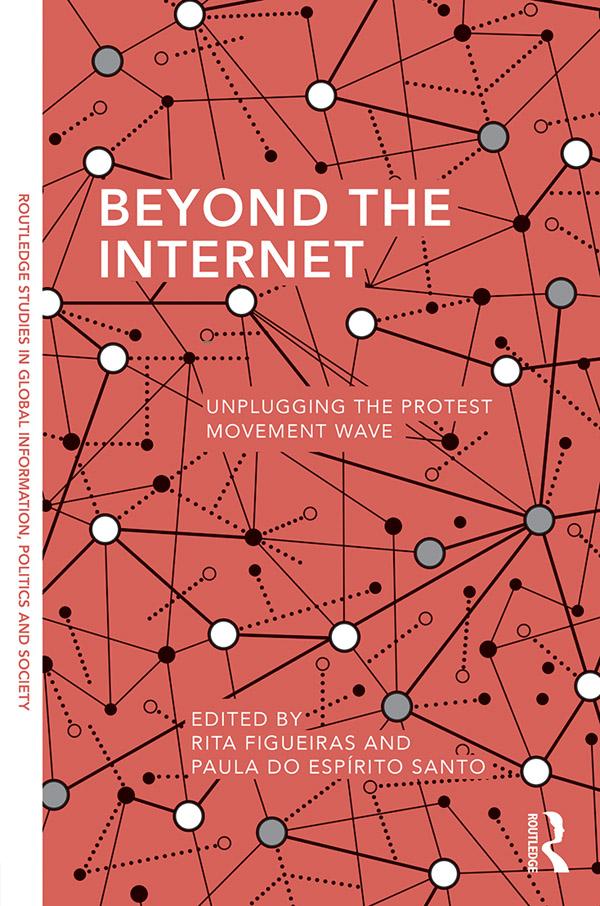
The western economic and financial crisis began with the collapse of Lehman Brothers in 2008 and led the European Union countries into recession. After this, governments started to implement austerity measures, such as cuts in public spending, including public subsidies and jobs, and rising prices. In this context, Europe started to experience a wave of protest movements. Individuals started to use the manifold interactive digital media environment to both fight against the austerity measures and find alternative ways of claiming their democratic rights. Inspired by the 2011 Arab Spring and the Occupy Wall Street movement in New York (USA), the Occupy LSX encampment in Central London (UK), The Outraged (Los Indignados)/ 15M encampment in Central Madrid (Spain), the Syntagma Square’s Outraged movement in Athens (Greece) and the March 12th Movement in Lisbon (Portugal), although short-lived, epitomize an emerging alternative politics and participation via the media. This wave has promoted a debate on how the realm of politics is changing, as citizens broaden their ideas of what political issues and participation mean.
Beyond the Internet examines the technological dimension of the recent wave of protest movements in the United Kingdom, Spain, Portugal, Greece, and Ireland. Offering an opportunity to achieve a better understanding of the dynamics between society, politics and technology, this volume questions the essentialist attributes of the Internet that fuel the techno-centric discourse. The contributors illustrate how all these protest movements were active in the social media and garnered high levels of media attention and public visibility, in spite of their failure to achieve their political goals. As intra-elite dissent was pivotal in understanding the Arab uprisings, the coalition of national ruling elites with European institutions in terms of austerity strategy is essential in understanding the limits of media/technology power and, therefore, the dissociation between communication and representative power.
Before Memmo my notes were scattered across PDFs. Now a workspace pulls everything into one place — I see exactly what's still left to study.
Memmo's summaries are gold before exams. I don't have to re-read 800 pages two weeks before — just the important parts.
The AI chat has saved me the night before an exam more than once. I just keep asking until I get it — no waiting on a study group to reply.
The quizzes hit exactly what I need to know. Memmo tracks what I get stuck on — so I only practice what's worth it.
Flashcards with spaced repetition are magic. Memmo knows when I'm about to forget something and brings it back.
The AI podcasts are my favorite. I listen on my way to school and get a recap without sitting at a computer.

Handbok i kvalitativa metoder
281 kr

Hållbar utveckling: en introduktion för ingenjörer och andra problemlösare
334 kr

Brymans Samhällsvetenskapliga metoder
390 kr

Projektledning
491 kr

Den orättvisa hälsan: om socioekonomiska skillnader i hälsa och livslängd
326 kr

Organizational Leadership
429 kr

Vetenskapsteori för nybörjare
196 kr

På väg mot läraryrket
172 kr

Det sociala livet i skolan: Socialpsykologiska perspektiv
253 kr

Betygsättningens didaktik
151 kr

Personality
402 kr

Studying Leadership
404 kr

Managing Innovation
477 kr

Introduktion till samhällsvetenskaplig metod
347 kr

The Psychology of Sex and Gender
698 kr

Evidens och kunskap för socialt arbete
207 kr

Introduction to Leadership
605 kr