
Before Memmo my notes were scattered across PDFs. Now a workspace pulls everything into one place — I see exactly what's still left to study.
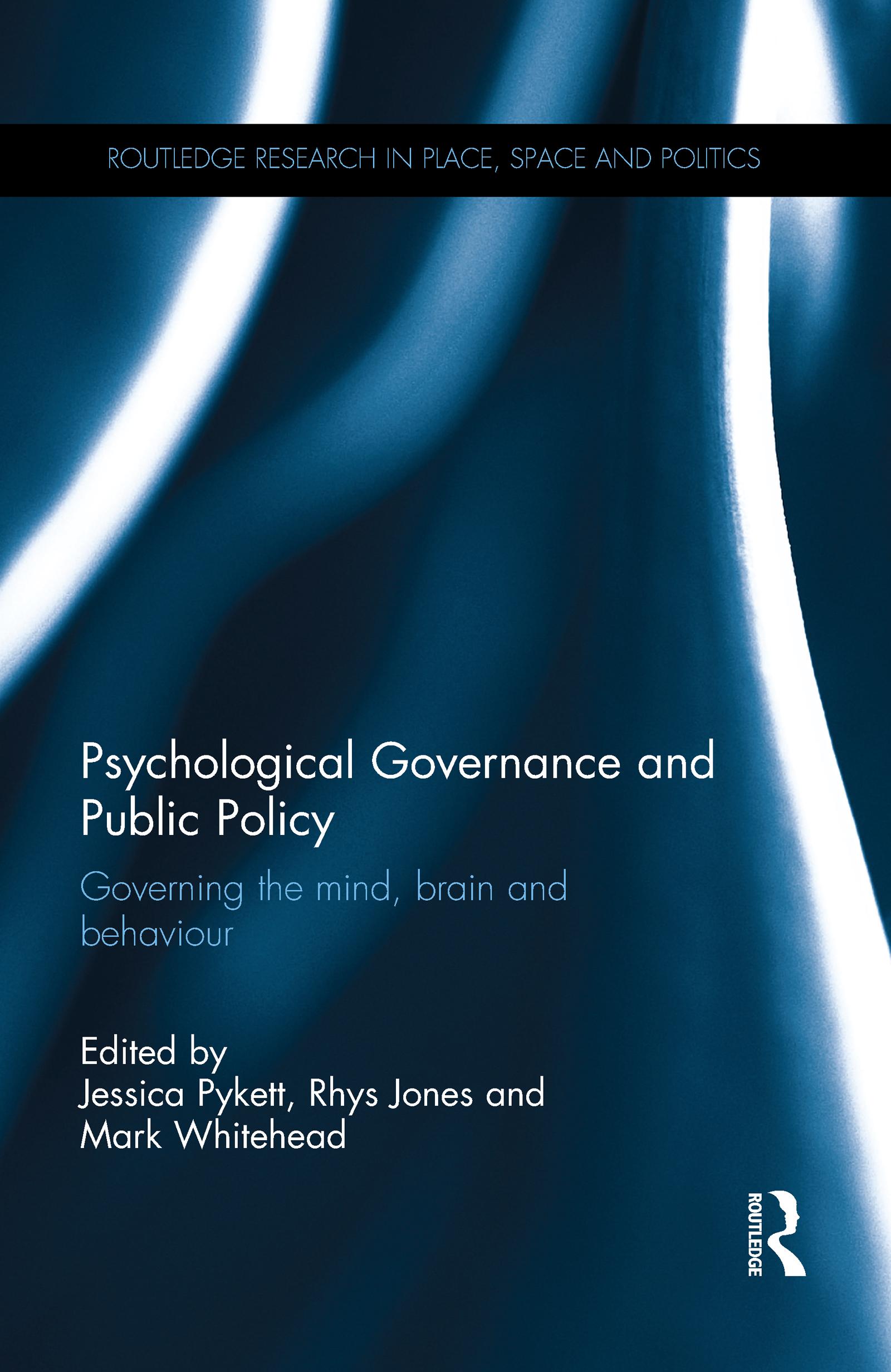
There have been significant developments in the state of psychological, neuroscientific and behavioural scientific knowledge relating to the human mind, brain, action and decision-making over the past two decades. These developments have influenced public policy making and popular culture in the UK and elsewhere – through policies and emerging social practices focussed on behavioural change, happiness, wellbeing, therapy, resilience and character. Yet little attention has been paid to examining the wider political and ethical significance of the widespread use of psychological governance techniques. There is a pressing and recognised need to address the behaviour change agenda in relation to how our cultural ideas about the brain, mind, behaviour and self are changing.
This book provides a critical account of existing forms of psychological governance in relation to public policy. It asks whether we can speak of a co-ordinated and novel shift in governance or, rather, whether these trends are more simply pragmatic policy tools based on advances in scientific evidence. With contributions from leading scholars across the social sciences from the UK, the USA and Canada, chapters identify practical, political and research challenges posed by the current policy enthusiasm for particular branches of affective neuroscience, behavioural economics, positive psychology and happiness economics. The core focus of this book is to investigate the ways in which knowledge about the mind, brain and behaviour has informed the methods and techniques of governance and to explore the implications of this for shaping citizen identity and social practice.
This groundbreaking book will be of interest to students, scholars and policy-makers interested and working within geography, economics, sociology, psychology, politics and cultural studies.
Before Memmo my notes were scattered across PDFs. Now a workspace pulls everything into one place — I see exactly what's still left to study.
Memmo's summaries are gold before exams. I don't have to re-read 800 pages two weeks before — just the important parts.
The AI chat has saved me the night before an exam more than once. I just keep asking until I get it — no waiting on a study group to reply.
The quizzes hit exactly what I need to know. Memmo tracks what I get stuck on — so I only practice what's worth it.
Flashcards with spaced repetition are magic. Memmo knows when I'm about to forget something and brings it back.
The AI podcasts are my favorite. I listen on my way to school and get a recap without sitting at a computer.

Handbok i kvalitativa metoder
281 kr

Hållbar utveckling: en introduktion för ingenjörer och andra problemlösare
334 kr

Brymans Samhällsvetenskapliga metoder
390 kr

Projektledning
491 kr

Den orättvisa hälsan: om socioekonomiska skillnader i hälsa och livslängd
326 kr

Vetenskapsteori för nybörjare
196 kr

Organizational Leadership
429 kr

På väg mot läraryrket
172 kr

Det sociala livet i skolan: Socialpsykologiska perspektiv
253 kr

Betygsättningens didaktik
151 kr

Personality
402 kr

Studying Leadership
404 kr

Managing Innovation
477 kr

Introduktion till samhällsvetenskaplig metod
347 kr

The Psychology of Sex and Gender
698 kr

Evidens och kunskap för socialt arbete
207 kr

Introduction to Leadership
605 kr