
Before Memmo my notes were scattered across PDFs. Now a workspace pulls everything into one place — I see exactly what's still left to study.
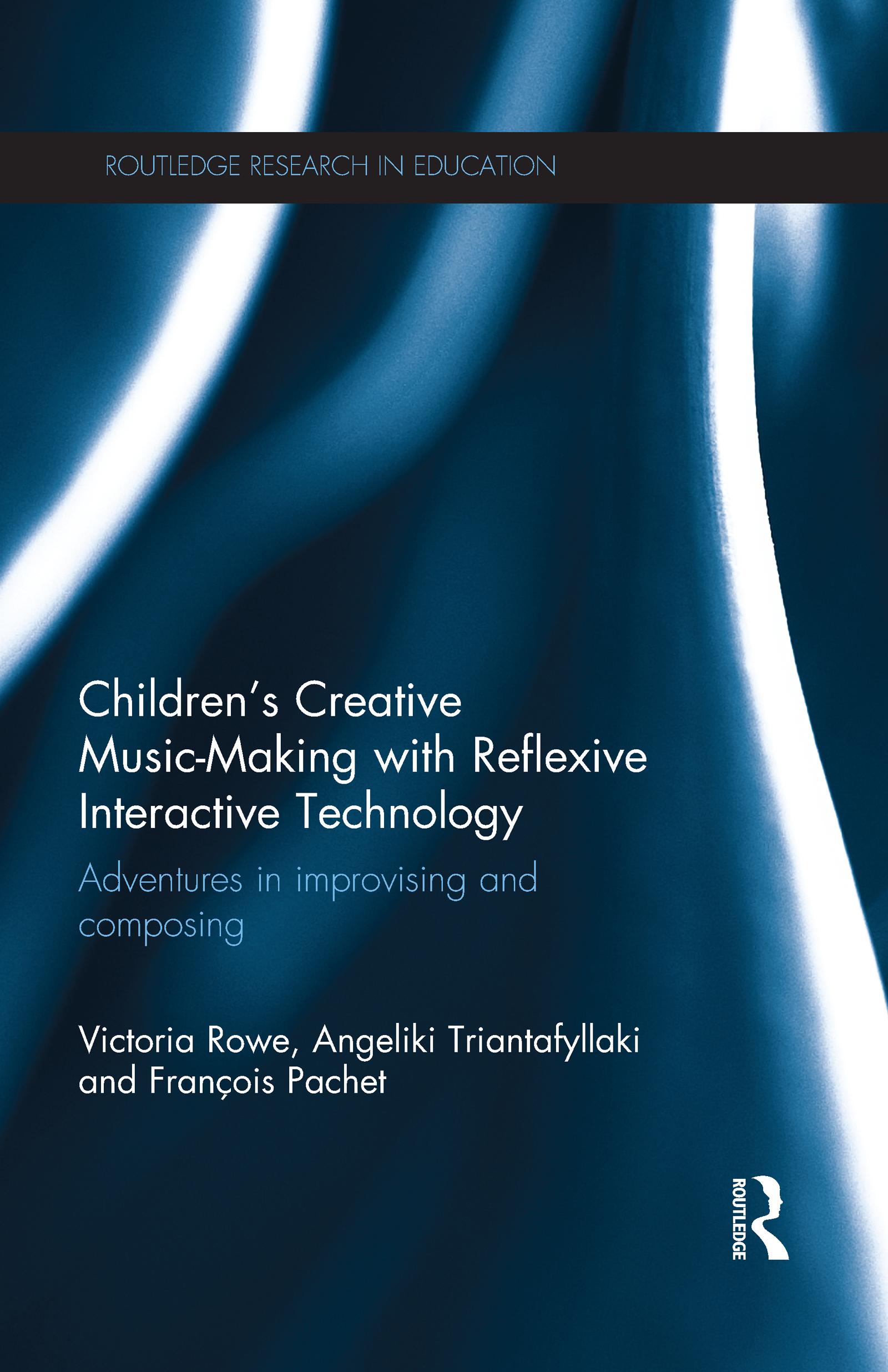
Children's Creative Music-Making with Reflexive Interactive Technology discusses pioneering experiments conducted with young children using a new generation of music software for improvising and composing. Using artificial intelligence techniques, this software captures the children’s musical style and interactively reflects it in its responses. The book describes the potential of these applications to enhance children’s agency and musical identity by reflecting players’ musical inputs, storing and creating variations on them. Set in the broader context of current music education research, it addresses the benefits and challenges of incorporating music technologies in primary and pre-school education.
It is comprised of six main chapters, which cover the creation of children's own music and their musical selves, critical thinking skills and learner agency, musical language development, and emotional intent during creative music-making. The authors provide a range of straight-forward techniques and strategies, which challenge conceptions of ‘difficult-to-use music technologies’ in formal music education. These are supported by an informative collection of practitioner vignettes written by teachers who have used the software in their classrooms. Not only are the teachers’ voices heard here, but also those of children as they discover some of the creative possibilities of music making. The book also provides free access to a companion website with teacher forums and a large bank of activities to explore. A toolkit serves as a database of the teaching activities in which MIROR applications have been used and provides a set of useful ideas regarding its future use in a variety of settings.
This book demonstrates that music applications based on artificial intelligence techniques can make an important contribution to music education within primary and pre-school education. It will be of key interest to academics, researchers and postgraduate students in the fields of music education, music technology, early years and primary education, teaching and learning, and teacher educators. It will also serve as an important point of reference for Early Years and Primary practitioners.
Before Memmo my notes were scattered across PDFs. Now a workspace pulls everything into one place — I see exactly what's still left to study.
Memmo's summaries are gold before exams. I don't have to re-read 800 pages two weeks before — just the important parts.
The AI chat has saved me the night before an exam more than once. I just keep asking until I get it — no waiting on a study group to reply.
The quizzes hit exactly what I need to know. Memmo tracks what I get stuck on — so I only practice what's worth it.
Flashcards with spaced repetition are magic. Memmo knows when I'm about to forget something and brings it back.
The AI podcasts are my favorite. I listen on my way to school and get a recap without sitting at a computer.

Handbok i kvalitativa metoder
281 kr

Hållbar utveckling: en introduktion för ingenjörer och andra problemlösare
334 kr

Brymans Samhällsvetenskapliga metoder
390 kr

Projektledning
491 kr

Den orättvisa hälsan: om socioekonomiska skillnader i hälsa och livslängd
326 kr

Vetenskapsteori för nybörjare
196 kr

Organizational Leadership
429 kr

På väg mot läraryrket
172 kr

Det sociala livet i skolan: Socialpsykologiska perspektiv
253 kr

Betygsättningens didaktik
151 kr

Personality
402 kr

Studying Leadership
404 kr

Managing Innovation
477 kr

Introduktion till samhällsvetenskaplig metod
347 kr

The Psychology of Sex and Gender
698 kr

Evidens och kunskap för socialt arbete
207 kr

Introduction to Leadership
605 kr