
Before Memmo my notes were scattered across PDFs. Now a workspace pulls everything into one place — I see exactly what's still left to study.
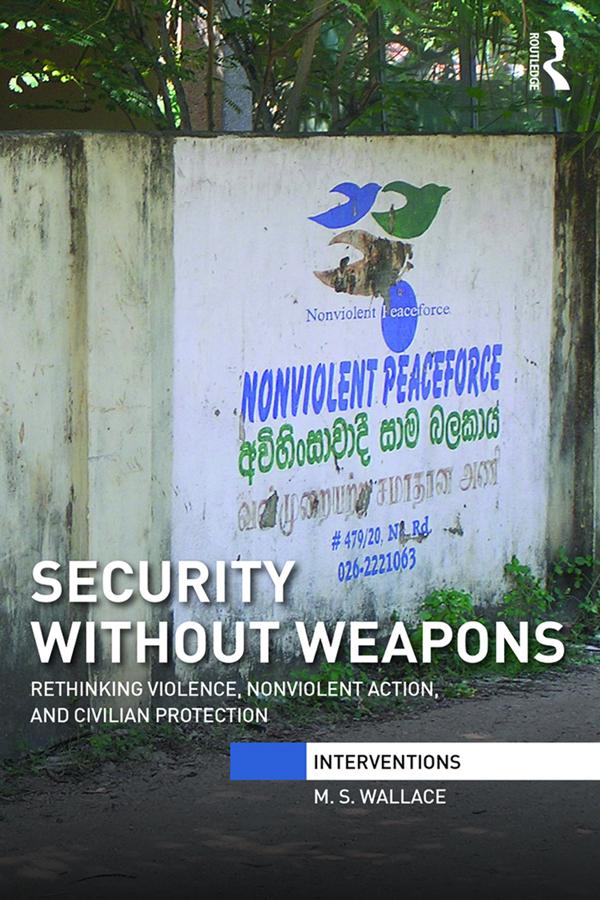
Few questions of global politics are more pressing than how to respond to widespread violence against civilians. Despite the efforts of Responsibility to Protect (R2P) proponents to draw attention away from exclusively military responses, debates on humanitarian intervention and R2P’s “Third Pillar” still tend to boil down to two unsatisfying options: stand by and “do nothing” or take military action to protect civilians – essentially using violence to stop violence. Accordingly – and given disagreement and uncertainty regarding moral claims, as well as the unpredictability of military effectiveness – this book asks: how can we counter violence ethically and effectively, taking action consistent with our particular moral commitments while also nurturing difference and enacting responsibility towards multiple others?
After evaluating the pragmatic and ethical failings of military action, the book proposes nonviolent intervention as a third – unarmed, on-the-ground – option for protecting civilians during humanitarian crises. In the empirical section of the book, focusing on the discursive and psychological conditions enabling violence, Wallace analyses the mechanisms by which Nonviolent Peaceforce – an international NGO engaged in nonviolent intervention/ unarmed civilian peacekeeping (UCP) – was able to protect civilians and prevent violence, even if on a limited scale, in the broader context of Sri Lanka’s war/counterinsurgency in 2008.
Both philosophically innovative and practically useful to those working in the field, the book contributes to a range of literatures and debates: from just war theory and poststructuralist ethics to nonviolent action and conflict transformation, and from humanitarian intervention, R2P, and civilian protection to strategic theory and discursive and psychological theories of violence.
Before Memmo my notes were scattered across PDFs. Now a workspace pulls everything into one place — I see exactly what's still left to study.
Memmo's summaries are gold before exams. I don't have to re-read 800 pages two weeks before — just the important parts.
The AI chat has saved me the night before an exam more than once. I just keep asking until I get it — no waiting on a study group to reply.
The quizzes hit exactly what I need to know. Memmo tracks what I get stuck on — so I only practice what's worth it.
Flashcards with spaced repetition are magic. Memmo knows when I'm about to forget something and brings it back.
The AI podcasts are my favorite. I listen on my way to school and get a recap without sitting at a computer.

Handbok i kvalitativa metoder
281 kr

Hållbar utveckling: en introduktion för ingenjörer och andra problemlösare
334 kr

Brymans Samhällsvetenskapliga metoder
390 kr

Projektledning
491 kr

Den orättvisa hälsan: om socioekonomiska skillnader i hälsa och livslängd
326 kr

Organizational Leadership
429 kr

Vetenskapsteori för nybörjare
196 kr

På väg mot läraryrket
172 kr

Det sociala livet i skolan: Socialpsykologiska perspektiv
253 kr

Betygsättningens didaktik
151 kr

Personality
402 kr

Studying Leadership
404 kr

Managing Innovation
477 kr

Introduktion till samhällsvetenskaplig metod
347 kr

The Psychology of Sex and Gender
698 kr

Evidens och kunskap för socialt arbete
207 kr

Introduction to Leadership
605 kr