
Before Memmo my notes were scattered across PDFs. Now a workspace pulls everything into one place — I see exactly what's still left to study.
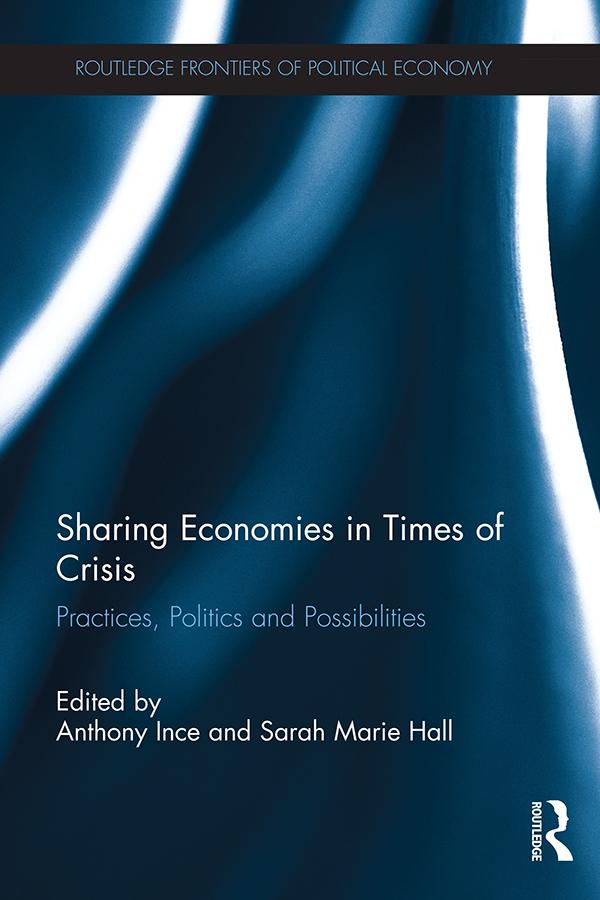
The ‘new sharing economy’ is a growing phenomenon across the Global North. It claims to transform relationships of production and consumption in a way that can improve our lives, reduce environmental impacts, and reduce the cost of living. Amidst various economic, environmental, and other crises, this message has strong resonance. Yet, it is not without controversy, and there have been heated debates over negative dimensions for workers and consumers alike. This book stretches far beyond the sharing economy as it is popularly defined, and explores the complex intersections of ‘sharing’ and ‘the economy’, and how a better understanding of these relationships might help us address the multiple crises that confront contemporary societies.
The contributors to this book explore a wide diversity of sharing systems and practices from various empirical case studies, ranging from hospitality to seed-swapping, and from indigenous land rights to alcohol consumption. In each chapter, a different crisis or vulnerability frames and shapes the study, allowing contributors to unpick the ways in which crisis and sharing relate to each other in real life. The book is divided into three thematic sections. Following an extended introduction to the themes and ideas of the book by the editors, the first section foregrounds the shaping of sharing practices by already existing or anticipated crises. The second section focuses on the lived relations between sharing and economic practice. In the third section, authors conclude the book by exploring the possibilities and challenges for creating alternative economic forms grounded in practices of sharing.
This edited volume makes a major, original contribution towards academic understandings of sharing economies in the context of crises. It is suitable for both students and academics who are interested in political economy, economic geography and consumption.
Before Memmo my notes were scattered across PDFs. Now a workspace pulls everything into one place — I see exactly what's still left to study.
Memmo's summaries are gold before exams. I don't have to re-read 800 pages two weeks before — just the important parts.
The AI chat has saved me the night before an exam more than once. I just keep asking until I get it — no waiting on a study group to reply.
The quizzes hit exactly what I need to know. Memmo tracks what I get stuck on — so I only practice what's worth it.
Flashcards with spaced repetition are magic. Memmo knows when I'm about to forget something and brings it back.
The AI podcasts are my favorite. I listen on my way to school and get a recap without sitting at a computer.

Handbok i kvalitativa metoder
281 kr

Hållbar utveckling: en introduktion för ingenjörer och andra problemlösare
334 kr

Brymans Samhällsvetenskapliga metoder
390 kr

Projektledning
491 kr

Den orättvisa hälsan: om socioekonomiska skillnader i hälsa och livslängd
326 kr

Vetenskapsteori för nybörjare
196 kr

Organizational Leadership
429 kr

På väg mot läraryrket
172 kr

Det sociala livet i skolan: Socialpsykologiska perspektiv
253 kr

Betygsättningens didaktik
151 kr

Personality
402 kr

Studying Leadership
404 kr

Managing Innovation
477 kr

Introduktion till samhällsvetenskaplig metod
347 kr

The Psychology of Sex and Gender
698 kr

Evidens och kunskap för socialt arbete
207 kr

Introduction to Leadership
605 kr