
Before Memmo my notes were scattered across PDFs. Now a workspace pulls everything into one place — I see exactly what's still left to study.
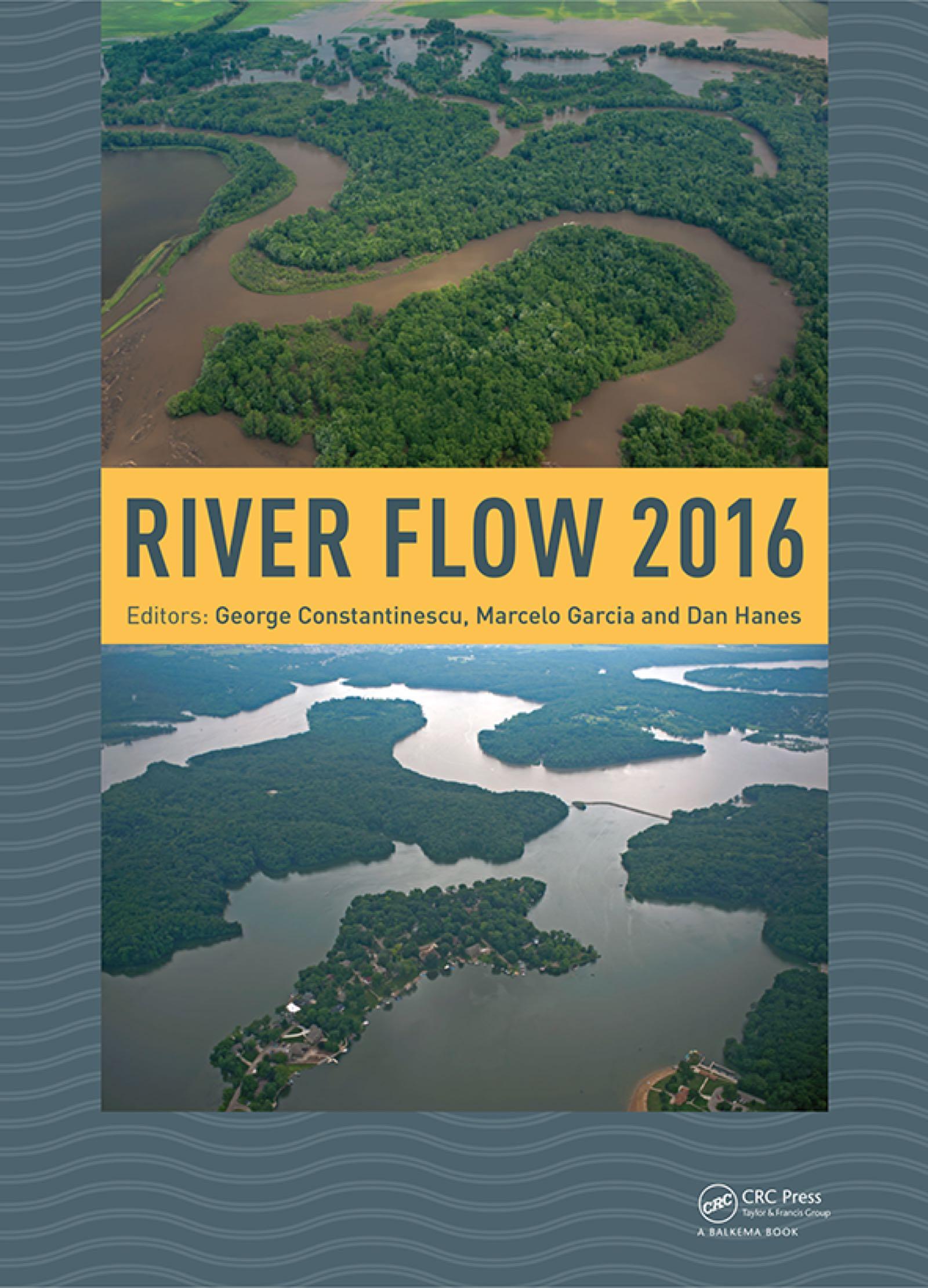
Understanding and being able to predict fluvial processes is one of the biggest challenges for hydraulics and environmental engineers, hydrologists and other scientists interested in preserving and restoring the diverse functions of rivers. The interactions among flow, turbulence, vegetation, macroinvertebrates and other organisms, as well as the transport and retention of particulate matter, have important consequences on the ecological health of rivers. Managing rivers in an ecologically friendly way is a major component of sustainable engineering design, maintenance and restoration of ecological habitats. To address these challenges, a major focus of River Flow 2016 was to highlight the latest advances in experimental, computational and theoretical approaches that can be used to deepen our understanding and capacity to predict flow and the associated fluid-driven ecological processes, anthropogenic influences, sediment transport and morphodynamic processes.
River Flow 2016 was organized under the auspices of the Committee for Fluvial Hydraulics of the International Association for Hydro-Environment Engineering and Research (IAHR). Since its first edition in 2002, the River Flow conference series has become the main international event focusing on river hydrodynamics, sediment transport, river engineering and restoration. Some of the highlights of the 8th International Conference on Fluvial Hydraulics were to focus on inter-disciplinary research involving, among others, ecological and biological aspects relevant to river flows and processes and to emphasize broader themes dealing with river sustainability. River Flow 2016 contains the contributions presented during the regular sessions covering the main conference themes and the special sessions focusing on specific hot topics of river flow research, and will be of interest to academics interested in hydraulics, hydrology and environmental engineering.
Before Memmo my notes were scattered across PDFs. Now a workspace pulls everything into one place — I see exactly what's still left to study.
Memmo's summaries are gold before exams. I don't have to re-read 800 pages two weeks before — just the important parts.
The AI chat has saved me the night before an exam more than once. I just keep asking until I get it — no waiting on a study group to reply.
The quizzes hit exactly what I need to know. Memmo tracks what I get stuck on — so I only practice what's worth it.
Flashcards with spaced repetition are magic. Memmo knows when I'm about to forget something and brings it back.
The AI podcasts are my favorite. I listen on my way to school and get a recap without sitting at a computer.

Handbok i kvalitativa metoder
281 kr

Hållbar utveckling: en introduktion för ingenjörer och andra problemlösare
334 kr

Brymans Samhällsvetenskapliga metoder
390 kr

Projektledning
491 kr

Den orättvisa hälsan: om socioekonomiska skillnader i hälsa och livslängd
326 kr

Organizational Leadership
429 kr

Vetenskapsteori för nybörjare
196 kr

På väg mot läraryrket
172 kr

Det sociala livet i skolan: Socialpsykologiska perspektiv
253 kr

Betygsättningens didaktik
151 kr

Personality
402 kr

Studying Leadership
404 kr

Managing Innovation
477 kr

Introduktion till samhällsvetenskaplig metod
347 kr

The Psychology of Sex and Gender
698 kr

Evidens och kunskap för socialt arbete
207 kr

Introduction to Leadership
605 kr