
Before Memmo my notes were scattered across PDFs. Now a workspace pulls everything into one place — I see exactly what's still left to study.
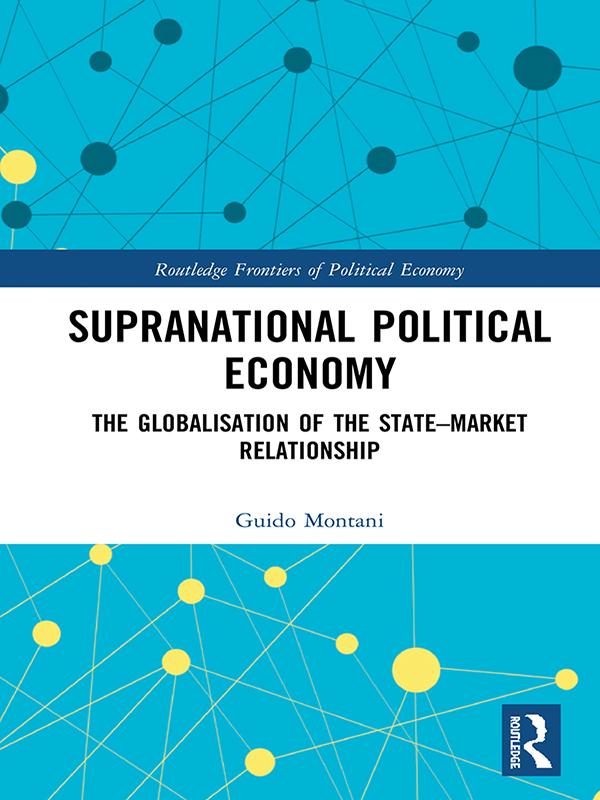
With the ending of the Cold War and the rise of a nationalistic ‘America First’ strategy, the post-war liberal international order, based upon the hegemonic power of the USA, is fading away. In its place, a multipolar world is emerging which, while offering some the hope of a better future, is also open to disorder and instability. This book offers an insight into the relationship between politics and economics in this new era.
As an alternative, this volume argues for a form of global governance that will offer a better balance between politics and economics, based on a supranational approach. A supranational approach in which world powers and UN member states can work in agreement would follow the principle on which European political and economic integration was built. The system put forward here is based on a Keynesian world clearing union and a reform of the World Trade Organization and a United Nations budget, which would accelerate the convergence of rich and poor countries in the aim of a more sustainable global system. This book demonstrates that globalisations and today’s ecological challenges are both a cause of social discontent and an opportunity. Supranational institutions can greatly increase our ability to address global risks, and this book shows how a 'supranational' world order could reduce the uncertainty of the transition from the post-war order to the future multipolar order.
The supranational principle enables us to view globalisation, world capitalism and the ecological crisis not only as causes of inequality, poverty and social instability, but also as processes that can be governed. Wise politicians and political parties cannot let the future of humanity be decided by the precarious equilibrium of the Westphalia system. In post-war Europe a group of nation states, once fierce enemies, embarked on a process of integration which led to the abolition of inter-European national borders. With supranational global governance, the same could be achieved in the global system.
Before Memmo my notes were scattered across PDFs. Now a workspace pulls everything into one place — I see exactly what's still left to study.
Memmo's summaries are gold before exams. I don't have to re-read 800 pages two weeks before — just the important parts.
The AI chat has saved me the night before an exam more than once. I just keep asking until I get it — no waiting on a study group to reply.
The quizzes hit exactly what I need to know. Memmo tracks what I get stuck on — so I only practice what's worth it.
Flashcards with spaced repetition are magic. Memmo knows when I'm about to forget something and brings it back.
The AI podcasts are my favorite. I listen on my way to school and get a recap without sitting at a computer.

Handbok i kvalitativa metoder
281 kr

Hållbar utveckling: en introduktion för ingenjörer och andra problemlösare
334 kr

Brymans Samhällsvetenskapliga metoder
390 kr

Projektledning
491 kr

Den orättvisa hälsan: om socioekonomiska skillnader i hälsa och livslängd
326 kr

Vetenskapsteori för nybörjare
196 kr

Organizational Leadership
429 kr

På väg mot läraryrket
172 kr

Det sociala livet i skolan: Socialpsykologiska perspektiv
253 kr

Betygsättningens didaktik
151 kr

Personality
402 kr

Studying Leadership
404 kr

Managing Innovation
477 kr

Introduktion till samhällsvetenskaplig metod
347 kr

The Psychology of Sex and Gender
698 kr

Evidens och kunskap för socialt arbete
207 kr

Introduction to Leadership
605 kr