
Before Memmo my notes were scattered across PDFs. Now a workspace pulls everything into one place — I see exactly what's still left to study.
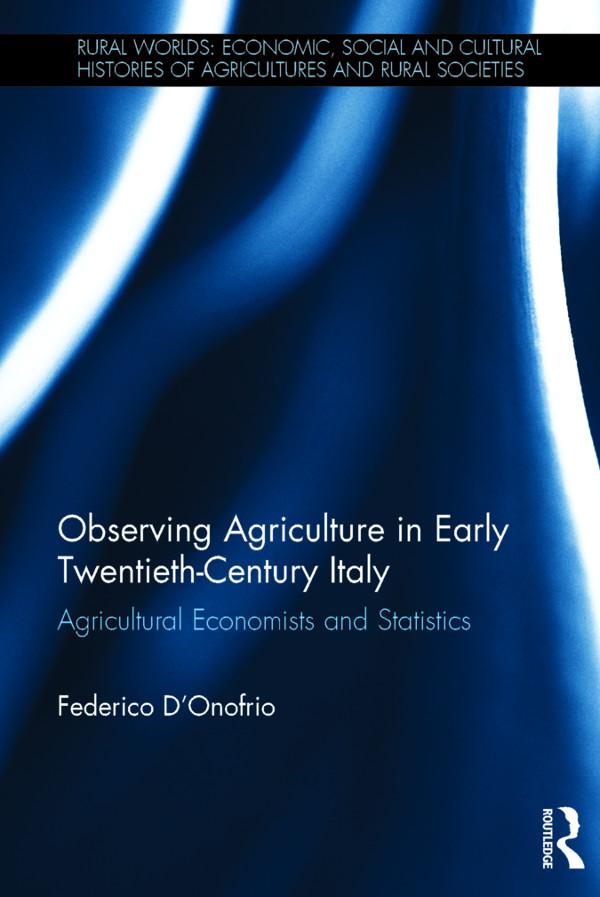
Agricultural Economists in Early Twentieth-Century Italy describes how Italian agricultural economists collected information about the economy of Italy, between the Giolittian and the Fascist era. The book carefully describes three main forms of economic observation: enquiries, statistics, and farm surveys. For each of these forms of observation, the main participants to the investigation are discussed with their respective agendas, alongside the purposes of the investigation, and its practical constraints. This work introduces the concept of "stakeholder statistics", and stresses the two-way relation between the observer and the observed in the co-production of observational knowledge. Practices of observation developed together with agricultural economics as a discipline and a profession. The study of forms of investigation therefore shed light on the constitution of a coherent and self-conscious group of agricultural economists in Italy, and the scientific and methodological alliances they forged with agricultural economists elsewhere in Europe. Thanks to ambitious research projects, Ghino Valenti in the Giolittian period, and Arrigo Serpieri, after the First World War, led the transformation of Italian agricultural economists from agents of estate owners, to social and economic experts in the service of the Italian state. The group of agricultural economists who gathered around Serpieri played an important role in supplying the ideology of the agricultural elites with economic content, especially after the First World War, along lines that resemble the development of agrarian ideologies in other countries of Central Europe. This work discusses how observation entered the political debate on agricultural policies of the Fascist regime, namely the so-called Ruralismo.
Before Memmo my notes were scattered across PDFs. Now a workspace pulls everything into one place — I see exactly what's still left to study.
Memmo's summaries are gold before exams. I don't have to re-read 800 pages two weeks before — just the important parts.
The AI chat has saved me the night before an exam more than once. I just keep asking until I get it — no waiting on a study group to reply.
The quizzes hit exactly what I need to know. Memmo tracks what I get stuck on — so I only practice what's worth it.
Flashcards with spaced repetition are magic. Memmo knows when I'm about to forget something and brings it back.
The AI podcasts are my favorite. I listen on my way to school and get a recap without sitting at a computer.

Handbok i kvalitativa metoder
281 kr

Hållbar utveckling: en introduktion för ingenjörer och andra problemlösare
334 kr

Brymans Samhällsvetenskapliga metoder
390 kr

Projektledning
491 kr

Den orättvisa hälsan: om socioekonomiska skillnader i hälsa och livslängd
326 kr

Vetenskapsteori för nybörjare
196 kr

Organizational Leadership
429 kr

På väg mot läraryrket
172 kr

Det sociala livet i skolan: Socialpsykologiska perspektiv
253 kr

Betygsättningens didaktik
151 kr

Personality
402 kr

Studying Leadership
404 kr

Managing Innovation
477 kr

Introduktion till samhällsvetenskaplig metod
347 kr

The Psychology of Sex and Gender
698 kr

Evidens och kunskap för socialt arbete
207 kr

Introduction to Leadership
605 kr