
Before Memmo my notes were scattered across PDFs. Now a workspace pulls everything into one place — I see exactly what's still left to study.
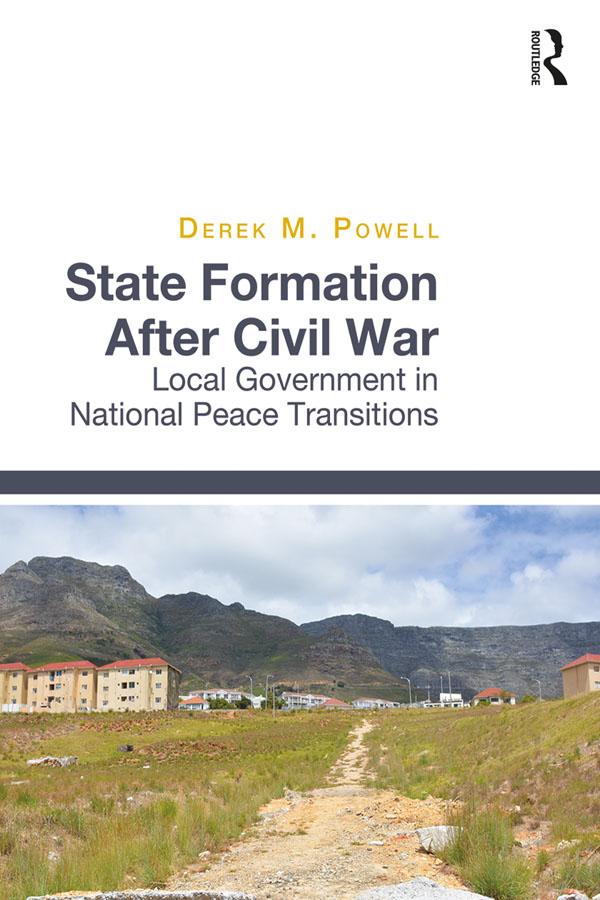
State formation after civil war offers a new model for studying the formation of the state in a national peace transition as an integrated national phenomenon. Current models of peacebuilding and state building limit that possibility, reproducing a fragmented, selective view of this complex reality. Placing too much emphasis on state building as design they place too little on understanding state formation as unplanned historical process. The dominant focus on national institutions also ignores the role that cities and civic polities have played in constituting the modern state. Mining ideas from many disciplines and evidence from 19 peace processes, including South Africa, the book argues that the starting point for building a systematic theory is to explain a distinct pattern to state formation that can be observed in practice: Despite their conflicts people in fragile societies bargain terms for peaceful coexistence, they make attempts to constitute the right to rule as valid state authority, in circumstances prone to conflict, over which they have imperfect influence, not control. Though the kind of institutions created will differ with context, how rules for state authority are institutionalized follows a consistent basic pattern. That pattern defines state formation in peace transitions as both a unified, if contingent, field of normative practice and an object of comparative study.
Where the national-centric models see local government as a matter belonging to policy on decentralization for later in the reconstruction phase, the book uncovers a distinct "local government dimension" to peace transitions: A civic dimension to national conflicts that must be explained; incipient or proto-local authorities that emerge even during civil war, in peace making, after state collapse; the fact that it is common for peace agreements and constitutions to include rules for local authority, for local elections to be held as part of broader democratization, and for laws to be enacted to establish local government as part of peace compacts. The book develops the concept of local peace transition to explain the distinctive constitutive role of this local dimension in peace-making and state formation.
This path-breaking book will be of compelling interest to practitioners, scholars and students of comparative constitutional studies, international law, peace building and state building.
Before Memmo my notes were scattered across PDFs. Now a workspace pulls everything into one place — I see exactly what's still left to study.
Memmo's summaries are gold before exams. I don't have to re-read 800 pages two weeks before — just the important parts.
The AI chat has saved me the night before an exam more than once. I just keep asking until I get it — no waiting on a study group to reply.
The quizzes hit exactly what I need to know. Memmo tracks what I get stuck on — so I only practice what's worth it.
Flashcards with spaced repetition are magic. Memmo knows when I'm about to forget something and brings it back.
The AI podcasts are my favorite. I listen on my way to school and get a recap without sitting at a computer.

Handbok i kvalitativa metoder
281 kr

Hållbar utveckling: en introduktion för ingenjörer och andra problemlösare
334 kr

Brymans Samhällsvetenskapliga metoder
390 kr

Projektledning
491 kr

Den orättvisa hälsan: om socioekonomiska skillnader i hälsa och livslängd
326 kr

Vetenskapsteori för nybörjare
196 kr

Organizational Leadership
429 kr

På väg mot läraryrket
172 kr

Det sociala livet i skolan: Socialpsykologiska perspektiv
253 kr

Betygsättningens didaktik
151 kr

Personality
402 kr

Studying Leadership
404 kr

Managing Innovation
477 kr

Introduktion till samhällsvetenskaplig metod
347 kr

The Psychology of Sex and Gender
698 kr

Evidens och kunskap för socialt arbete
207 kr

Introduction to Leadership
605 kr