
Before Memmo my notes were scattered across PDFs. Now a workspace pulls everything into one place — I see exactly what's still left to study.
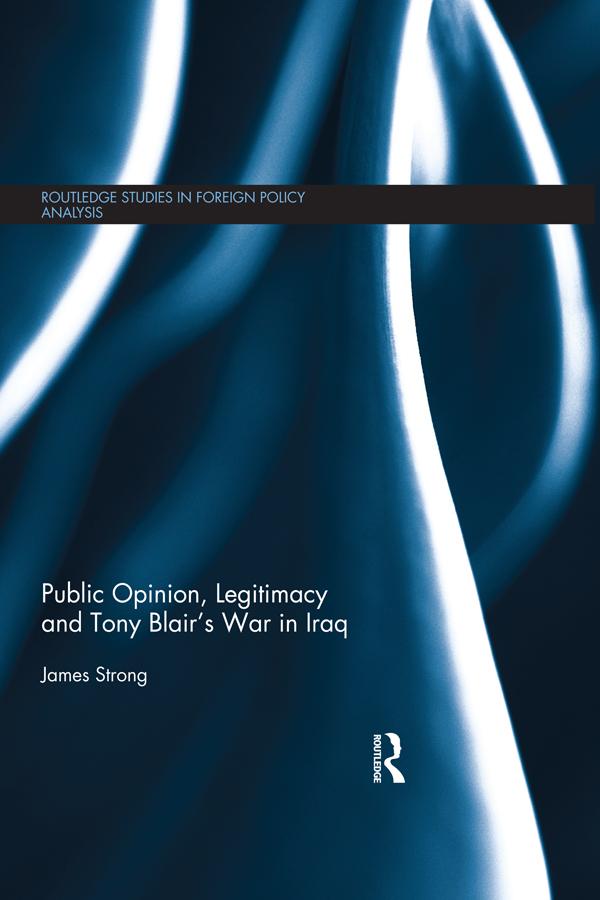
In the wake of the publication of the Chilcot report, this book reinterprets the relationship between British public opinion and the Blair government’s decision-making in the run-up to the 2003 invasion of Iraq. It highlights how the government won the parliamentary vote and got its war, but never won the argument that it was the right thing to do. Understanding how, why and with what consequences Britain wound up in this position means understanding better both this specific case and the wider issue of how democratic publics influence foreign policy processes.
Taking an innovative constructivist approach to understanding how public actors potentially influence foreign policy, Strong frames the debate about Iraq as a contest over legitimacy among active public actors, breaking it down into four constituent elements covering the necessity, legality and morality of war, and the government’s authority. The book presents a detailed empirical account of the British public debate before the invasion of Iraq based on the rigorous interrogation of thousands of primary sources, employing both quantitative and qualitative content analysis methods to interpret the shape of debate between January 2002 and March 2003.
Also contributing to the wider foreign policy analysis literature, the book investigates the domestic politics of foreign policy decision-making, and particularly the influence public opinion exerts; considers the domestic structural determinants of foreign policy decision-making; and studies the ethics of foreign policy decision-making, and the legitimate use of force. It will be of great use to students and scholars of foreign policy analysis, as well as those interested in legitimacy in international conflict, British foreign policy, the Iraq War and the role of public opinion in conflict situations.
Before Memmo my notes were scattered across PDFs. Now a workspace pulls everything into one place — I see exactly what's still left to study.
Memmo's summaries are gold before exams. I don't have to re-read 800 pages two weeks before — just the important parts.
The AI chat has saved me the night before an exam more than once. I just keep asking until I get it — no waiting on a study group to reply.
The quizzes hit exactly what I need to know. Memmo tracks what I get stuck on — so I only practice what's worth it.
Flashcards with spaced repetition are magic. Memmo knows when I'm about to forget something and brings it back.
The AI podcasts are my favorite. I listen on my way to school and get a recap without sitting at a computer.

Handbok i kvalitativa metoder
281 kr

Hållbar utveckling: en introduktion för ingenjörer och andra problemlösare
334 kr

Brymans Samhällsvetenskapliga metoder
390 kr

Projektledning
491 kr

Den orättvisa hälsan: om socioekonomiska skillnader i hälsa och livslängd
326 kr

Vetenskapsteori för nybörjare
196 kr

Organizational Leadership
429 kr

På väg mot läraryrket
172 kr

Det sociala livet i skolan: Socialpsykologiska perspektiv
253 kr

Betygsättningens didaktik
151 kr

Personality
402 kr

Studying Leadership
404 kr

Managing Innovation
477 kr

Introduktion till samhällsvetenskaplig metod
347 kr

The Psychology of Sex and Gender
698 kr

Evidens och kunskap för socialt arbete
207 kr

Introduction to Leadership
605 kr