
Before Memmo my notes were scattered across PDFs. Now a workspace pulls everything into one place — I see exactly what's still left to study.
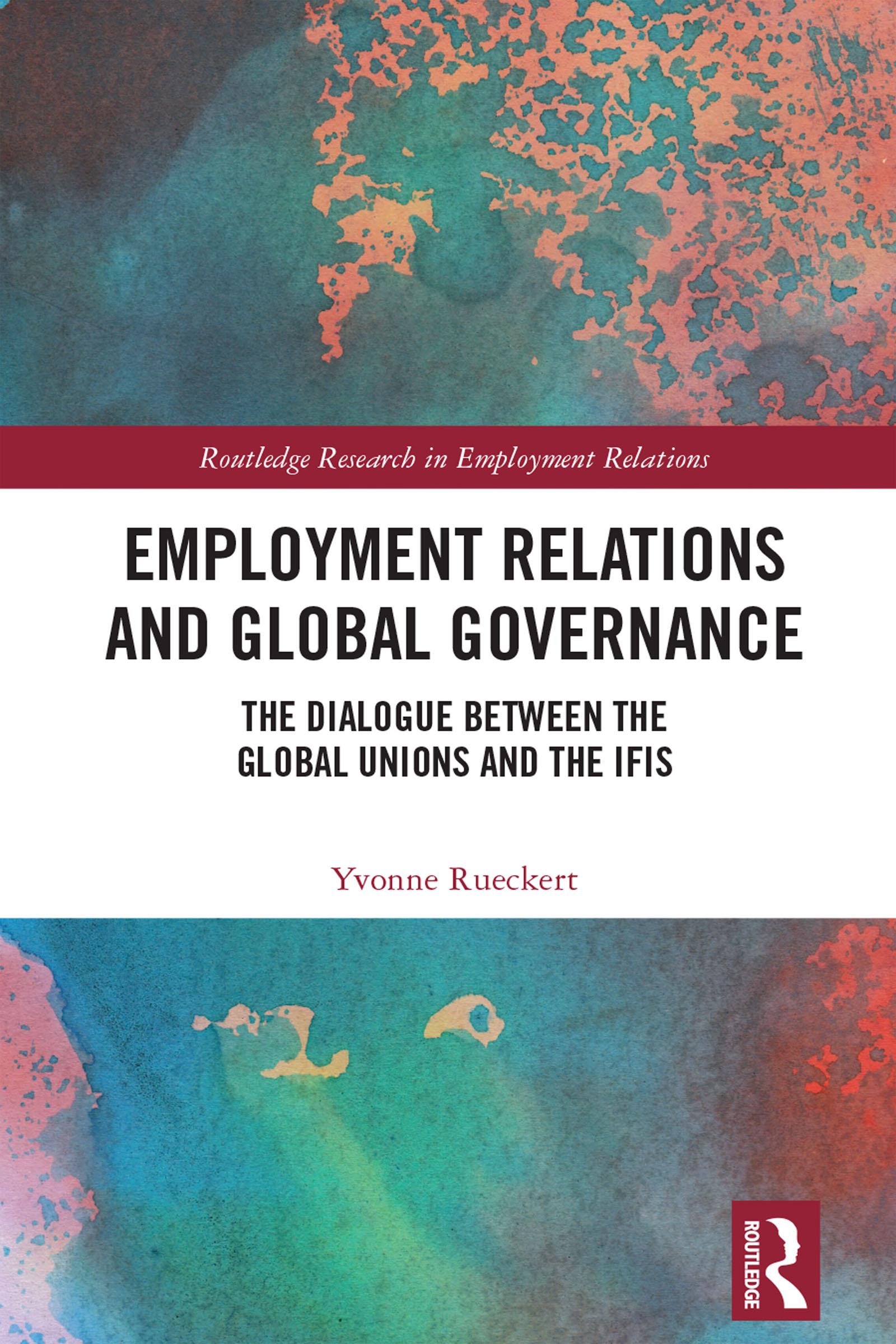
Globalisation has created many opportunities for economic development, but it is also associated with rising income inequality and poverty. International crises such as the international financial and economic crisis of 2008, and more recently the global health pandemic, have led to a rise in unemployment and income losses for workers and a surge in the violation of workers’ rights.
At global level intergovernmental organisations including the World Bank and the IMF are influential actors and policy makers which promote the UN Sustainable Development Goals. However, the International Financial Institutions (IFIs) have been criticised for their internal political power imbalances and macroeconomic policy prescriptions based on neo-liberal principles. The Global Unions and their affiliates as well as the International Labour Organisation (ILO) regularly comment on the negative impact of the IFI’s policies in regard to labour flexibilisation and the privatisation of public and social services.
In 2002 a formalised dialogue was established between the Global Unions and the IFIs which addresses labour, social and environmental issues. This dialogue takes place at three levels: the country level, the sector level, and the headquarters level. The ILO maintains its own dialogue with the IFIs, but it also participates at the headquarters-level dialogue between the Global Unions and the IFIs.
Employment Relations and Global Governance focuses on the headquarters-level dialogue which can be considered as a strategic instrument that helps the Global Unions and their affiliates to exercise influence over the policies of the IFIs, especially those policies which concern workers. The book describes and analyses the development of the dialogue since its establishment with a particular focus on factors which promote and hinder the dialogue.
The book provides important insights into the real-world functioning of the institutions of economic global governance and its broader impact on the world of work. It is likely to be key reading for academics, researchers and students studying global employment relations, political economy, and international organisations. It will also be of interest to international and national trade unions, non-governmental organisations, and policy makers.
Before Memmo my notes were scattered across PDFs. Now a workspace pulls everything into one place — I see exactly what's still left to study.
Memmo's summaries are gold before exams. I don't have to re-read 800 pages two weeks before — just the important parts.
The AI chat has saved me the night before an exam more than once. I just keep asking until I get it — no waiting on a study group to reply.
The quizzes hit exactly what I need to know. Memmo tracks what I get stuck on — so I only practice what's worth it.
Flashcards with spaced repetition are magic. Memmo knows when I'm about to forget something and brings it back.
The AI podcasts are my favorite. I listen on my way to school and get a recap without sitting at a computer.

Handbok i kvalitativa metoder
281 kr

Hållbar utveckling: en introduktion för ingenjörer och andra problemlösare
334 kr

Brymans Samhällsvetenskapliga metoder
390 kr

Projektledning
491 kr

Den orättvisa hälsan: om socioekonomiska skillnader i hälsa och livslängd
326 kr

Organizational Leadership
429 kr

Vetenskapsteori för nybörjare
196 kr

På väg mot läraryrket
172 kr

Det sociala livet i skolan: Socialpsykologiska perspektiv
253 kr

Betygsättningens didaktik
151 kr

Personality
402 kr

Studying Leadership
404 kr

Managing Innovation
477 kr

Introduktion till samhällsvetenskaplig metod
347 kr

The Psychology of Sex and Gender
698 kr

Evidens och kunskap för socialt arbete
207 kr

Introduction to Leadership
605 kr