
Before Memmo my notes were scattered across PDFs. Now a workspace pulls everything into one place — I see exactly what's still left to study.
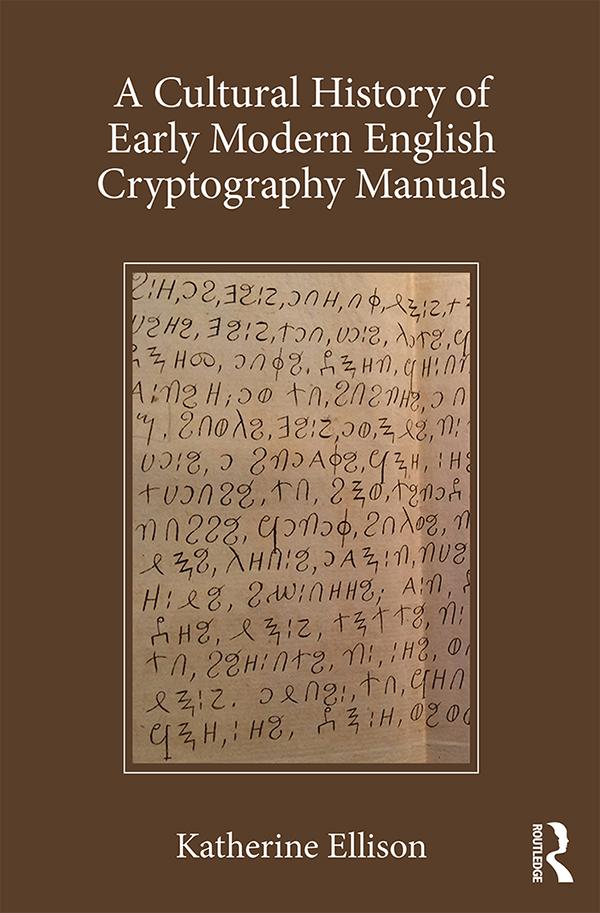
During and after the English civil wars, between 1640 and 1690, an unprecedented number of manuals teaching cryptography were published, almost all for the general public. While there are many surveys of cryptography, none pay any attention to the volume of manuals that appeared during the seventeenth century, or provide any cultural context for the appearance, design, or significance of the genre during the period. On the contrary, when the period’s cryptography writings are mentioned, they are dismissed as esoteric, impractical, and useless. Yet, as this book demonstrates, seventeenth-century cryptography manuals show us one clear beginning of the capitalization of information. In their pages, intelligence—as private message and as mental ability—becomes a central commodity in the emergence of England’s capitalist media state. Publications boasting the disclosure of secrets had long been popular, particularly for English readers with interests in the occult, but it was during these particular decades of the seventeenth century that cryptography emerged as a permanent bureaucratic function for the English government, a fashionable activity for the stylish English reader, and a respected discipline worthy of its own genre.
These manuals established cryptography as a primer for intelligence, a craft able to identify and test particular mental abilities deemed "smart" and useful for England’s financial future. Through close readings of five specific primary texts that have been ignored not only in cryptography scholarship but also in early modern literary, scientific, and historical studies, this book allows us to see one origin of disciplinary division in the popular imagination and in the university, when particular broad fields—the sciences, the mechanical arts, and the liberal arts—came to be viewed as more or less profitable.
Before Memmo my notes were scattered across PDFs. Now a workspace pulls everything into one place — I see exactly what's still left to study.
Memmo's summaries are gold before exams. I don't have to re-read 800 pages two weeks before — just the important parts.
The AI chat has saved me the night before an exam more than once. I just keep asking until I get it — no waiting on a study group to reply.
The quizzes hit exactly what I need to know. Memmo tracks what I get stuck on — so I only practice what's worth it.
Flashcards with spaced repetition are magic. Memmo knows when I'm about to forget something and brings it back.
The AI podcasts are my favorite. I listen on my way to school and get a recap without sitting at a computer.

Handbok i kvalitativa metoder
281 kr

Hållbar utveckling: en introduktion för ingenjörer och andra problemlösare
334 kr

Brymans Samhällsvetenskapliga metoder
390 kr

Projektledning
491 kr

Den orättvisa hälsan: om socioekonomiska skillnader i hälsa och livslängd
326 kr

Vetenskapsteori för nybörjare
196 kr

Organizational Leadership
429 kr

På väg mot läraryrket
172 kr

Det sociala livet i skolan: Socialpsykologiska perspektiv
253 kr

Betygsättningens didaktik
151 kr

Personality
402 kr

Studying Leadership
404 kr

Managing Innovation
477 kr

Introduktion till samhällsvetenskaplig metod
347 kr

The Psychology of Sex and Gender
698 kr

Evidens och kunskap för socialt arbete
207 kr

Introduction to Leadership
605 kr