
Before Memmo my notes were scattered across PDFs. Now a workspace pulls everything into one place — I see exactly what's still left to study.
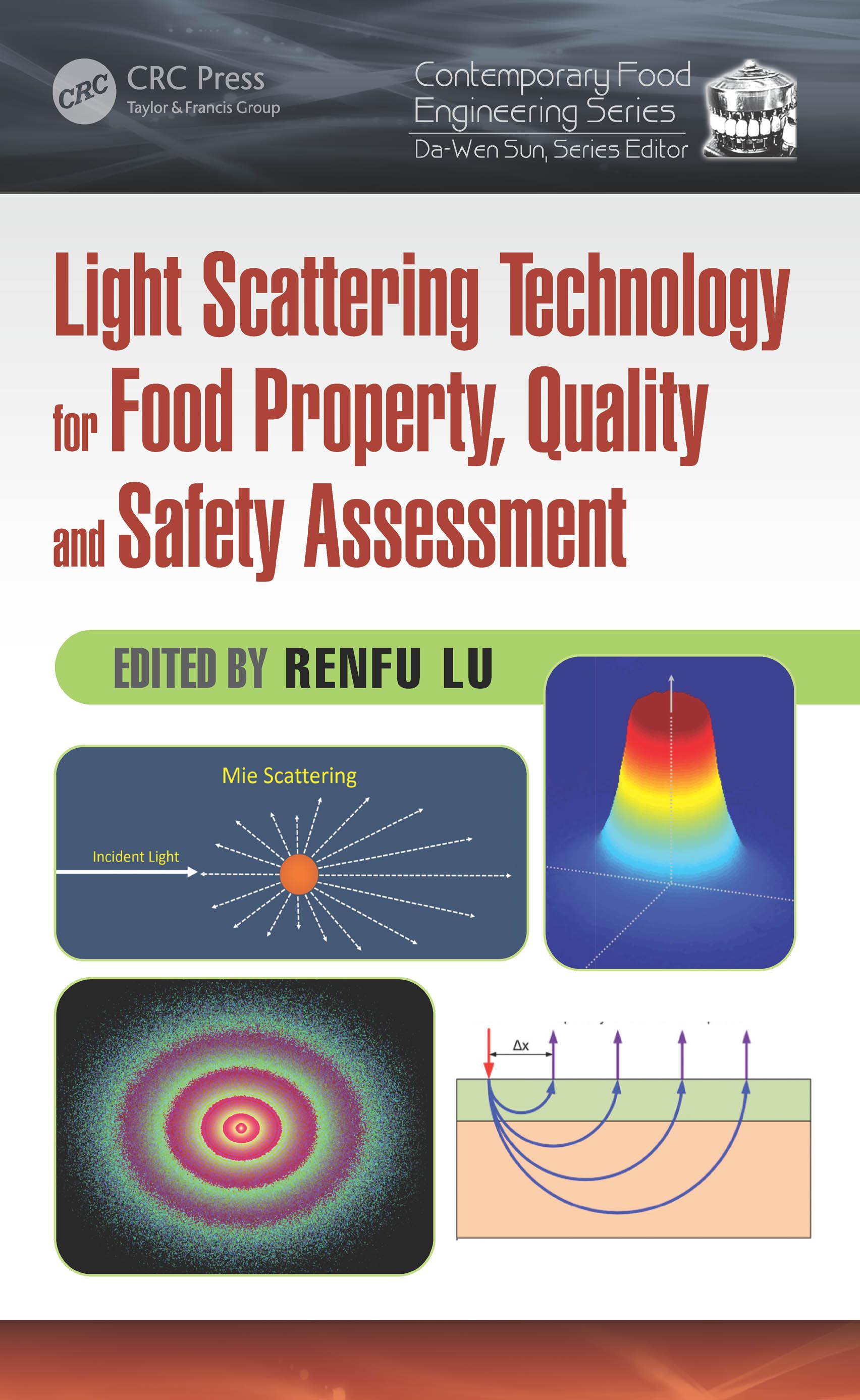
Light Scattering Technology for Food Property, Quality and Safety Assessment discusses the development and application of various light scattering techniques for measuring the structural and rheological properties of food, evaluating composition and quality attributes, and detecting pathogens in food. The first four chapters cover basic concepts, principles, theories, and modeling of light transfer in food and biological materials. Chapters 5 and 6 describe parameter estimation methods and basic techniques for determining optical absorption and scattering properties of food products.
Chapter 7 discusses the spatially-resolved measurement technique for determining the optical properties of food and biological materials, whereas Chapter 8 focuses on the time-resolved spectroscopic technique for measuring optical properties and quality or maturity of horticultural products. Chapter 9 examines practical light scattering techniques for nondestructive quality assessment of fruits and vegetables. Chapter 10 presents the theory of light transfer in meat muscle and the measurement of optical properties for determining the postmortem condition and textural properties of muscle foods and meat analogs.
Chapter 11 covers the applications of spatially-resolved light scattering techniques for assessing quality and safety of animal products. Chapter 12 looks into light scattering for milk and dairy processing. Chapter 13 examines the applications of dynamic light scattering for measuring the microstructure and rheological properties of food. Chapter 14 shows the applications of a biospeckle technique for assessing the quality and condition of fruits and vegetables. Chapter 15 provides a detailed description of Raman scattering spectroscopic and imaging techniques in food quality and safety assessment. Chapter 16, the final chapter, focuses on applications of light scattering techniques for the detection of food-borne pathogens.
Before Memmo my notes were scattered across PDFs. Now a workspace pulls everything into one place — I see exactly what's still left to study.
Memmo's summaries are gold before exams. I don't have to re-read 800 pages two weeks before — just the important parts.
The AI chat has saved me the night before an exam more than once. I just keep asking until I get it — no waiting on a study group to reply.
The quizzes hit exactly what I need to know. Memmo tracks what I get stuck on — so I only practice what's worth it.
Flashcards with spaced repetition are magic. Memmo knows when I'm about to forget something and brings it back.
The AI podcasts are my favorite. I listen on my way to school and get a recap without sitting at a computer.

Handbok i kvalitativa metoder
281 kr

Hållbar utveckling: en introduktion för ingenjörer och andra problemlösare
334 kr

Brymans Samhällsvetenskapliga metoder
390 kr

Projektledning
491 kr

Den orättvisa hälsan: om socioekonomiska skillnader i hälsa och livslängd
326 kr

Organizational Leadership
429 kr

Vetenskapsteori för nybörjare
196 kr

På väg mot läraryrket
172 kr

Det sociala livet i skolan: Socialpsykologiska perspektiv
253 kr

Betygsättningens didaktik
151 kr

Personality
402 kr

Studying Leadership
404 kr

Managing Innovation
477 kr

Introduktion till samhällsvetenskaplig metod
347 kr

The Psychology of Sex and Gender
698 kr

Evidens och kunskap för socialt arbete
207 kr

Introduction to Leadership
605 kr