
Before Memmo my notes were scattered across PDFs. Now a workspace pulls everything into one place — I see exactly what's still left to study.
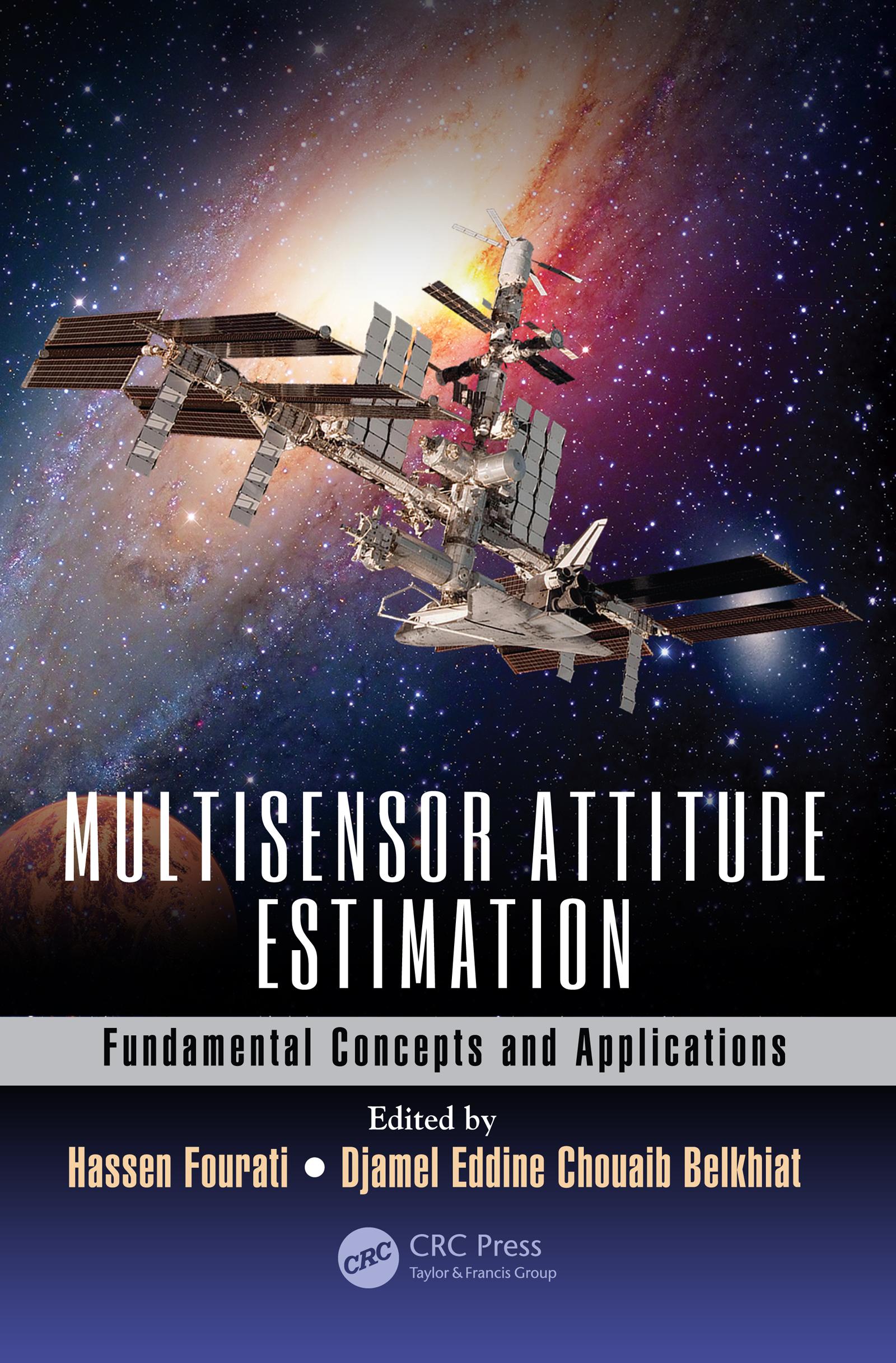
There has been an increasing interest in multi-disciplinary research on multisensor attitude estimation technology driven by its versatility and diverse areas of application, such as sensor networks, robotics, navigation, video, biomedicine, etc. Attitude estimation consists of the determination of rigid bodies’ orientation in 3D space. This research area is a multilevel, multifaceted process handling the automatic association, correlation, estimation, and combination of data and information from several sources. Data fusion for attitude estimation is motivated by several issues and problems, such as data imperfection, data multi-modality, data dimensionality, processing framework, etc. While many of these problems have been identified and heavily investigated, no single data fusion algorithm is capable of addressing all the aforementioned challenges. The variety of methods in the literature focus on a subset of these issues to solve, which would be determined based on the application in hand. Historically, the problem of attitude estimation has been introduced by Grace Wahba in 1965 within the estimate of satellite attitude and aerospace applications.
This book intends to provide the reader with both a generic and comprehensive view of contemporary data fusion methodologies for attitude estimation, as well as the most recent researches and novel advances on multisensor attitude estimation task. It explores the design of algorithms and architectures, benefits, and challenging aspects, as well as a broad array of disciplines, including: navigation, robotics, biomedicine, motion analysis, etc. A number of issues that make data fusion for attitude estimation a challenging task, and which will be discussed through the different chapters of the book, are related to: 1) The nature of sensors and information sources (accelerometer, gyroscope, magnetometer, GPS, inclinometer, etc.); 2) The computational ability at the sensors; 3) The theoretical developments and convergence proofs; 4) The system architecture, computational resources, fusion level.
Before Memmo my notes were scattered across PDFs. Now a workspace pulls everything into one place — I see exactly what's still left to study.
Memmo's summaries are gold before exams. I don't have to re-read 800 pages two weeks before — just the important parts.
The AI chat has saved me the night before an exam more than once. I just keep asking until I get it — no waiting on a study group to reply.
The quizzes hit exactly what I need to know. Memmo tracks what I get stuck on — so I only practice what's worth it.
Flashcards with spaced repetition are magic. Memmo knows when I'm about to forget something and brings it back.
The AI podcasts are my favorite. I listen on my way to school and get a recap without sitting at a computer.

Handbok i kvalitativa metoder
281 kr

Hållbar utveckling: en introduktion för ingenjörer och andra problemlösare
334 kr

Brymans Samhällsvetenskapliga metoder
390 kr

Projektledning
491 kr

Den orättvisa hälsan: om socioekonomiska skillnader i hälsa och livslängd
326 kr

Organizational Leadership
429 kr

Vetenskapsteori för nybörjare
196 kr

På väg mot läraryrket
172 kr

Det sociala livet i skolan: Socialpsykologiska perspektiv
253 kr

Betygsättningens didaktik
151 kr

Personality
402 kr

Studying Leadership
404 kr

Managing Innovation
477 kr

Introduktion till samhällsvetenskaplig metod
347 kr

The Psychology of Sex and Gender
698 kr

Evidens och kunskap för socialt arbete
207 kr

Introduction to Leadership
605 kr