
Before Memmo my notes were scattered across PDFs. Now a workspace pulls everything into one place — I see exactly what's still left to study.
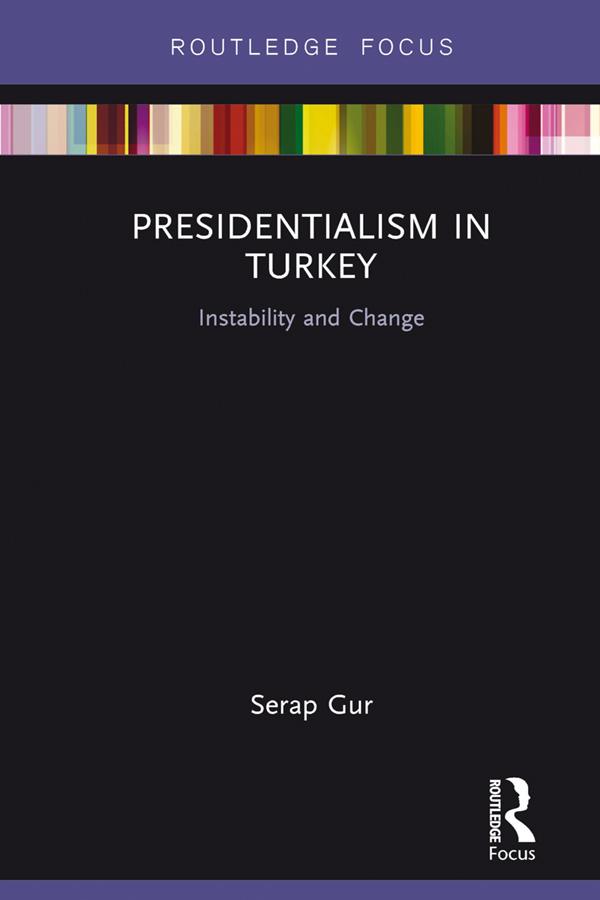
Parliamentarism has been a presiding characteristic of the Turkish political tradition since the 1876 Ottoman constitution. In 1923, with the founding of the Turkish Republic, modern parliamentarism was implemented in Turkey. Since that time, Turkish politics has been turbulent, with four military coups, a number of short-lived multiparty coalitions, and several ineffective governments. Many scholars have argued that the main reason for this instability is the parliamentary system of government, so Turkey must therefore adopt a presidential system.
Presidentialism in Turkey uses both quantitative analysis and country-based comparisons to explore whether such a change might solve Turkey’s main political problems or if it might in fact create more problems for the nation. The relationship between government systems and political, economic, and social development is explored in a time-series analysis covering the period 1975–2014 for Turkey. It is argued that during this time period, the parliamentary system was better than the presidential system at boosting economic and political development, whereas the presidential system provides better social development. Furthermore, a country-based analysis in which Turkey is compared with other states that have used a presidential system at some point since 1975 highlights that each country has its own specific characteristics that affect its economic and political success. Thus, a regime transformation to a presidential system will not necessarily improve Turkey’s economic, political, and social development.
By including a comparison of all presidential, parliamentary, and semi-presidential systems, this book helps to shed new light on what is a very controversial topic in Turkey. It will therefore be a key resource for students and scholars of Turkish studies and comparative politics.
Before Memmo my notes were scattered across PDFs. Now a workspace pulls everything into one place — I see exactly what's still left to study.
Memmo's summaries are gold before exams. I don't have to re-read 800 pages two weeks before — just the important parts.
The AI chat has saved me the night before an exam more than once. I just keep asking until I get it — no waiting on a study group to reply.
The quizzes hit exactly what I need to know. Memmo tracks what I get stuck on — so I only practice what's worth it.
Flashcards with spaced repetition are magic. Memmo knows when I'm about to forget something and brings it back.
The AI podcasts are my favorite. I listen on my way to school and get a recap without sitting at a computer.

Handbok i kvalitativa metoder
281 kr

Hållbar utveckling: en introduktion för ingenjörer och andra problemlösare
334 kr

Brymans Samhällsvetenskapliga metoder
390 kr

Projektledning
491 kr

Den orättvisa hälsan: om socioekonomiska skillnader i hälsa och livslängd
326 kr

Vetenskapsteori för nybörjare
196 kr

Organizational Leadership
429 kr

På väg mot läraryrket
172 kr

Det sociala livet i skolan: Socialpsykologiska perspektiv
253 kr

Betygsättningens didaktik
151 kr

Personality
402 kr

Studying Leadership
404 kr

Managing Innovation
477 kr

Introduktion till samhällsvetenskaplig metod
347 kr

The Psychology of Sex and Gender
698 kr

Evidens och kunskap för socialt arbete
207 kr

Introduction to Leadership
605 kr