
Before Memmo my notes were scattered across PDFs. Now a workspace pulls everything into one place — I see exactly what's still left to study.
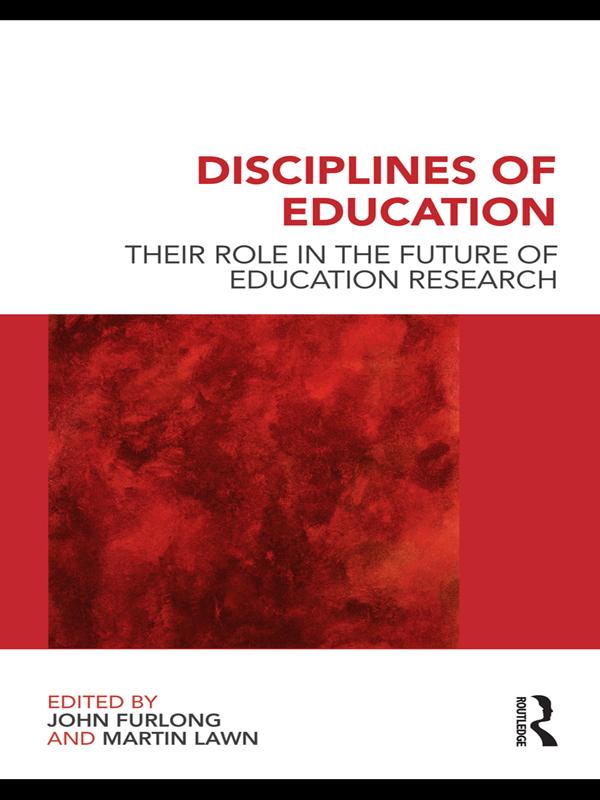
Are the disciplines of education ghosts of a productive past or creative and useful forms of inquiry? Are they in a demographic and organisational crisis today?
The contribution of the ‘foundation disciplines’ of sociology, psychology, philosophy, history and economics to the study of education has always been contested in the UK and in much of the English-speaking world. But such debates are now being brought to a head in education by the demographic crisis. Recent research has shown that with the an ageing population of education academics, in ten years' time, there could be very few disciplinary specialists left working within faculties of education in UK universities. But does that matter and is the UK no more than a special case? How does this ‘crisis’ look from Europe where the disciplines of education are more embedded, and from the USA with its more diverse higher education system?
In this book, leading scholars – including A.H. Halsey, David Bridges, John Furlong, Hugh Lauder, Martin Lawn and Sheldon Rothblatt – consider the changing fortunes of each discipline as education moved away from the dominance of psychology in the 1930s, 1940s and 1950s as a result of the growing importance of the other disciplines and new social questions, and how the changing epistemological and political debates of the last twenty years haves resulted in their progressive demise. Finally, the book confronts the question as to whether the disciplines have a place in education in the twenty-first century.
The book brings the coming crisis into the public view and explores the issue of the past, current and future relevance of the disciplines to the study of education. It will be of interest to all international academics and researchers in the field of education and the contributory disciplines as well as to students on educational research methods courses.
Before Memmo my notes were scattered across PDFs. Now a workspace pulls everything into one place — I see exactly what's still left to study.
Memmo's summaries are gold before exams. I don't have to re-read 800 pages two weeks before — just the important parts.
The AI chat has saved me the night before an exam more than once. I just keep asking until I get it — no waiting on a study group to reply.
The quizzes hit exactly what I need to know. Memmo tracks what I get stuck on — so I only practice what's worth it.
Flashcards with spaced repetition are magic. Memmo knows when I'm about to forget something and brings it back.
The AI podcasts are my favorite. I listen on my way to school and get a recap without sitting at a computer.

Handbok i kvalitativa metoder
281 kr

Hållbar utveckling: en introduktion för ingenjörer och andra problemlösare
334 kr

Brymans Samhällsvetenskapliga metoder
390 kr

Projektledning
491 kr

Den orättvisa hälsan: om socioekonomiska skillnader i hälsa och livslängd
326 kr

Vetenskapsteori för nybörjare
196 kr

Organizational Leadership
429 kr

På väg mot läraryrket
172 kr

Det sociala livet i skolan: Socialpsykologiska perspektiv
253 kr

Betygsättningens didaktik
151 kr

Personality
402 kr

Studying Leadership
404 kr

Managing Innovation
477 kr

Introduktion till samhällsvetenskaplig metod
347 kr

The Psychology of Sex and Gender
698 kr

Evidens och kunskap för socialt arbete
207 kr

Introduction to Leadership
605 kr