
Before Memmo my notes were scattered across PDFs. Now a workspace pulls everything into one place — I see exactly what's still left to study.
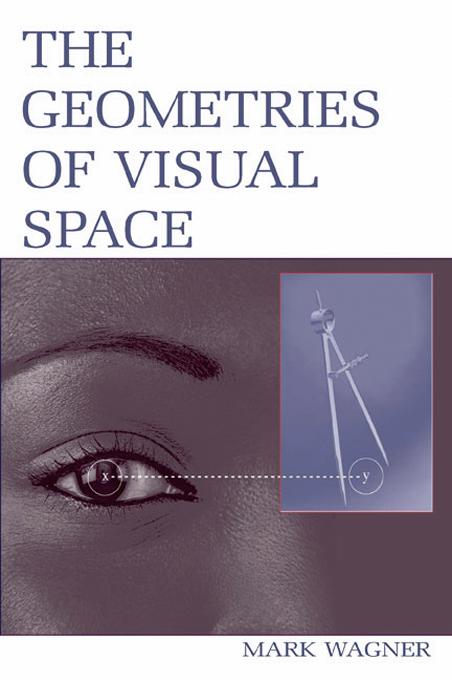
When most people think of space, they think of physical space. However, visual space concerns space as consciously experienced, and it is studied through subjective measures, such as asking people to use numbers to estimate perceived distances, areas, angles, or volumes. This book explores the mismatch between perception and physical reality, and describes the many factors that influence the perception of space including the meaning assigned to geometric concepts like distance, the judgment methods used to report the experience, the presence or absence of cues to depth, and the orientation of a stimulus with respect to point of view. The main theme of the text is that no single geometry describes visual space, but that the geometry of visual space depends upon the stimulus conditions and mental shifts in the subjective meaning of size and distance.
In addition, The Geometries of Visual Space:
*contains philosophical, mathematical, and psychophysical background material;
*looks at synthetic approaches to space perception including work on hyperbolic, spherical, and Euclidean geometries;
*presents a meta-analysis of studies that ask observers to directly estimate size, distance, area, angle, and volume;
*looks at the size constancy literature in which observers are asked to adjust a comparison stimulus to match a variety of standards at different distances away;
*discusses research that takes a multi-dimensional approach toward studying visual space; and
*discusses how spatial experience is influenced by memory.
While this book is primarily intended for scholars in perception, mathematical psychology, and psychophysics, it will also be accessible to a wider audience since it is written at a readable level. It will make a good graduate-level textbook on space perception.
Before Memmo my notes were scattered across PDFs. Now a workspace pulls everything into one place — I see exactly what's still left to study.
Memmo's summaries are gold before exams. I don't have to re-read 800 pages two weeks before — just the important parts.
The AI chat has saved me the night before an exam more than once. I just keep asking until I get it — no waiting on a study group to reply.
The quizzes hit exactly what I need to know. Memmo tracks what I get stuck on — so I only practice what's worth it.
Flashcards with spaced repetition are magic. Memmo knows when I'm about to forget something and brings it back.
The AI podcasts are my favorite. I listen on my way to school and get a recap without sitting at a computer.

Handbok i kvalitativa metoder
281 kr

Hållbar utveckling: en introduktion för ingenjörer och andra problemlösare
334 kr

Brymans Samhällsvetenskapliga metoder
390 kr

Projektledning
491 kr

Den orättvisa hälsan: om socioekonomiska skillnader i hälsa och livslängd
326 kr

Vetenskapsteori för nybörjare
196 kr

Organizational Leadership
429 kr

På väg mot läraryrket
172 kr

Det sociala livet i skolan: Socialpsykologiska perspektiv
253 kr

Betygsättningens didaktik
151 kr

Personality
402 kr

Studying Leadership
404 kr

Managing Innovation
477 kr

Introduktion till samhällsvetenskaplig metod
347 kr

The Psychology of Sex and Gender
698 kr

Evidens och kunskap för socialt arbete
207 kr

Introduction to Leadership
605 kr