
Before Memmo my notes were scattered across PDFs. Now a workspace pulls everything into one place — I see exactly what's still left to study.
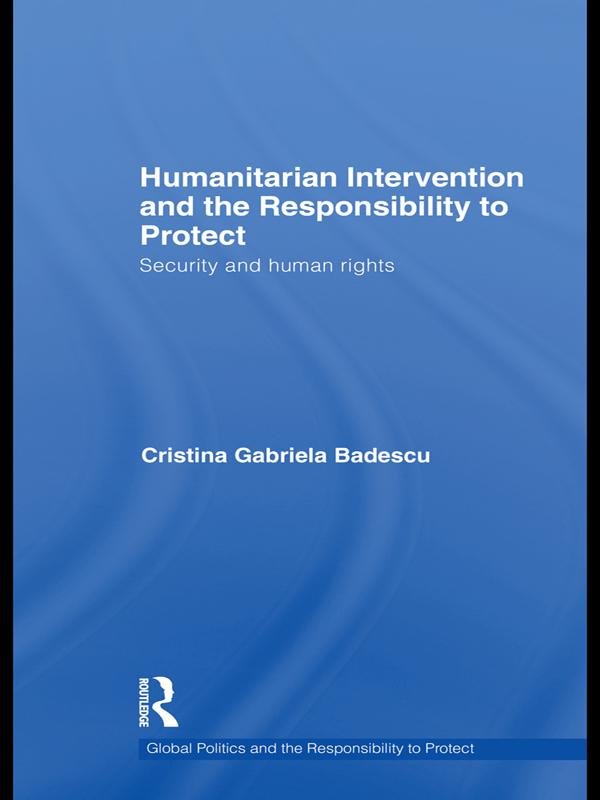
This book explores attempts to develop a more acceptable account of the principles and mechanisms associated with humanitarian intervention, which has become known as the ‘Responsibility to Protect’ (R2P).
Cases of genocide and mass violence have raised endless debates about the theory and practice of humanitarian intervention to save innocent lives. Since the humanitarian tragedies in Rwanda, Burundi, Bosnia, Kosovo and elsewhere, states have begun advocating a right to undertake interventions to stop mass violations of human rights from occurring. Their central concern rests with whether the UN’s current regulations on the use of force meet the challenges of the post-Cold War world, and in particular the demands of addressing humanitarian emergencies. International actors tend to agree that killing civilians as a necessary part of state formation is no longer acceptable, nor is standing by idly in the face of massive violations of human rights. And yet, respect for the sovereign rights of states remains central among the ordering principles of the international community. How can populations affected by egregious human rights violations be protected? How can the legal constraints on the use of force and respect for state sovereignty be reconciled with the international community’s willingness and readiness to take action in such instances? And more importantly, how can protection be offered when the Security Council, which is responsible for authorizing the use of force when threats to international peace and security occur, is paralyzed? The author addresses these issues, arguing that R2P is the best framework available at present to move the humanitarian intervention debate forward.
This book will be of interest to students of the responsibility to protect, war and conflict studies, human security, international organisations, security studies and IR in general.
Before Memmo my notes were scattered across PDFs. Now a workspace pulls everything into one place — I see exactly what's still left to study.
Memmo's summaries are gold before exams. I don't have to re-read 800 pages two weeks before — just the important parts.
The AI chat has saved me the night before an exam more than once. I just keep asking until I get it — no waiting on a study group to reply.
The quizzes hit exactly what I need to know. Memmo tracks what I get stuck on — so I only practice what's worth it.
Flashcards with spaced repetition are magic. Memmo knows when I'm about to forget something and brings it back.
The AI podcasts are my favorite. I listen on my way to school and get a recap without sitting at a computer.

Handbok i kvalitativa metoder
281 kr

Hållbar utveckling: en introduktion för ingenjörer och andra problemlösare
334 kr

Brymans Samhällsvetenskapliga metoder
390 kr

Projektledning
491 kr

Den orättvisa hälsan: om socioekonomiska skillnader i hälsa och livslängd
326 kr

Vetenskapsteori för nybörjare
196 kr

Organizational Leadership
429 kr

På väg mot läraryrket
172 kr

Det sociala livet i skolan: Socialpsykologiska perspektiv
253 kr

Betygsättningens didaktik
151 kr

Personality
402 kr

Studying Leadership
404 kr

Managing Innovation
477 kr

Introduktion till samhällsvetenskaplig metod
347 kr

The Psychology of Sex and Gender
698 kr

Evidens och kunskap för socialt arbete
207 kr

Introduction to Leadership
605 kr