
Before Memmo my notes were scattered across PDFs. Now a workspace pulls everything into one place — I see exactly what's still left to study.
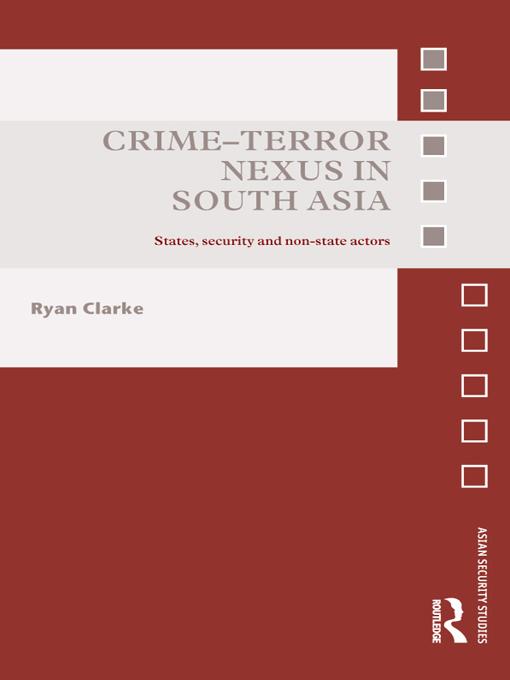
This book examines the crime-terror nexus in South Asia, focusing in particular on the activities of non-state actors that operate out of Pakistan, and challenges the conventional wisdom that the Pakistan Taleban (TTP) and Al-Qaeda are Pakistan’s most serious security threats.
Much research has focused on the policies of India and Pakistan towards Kashmir. But surprisingly little attention has been paid to several notable Pakistan-based non-state actors who are increasingly operating on their own, and who have the potential to greatly inhibit, if not derail, the peace process there. These groups blur the line between terrorism and organized crime with serious implications for policy in the region. India and Pakistan can engage in confidence-building measures, but if criminal actors such as Lashkar-i-Taiba (LeT) and D-Company cannot effectively be controlled, a lack of trust between both sides will remain.
Although the role of regular military forces is not to be discounted, many of the non-state actors in Indian-Held Kashmir, such as LeT, are not confined by the same restraints as state forces, thus allowing them engage in more violent actions without fear of reprisal. In order for lawmakers, security personnel, and others to develop sound, comprehensive policies, these forces and their potential to undermine political initiatives must be fully appreciated. This book explores the dynamics of the relationship between Pakistan, D-Company, and LeT and how it affects strategic thought, decision-making, and security interests in the region and explains the triangular relationships between states, terrorist groups, and organized criminal syndicates in general, and in India and Pakistan in particular.
This book will of much interest to students of South Asian politics, terrorism, organised crime, war and conflict studies, and Security Studies in general.
Before Memmo my notes were scattered across PDFs. Now a workspace pulls everything into one place — I see exactly what's still left to study.
Memmo's summaries are gold before exams. I don't have to re-read 800 pages two weeks before — just the important parts.
The AI chat has saved me the night before an exam more than once. I just keep asking until I get it — no waiting on a study group to reply.
The quizzes hit exactly what I need to know. Memmo tracks what I get stuck on — so I only practice what's worth it.
Flashcards with spaced repetition are magic. Memmo knows when I'm about to forget something and brings it back.
The AI podcasts are my favorite. I listen on my way to school and get a recap without sitting at a computer.

Handbok i kvalitativa metoder
281 kr

Hållbar utveckling: en introduktion för ingenjörer och andra problemlösare
334 kr

Brymans Samhällsvetenskapliga metoder
390 kr

Projektledning
491 kr

Den orättvisa hälsan: om socioekonomiska skillnader i hälsa och livslängd
326 kr

Vetenskapsteori för nybörjare
196 kr

Organizational Leadership
429 kr

På väg mot läraryrket
172 kr

Det sociala livet i skolan: Socialpsykologiska perspektiv
253 kr

Betygsättningens didaktik
151 kr

Personality
402 kr

Studying Leadership
404 kr

Managing Innovation
477 kr

Introduktion till samhällsvetenskaplig metod
347 kr

The Psychology of Sex and Gender
698 kr

Evidens och kunskap för socialt arbete
207 kr

Introduction to Leadership
605 kr