
Before Memmo my notes were scattered across PDFs. Now a workspace pulls everything into one place — I see exactly what's still left to study.
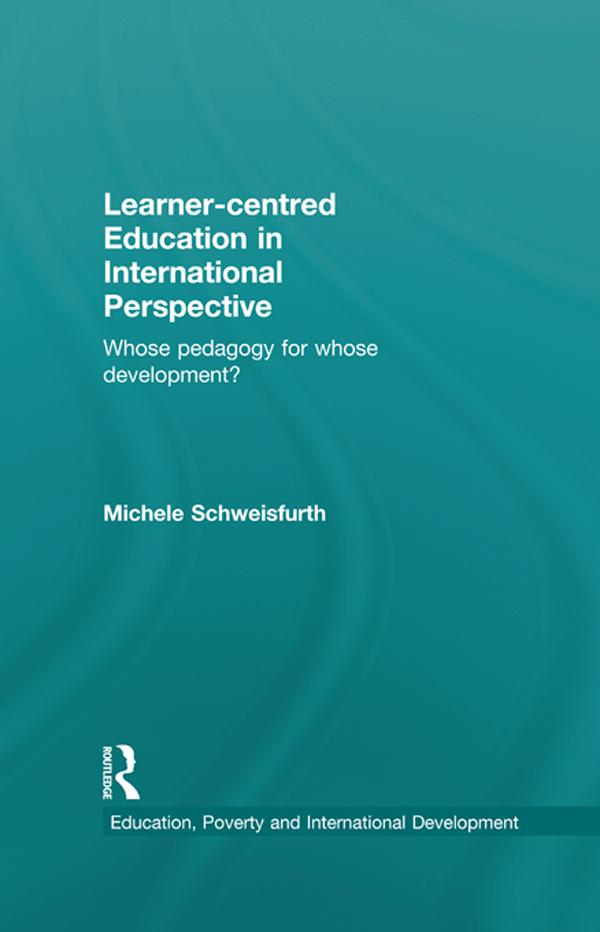
Is learner-centred education appropriate for all societies and classrooms?
Learner-centred education (LCE) is a travelling policy, widely promoted by international agencies and national governments. Arguments in favour of this pedagogical tradition refer to theories and evidence from cognitive psychology, claiming that all learners can benefit equally from its judicious use. Beyond the benefits to the individual however, lie a set of assumptions about learner-centred education as a foundation for the building of democratic citizens and societies, suitable for economies of the future. These promises have been questioned by critics who doubt that it is appropriate in all cultural and resource contexts, and there is considerable evidence in the global South of perennial problems of implementation.
In the light of these debates, is LCE still a good development ‘bet’? This book provides an authoritative and balanced investigation of these issues, exploring the contextual factors from global movements to local resourcing realities which have fuelled it as a discourse and affected its practice. In the light of the theoretical underpinnings and research evidence, the book addresses pressing questions: to what extent is learner-centred education a sound choice for policy and practice in developing countries? And if it is a sound choice, under which conditions is it a viable one?
The book is divided into three key parts:
- Learner-centred Education as a Global Phenomenon
- Learner-centred Education in Lower and Middle-income Countries
- Lessons and Resolutions
This book provides a much-needed fresh analysis of the concept and practice of LCE. It will be valuable reading for academics and post-graduates with a focus on comparative and international education, along with policy-makers in developing countries and development agencies.
Before Memmo my notes were scattered across PDFs. Now a workspace pulls everything into one place — I see exactly what's still left to study.
Memmo's summaries are gold before exams. I don't have to re-read 800 pages two weeks before — just the important parts.
The AI chat has saved me the night before an exam more than once. I just keep asking until I get it — no waiting on a study group to reply.
The quizzes hit exactly what I need to know. Memmo tracks what I get stuck on — so I only practice what's worth it.
Flashcards with spaced repetition are magic. Memmo knows when I'm about to forget something and brings it back.
The AI podcasts are my favorite. I listen on my way to school and get a recap without sitting at a computer.

Handbok i kvalitativa metoder
281 kr

Hållbar utveckling: en introduktion för ingenjörer och andra problemlösare
334 kr

Brymans Samhällsvetenskapliga metoder
390 kr

Projektledning
491 kr

Den orättvisa hälsan: om socioekonomiska skillnader i hälsa och livslängd
326 kr

Vetenskapsteori för nybörjare
196 kr

Organizational Leadership
429 kr

På väg mot läraryrket
172 kr

Det sociala livet i skolan: Socialpsykologiska perspektiv
253 kr

Betygsättningens didaktik
151 kr

Personality
402 kr

Studying Leadership
404 kr

Managing Innovation
477 kr

Introduktion till samhällsvetenskaplig metod
347 kr

The Psychology of Sex and Gender
698 kr

Evidens och kunskap för socialt arbete
207 kr

Introduction to Leadership
605 kr